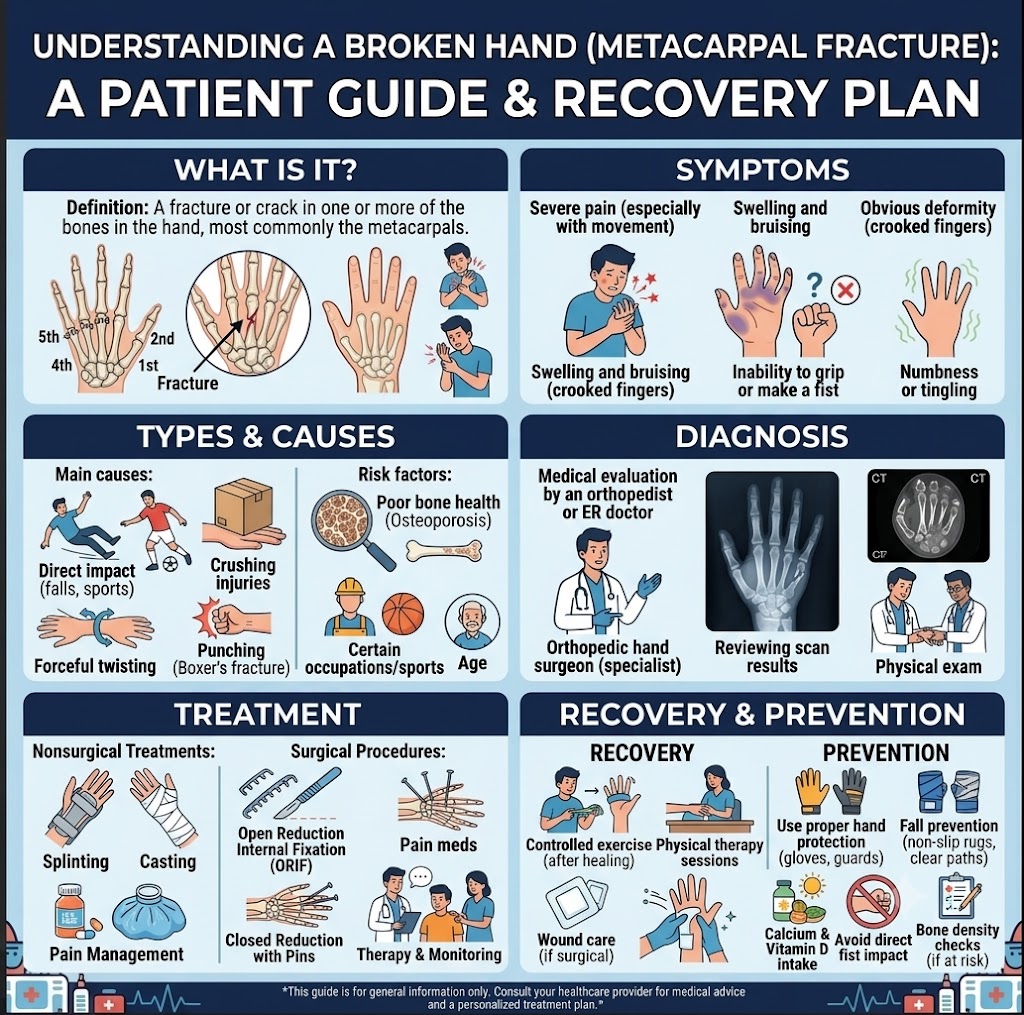
A broken hand, also known as a hand fracture, occurs when one or more of the bones in your hand or fingers crack or break. This common injury often happens due to a fall, where people instinctively extend their hands to break their fall. Other causes include a direct blow to the hand, or severe trauma from incidents like motor vehicle crashes, which can sometimes shatter bones into multiple pieces and may require surgery. Your hand is made up of 27 small bones. These include the long bones in your palm (metacarpals) and the smaller bones in your fingers (phalanges). A break in a palm bone is called a metacarpal fracture, while a break in a finger bone is a phalangeal fracture. Certain activities like contact sports (e.g., football, hockey) or medical conditions that weaken bones, such as osteoporosis, can increase your risk of a broken hand. Prompt medical attention is crucial for a broken hand to ensure proper healing. Untreated fractures can lead to long-term problems, including chronic pain, stiffness, and difficulty performing everyday tasks like writing or dressing.
Understanding the Condition
Broken Hand: A Comprehensive Guide
Understanding the Condition
Common Symptoms
Severe Pain: Pain that can range from mild to intense, especially when moving the hand or fingers.
Swelling: Noticeable puffiness around the injured area.
Tenderness: Pain when the injured area is touched.
Bruising: Discoloration of the skin due to bleeding under the surface.
Visible Deformity: An unusual shape or bend in the hand or finger that looks out of place.
Limited Movement: Difficulty or inability to move the affected fingers or hand.
Numbness or Tingling: A loss of sensation or a 'pins and needles' feeling in the hand or fingers, indicating possible nerve involvement.
Consultation Guide
Which Specialist to Meet
Watch for Complications: Be aware of symptoms like persistent pain, stiffness, numbness, or reduced grip strength that do not improve over time. These could indicate delayed healing or other issues requiring further medical attention.
Consultation Guide
A broken hand, also known as a hand fracture, occurs when one or more of the bones in your hand or fingers crack or break. This common injury often happens due to a fall, where people instinctively extend their hands to break their fall. Other causes include a direct blow to the hand, or severe trauma from incidents like motor vehicle crashes, which can sometimes shatter bones into multiple pieces and may require surgery. Your hand is made up of 27 small bones. These include the long bones in your palm (metacarpals) and the smaller bones in your fingers (phalanges). A break in a palm bone is called a metacarpal fracture, while a break in a finger bone is a phalangeal fracture. Certain activities like contact sports (e.g., football, hockey) or medical conditions that weaken bones, such as osteoporosis, can increase your risk of a broken hand. Prompt medical attention is crucial for a broken hand to ensure proper healing. Untreated fractures can lead to long-term problems, including chronic pain, stiffness, and difficulty performing everyday tasks like writing or dressing.
Diagnostic Procedures
If you suspect a broken hand, you should initially visit an emergency room or an urgent care center. Following initial diagnosis, you will likely be referred to an orthopedic surgeon, a doctor who specializes in bone and joint conditions, or a hand surgeon, an orthopedic specialist with advanced training in hand injuries.
Preparations Before Your Visit
An X-ray is a quick, painless imaging test that uses a small amount of radiation to create pictures of the inside of your body, primarily to visualize bones. It helps identify the location and type of fracture, whether the bone is merely cracked or completely broken, and if bone fragments are displaced.
What to Expect
During an X-ray, you will be asked to position your hand on a table or directly on the X-ray detector. The technician will guide you on how to hold your hand still to get clear images from different angles. You might be asked to remove jewelry or metal objects from the area. The procedure itself is very brief, typically lasting only a few minutes, and involves no pain or discomfort. You will hear a click as the X-ray machine takes the image. Dense materials like bones appear white on the image, while soft tissues and air appear in shades of gray or black.
Treatment Options
Before your visit, try to keep your hand still and elevated to reduce swelling. You can apply a cold pack wrapped in cloth to the injured area. Be prepared to describe exactly how the injury occurred, including the mechanism of injury. List all your current medications, any allergies, and your medical history. Avoid eating or drinking before your appointment, especially if surgery might be considered.
Book a doctor visit near me
Rest: Avoid using the injured hand and prevent any activities that might worsen the fracture. (Duration: Until pain subsides and healing begins.)
Ice: Apply a cold pack, wrapped in a cloth, to the injured area for 15-20 minutes at a time, several times a day, to reduce swelling and pain. (Duration: For the first 48-72 hours post-injury.)
Elevation: Keep the injured hand raised above the level of your heart, especially when resting, to help decrease swelling. (Duration: Continuously for the initial days, then as needed.)
Medications
Pain Relievers: Over-the-counter pain medications can help manage mild to moderate pain. For more severe pain, a doctor may prescribe stronger pain relief. (Duration: As needed for pain, typically for several days to weeks.)
Procedures and Therapies
Closed Reduction: If the broken bone pieces are out of alignment, a doctor may need to manually manipulate them back into their correct position without making an incision. (Duration: A single procedure, followed by immobilization.)
Immobilization: After the bone is aligned, a cast, splint, or brace is applied to hold the bones in place, preventing movement and allowing them to heal. The type depends on the fracture severity and location. (Duration: Typically 3-8 weeks, depending on the fracture and individual healing.)
Internal Fixation: For severe or complex fractures (e.g., multiple pieces, unstable, affecting a joint, or open fractures), surgery may be needed. This involves using plates, screws, wires, or pins to hold the bone fragments together securely while they heal. These devices may be permanent or removed later. (Duration: A single procedure, with devices remaining for months or permanently; full recovery can take several months to a year.)
Bone Health: Maintain strong bones through a diet rich in calcium and Vitamin D. Regular weight-bearing exercise also contributes to bone density. If you have osteoporosis, follow your doctor's treatment plan to manage the condition.
Long-Term Monitoring and Care
Adhere to Rehabilitation: Diligently follow your physical or occupational therapy exercises. This is crucial for regaining full strength, flexibility, and function in your hand after a fracture.
Prevention & Long-Term Wellbeing
Physical or Occupational Therapy: Once the cast or splint is removed, therapy helps restore strength, flexibility, and range of motion to the hand and fingers, and regain functional use for daily tasks. (Duration: Several weeks to months, based on recovery progress.)
Prevention
Fall Prevention: Make your home safer by removing tripping hazards, improving lighting, and installing grab bars in bathrooms. Engage in exercises that improve balance and strength.
Sports Safety: Wear appropriate protective gear, such as gloves or wrist guards, when participating in sports like football, hockey, or skateboarding, to shield your hands from impact.
Follow-up Appointments: Attend all scheduled follow-up appointments with your doctor to monitor healing progress, assess recovery, and address any potential complications early.
Tags & Topics
Notice an error or need an update?
Help us keep medical information accurate. Report incorrect info or suggest an edit.


