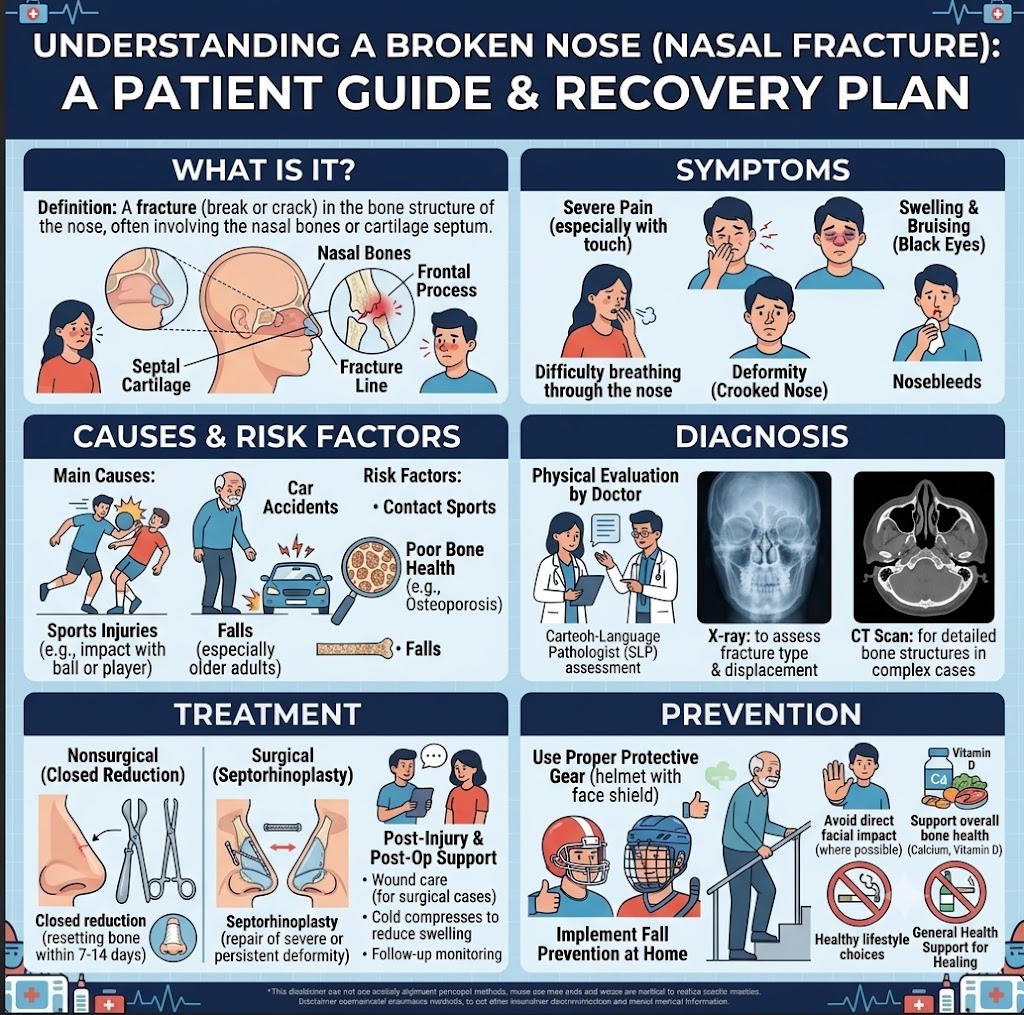
A broken nose, also known as a nasal fracture, is a break or crack in the bones of your nose, often affecting the bridge. It commonly results from accidents like falls, sports injuries, or car crashes. Symptoms can include pain, bleeding, swelling, bruising around the eyes, a crooked appearance, and difficulty breathing. Most broken noses heal without complex surgery, often requiring procedures to gently realign the bones for proper healing.
Understanding the Condition
Broken Nose (Nasal Fracture)
Understanding the Condition
A broken nose, also known as a nasal fracture, is a break or crack in the bones of your nose, often affecting the bridge. It commonly results from accidents like falls, sports injuries, or car crashes. Symptoms can include pain, bleeding, swelling, bruising around the eyes, a crooked appearance, and difficulty breathing. Most broken noses heal without complex surgery, often requiring procedures to gently realign the bones for proper healing.
Common Symptoms
Pain and Tenderness: Severe pain, especially when the nose is touched.
Swelling: Visible swelling around the nose and surrounding areas.
Bruising: Bruising around the nose, under the eyes, or on the eyelids.
Nosebleed: Bleeding from the nose.
Crooked Appearance: A visibly bent, crooked, or misshapen nose.
Breathing Difficulty: Trouble breathing through one or both nostrils.
Blocked Nasal Passage: A feeling of obstruction in one or both nasal passages.
Grinding Sensation: A feeling or sound of grinding or crackling when moving the nose.
Consultation Guide
Which Specialist to Meet
Before your visit, be ready to describe in detail how the injury happened and all your current symptoms. Prepare a list of all medications you are currently taking, including over-the-counter drugs and supplements, and have your medical history available. Consider noting down any questions you have about the diagnosis, treatment plan, and recovery process.
Book a doctor visit near me
Consultation Guide
Avoid Physical Fights: Steer clear of altercations, as they are common causes of nasal injuries.
Prevent Falls: Take steps to prevent falls at home, especially if children or elderly individuals are present.
Monitor Breathing: Watch for persistent difficulty breathing through your nose, which may need further medical review.
Observe Appearance Changes: Note any lasting changes in nose shape or alignment and discuss with your doctor if concerned.
Diagnostic Procedures
An X-ray is a fast, painless imaging test that uses radiation to create pictures of the bones inside your body. For a suspected broken nose, it helps doctors see cracks or breaks in the nasal bones.
What to Expect
You will be asked to remove any metal objects or jewelry. You will then be positioned to capture images of your nose from different angles, either standing, sitting, or lying down. You must remain still for a few seconds while the X-ray is taken. The entire procedure is quick and generally painless.
CT Scan (Computerized Tomography Scan)
A CT scan uses specialized X-ray equipment and computer processing to create detailed cross-sectional images, or 'slices,' of your bones, soft tissues, and blood vessels. It provides a more comprehensive view than a standard X-ray, useful for evaluating complex facial injuries or potential related damage.
What to Expect
You will lie on a motorized table that slides into a large, tunnel-like machine. Remaining still for several minutes is crucial during the scan, which may involve humming or clicking sounds. Sometimes, a contrast dye is injected to enhance images, possibly causing a temporary warm sensation. A technologist will monitor and communicate with you from an adjacent room.
Treatment Options
Initially, consult your primary care physician. Depending on the severity of the injury, they may refer you to a specialist such as an ear, nose, and throat (ENT) doctor, also known as an otolaryngologist, or a plastic surgeon for further evaluation and treatment.
Preparations Before Your Visit
Ice Pack Application: Apply ice wrapped in a cloth to your nose for 15-20 minutes at a time to reduce swelling and pain. (Duration: For the first 24-48 hours after injury.)
Pain Management: Use non-prescription pain relievers to manage discomfort. (Duration: As needed, typically for several days.)
Head Elevation: Keep your head elevated, especially while sleeping, to minimize swelling. (Duration: For several days to a week.)
Medications
Pain Relievers: Prescription or over-the-counter medications to alleviate pain and reduce swelling. (Duration: As prescribed or needed for days to weeks.)
Antibiotics: Prescribed if there is an open wound or risk of infection. (Duration: Typically 7-10 days, as prescribed.)
Procedures (Non-Surgical)
Closed Reduction: If nasal bones are misaligned, a doctor may manually realign them using instruments, often under anesthesia. This is done without cutting the skin. (Duration: Performed within 14 days of injury; healing takes 3-6 weeks.)
Surgical Procedures
Rhinoplasty (Nose Reshaping Surgery): Surgery to reshape nasal bone, cartilage, or skin, often to restore appearance or improve breathing after injury. (Duration: Healing takes several weeks, full results over several months to a year.)
Septoplasty (Septum Straightening Surgery): Surgery to straighten the internal wall (septum) of the nose if it's severely crooked due to injury, improving breathing. (Duration: Recovery typically takes a few weeks, with improved breathing seen within months.)
Follow Post-Procedure Care: If you have surgery, diligently follow all post-operative instructions for proper healing.
Prevention & Long-Term Wellbeing
Prevention
Wear Protective Gear: Use faceguards or helmets during contact sports to protect your face.
Use Seat Belts: Always wear a seat belt in motor vehicles to reduce facial injury risk during accidents.
Wear Helmets for Cycling: Wear a helmet when cycling or motorcycling to protect your head and face.
Tags & Topics
Notice an error or need an update?
Help us keep medical information accurate. Report incorrect info or suggest an edit.


