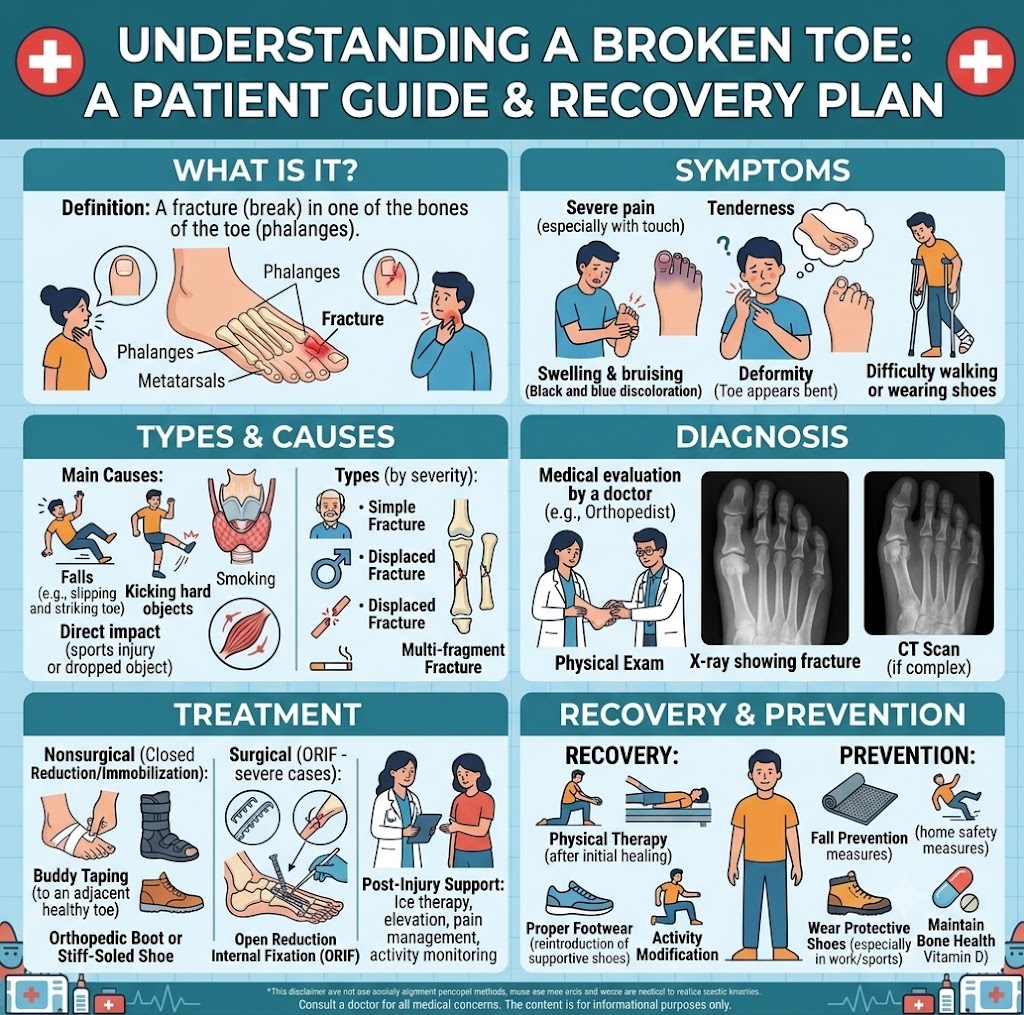
A broken toe, medically known as a toe fracture, occurs when one of the bones in your toe cracks or breaks. This common injury usually results from direct trauma, such as dropping a heavy object on the foot or forcefully stubbing a toe. While many broken toes can heal with simple care, severe fractures—especially those involving the big toe or a joint—might require more advanced medical intervention like casting or surgery. Most broken toes heal well within 4 to 6 weeks. However, complications such as infection (particularly if the skin is broken) or the development of arthritis in the affected joint can sometimes occur, making proper assessment and treatment essential.
Understanding the Condition
Broken Toe (Toe Fracture)
Understanding the Condition
Common Symptoms
Immediate Pain: Sharp and intense pain at the time of injury, often worsening with movement or when attempting to put weight on the foot.
Swelling: The injured toe and the surrounding area may become visibly swollen, making it difficult to wear shoes.
Bruising and Discoloration: The skin around the broken toe may change color, appearing red, purple, or black due to internal bleeding under the skin.
Deformity: In more severe cases, the toe might look crooked or unnatural in shape, indicating bone displacement.
Difficulty Walking or Weight Bearing: Pain and swelling can make it hard or impossible to walk comfortably or put any weight on the affected foot.
Before your visit, be prepared to describe exactly how the injury occurred, all your symptoms, and how severe the pain is. Bring a list of any medications you are currently taking and any pre-existing medical conditions. Wear comfortable, loose-fitting clothing and shoes that can be easily removed. Prepare a list of questions you have for the doctor regarding your condition and treatment options.
Book a doctor visit near me
Monitor for Complications: Remain vigilant for any signs of infection (increased pain, redness, warmth, pus) or persistent, unexplained pain, swelling, or changes in toe function. Report these symptoms to your doctor promptly.
Consultation Guide
Numbness or Tingling: Occasionally, damage to surrounding nerves might cause a sensation of numbness or tingling in the toe.
Consultation Guide
Which Specialist to Meet
Initially, you should see a general practitioner or family doctor. For more severe, complex, or non-healing fractures, they may refer you to an orthopedic surgeon (a doctor specializing in bone and joint injuries) or a podiatrist (a specialist in foot and ankle conditions).
Preparations Before Your Visit
You will be asked about the injury's history and your pain level. The doctor will carefully examine your foot, which may cause some temporary discomfort. They will look for bruising, swelling, and ask you to try moving your toe gently to assess its function and stability. This physical assessment helps determine the likely nature of the injury.
Diagnostic Procedures
A healthcare provider will visually inspect your injured toe and foot, gently touching the area to pinpoint pain and swelling. They will assess for any visible deformities, skin breaks, and check the stability and range of motion of the toe.
What to Expect
An X-ray uses a small amount of radiation to produce detailed images of your bones. This is the most common and effective diagnostic tool to confirm a broken toe, identify the exact location and type of fracture, and assess its severity, including any bone displacement.
What to Expect
You will be positioned to allow the X-ray machine to capture images of your foot from several angles. You'll need to stay still for a few seconds during each image capture. The procedure is quick, generally painless, and non-invasive. A lead apron may be provided to protect other parts of your body from radiation exposure. Multiple views ensure a comprehensive assessment of the fracture.
Treatment Options
A broken toe, medically known as a toe fracture, occurs when one of the bones in your toe cracks or breaks. This common injury usually results from direct trauma, such as dropping a heavy object on the foot or forcefully stubbing a toe. While many broken toes can heal with simple care, severe fractures—especially those involving the big toe or a joint—might require more advanced medical intervention like casting or surgery. Most broken toes heal well within 4 to 6 weeks. However, complications such as infection (particularly if the skin is broken) or the development of arthritis in the affected joint can sometimes occur, making proper assessment and treatment essential.
Home Care and First Aid
Rest: Avoid putting weight on the injured toe to allow the bone to begin healing. (Duration: Until pain subsides, often 1-2 weeks initially.)
Ice Application: Apply a cold pack (wrapped in a thin cloth) to the injured area to reduce swelling and pain. (Duration: 15-20 minutes at a time, several times a day for the first 2-3 days.)
Elevation: Keep your foot elevated above the level of your heart whenever possible to help minimize swelling. (Duration: Especially during the first few days post-injury.)
Medications
Pain Relievers: Over-the-counter pain medications can help manage discomfort and reduce inflammation. For severe pain, a doctor may prescribe stronger pain relief. (Duration: As needed for pain, typically for 1-4 weeks.)
Antibiotics: If the skin near the fracture is broken (an open fracture) or an infection develops, antibiotics will be prescribed to prevent or treat bacterial infection. (Duration: Course of treatment as directed by a doctor, usually 7-14 days.)
Immobilization and Support
Buddy Taping: The injured toe is gently taped to an adjacent healthy toe, with a small piece of cotton or gauze placed between them to prevent skin irritation. The healthy toe acts as a splint. (Duration: Typically 2-4 weeks, or until pain subsides and healing is evident.)
Stiff-Soled Shoe or Walking Boot: For more significant fractures, particularly of the big toe, a stiff-soled shoe or a specialized walking boot helps to restrict movement and protect the toe, promoting proper healing. (Duration: Usually 3-6 weeks, depending on the fracture's severity and location.)
Cast: In rare cases, for severe fractures or instability, a lightweight cast extending from the foot to below the knee may be applied for maximum immobilization. (Duration: Typically 4-6 weeks.)
Surgical Procedures
Closed Reduction: If the bone fragments are displaced but the skin is not broken, the doctor may manually realign the bones without making an incision. (Duration: A single procedure, followed by immobilization.)
Open Reduction and Internal Fixation (ORIF): For complex fractures, multiple breaks, or fractures involving a joint, surgery may be necessary to realign the bones and hold them in place with small pins, plates, or screws. (Duration: A single surgical procedure. Hardware may be removed in a later procedure once healing is complete.)
Rehabilitation and Physical Therapy
Prevention & Long-Term Wellbeing
Rehabilitation Exercises: Once the initial healing period is over, guided exercises may be recommended to restore strength, flexibility, and full range of motion to the toe and foot. (Duration: Weeks to months, depending on the extent of injury and individual recovery.)
Prevention Strategies
Wear Protective Footwear: Always wear sturdy, closed-toe shoes, especially when engaging in activities that carry a risk of foot injury, such as heavy lifting, sports, or working in hazardous environments. Avoid walking barefoot in areas where you might stub your toe or drop objects.
Maintain Clear Pathways: Keep floors and walking areas free of clutter, loose rugs, and electrical cords to reduce the risk of tripping or stubbing your toes.
Exercise Caution with Heavy Objects: Be particularly careful and use proper lifting techniques when handling or moving heavy items to prevent them from falling onto your feet.
Ensure Adequate Lighting: Make sure your home and workspaces are well-lit to improve visibility and help prevent accidental collisions with furniture or other obstacles.
Long-Term Monitoring and Management
Manage Osteoarthritis Risk: If your fracture involved a joint, you might have an increased risk of developing osteoarthritis (wear-and-tear arthritis) in that toe later in life. Be mindful of new or worsening joint pain, stiffness, or decreased range of motion, and discuss these with your healthcare provider. Lifestyle adjustments and specific footwear might help.
Adhere to Follow-up Care: Attend all scheduled follow-up appointments with your doctor to ensure the toe is healing correctly and to address any ongoing concerns or complications.
Consistent Rehabilitation: If prescribed physical therapy, consistently perform all recommended exercises to regain full strength, flexibility, and function in your toe and foot, minimizing long-term stiffness or weakness.
Tags & Topics
Notice an error or need an update?
Help us keep medical information accurate. Report incorrect info or suggest an edit.


