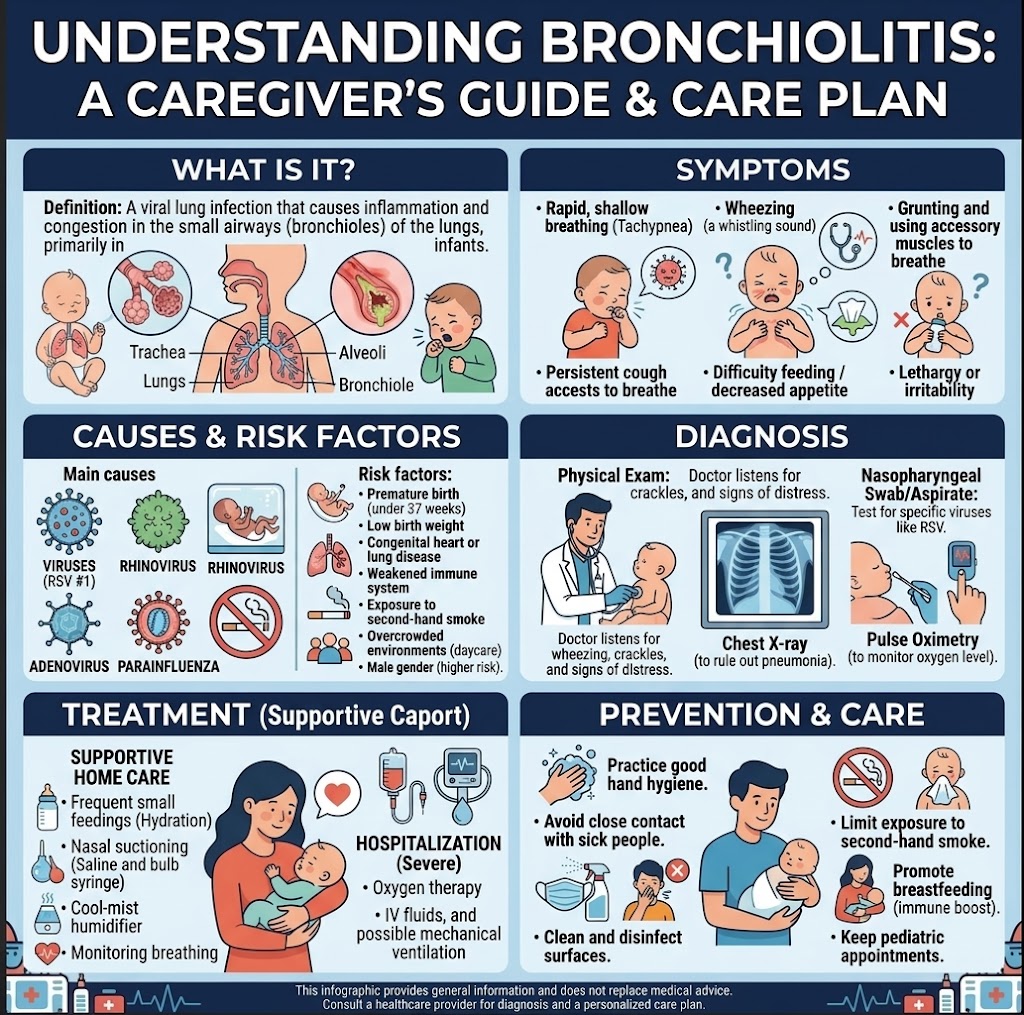
Bronchiolitis is a common lung infection that affects babies and young children, usually under two years old. It causes the smallest airways in the lungs, called bronchioles, to swell, become irritated, and fill with sticky mucus. This makes it hard for air to move in and out, leading to breathing difficulties. This illness is almost always caused by a virus, most often the Respiratory Syncytial Virus (RSV), which spreads easily. While it often starts like a common cold, symptoms can worsen, causing a distinct cough and a whistling sound when breathing out, known as wheezing. Most children recover well with care at home, but some may need hospital care, especially infants under three months or those with other health conditions.
Understanding the Condition
Bronchiolitis: A Common Breathing Illness in Babies and Young Children
Understanding the Condition
Bronchiolitis is a common lung infection that affects babies and young children, usually under two years old. It causes the smallest airways in the lungs, called bronchioles, to swell, become irritated, and fill with sticky mucus. This makes it hard for air to move in and out, leading to breathing difficulties. This illness is almost always caused by a virus, most often the Respiratory Syncytial Virus (RSV), which spreads easily. While it often starts like a common cold, symptoms can worsen, causing a distinct cough and a whistling sound when breathing out, known as wheezing. Most children recover well with care at home, but some may need hospital care, especially infants under three months or those with other health conditions.
Common Symptoms
Early Symptoms (like a common cold): Clear or congested runny nose, stuffy nose, and sometimes a slight fever during the first few days.
Worsening Symptoms (may last a week or more): Persistent coughing, wheezing (a high-pitched whistling or squeaky sound when breathing out), and appearing to work harder than usual to breathe. Many infants with bronchiolitis also develop an ear infection.
When to Call Your Child's Doctor: Contact your child's healthcare provider if symptoms become serious, especially if your child is younger than 12 weeks old, was born prematurely, or has an existing heart or lung condition.
Seek Immediate Medical Attention (Emergency Warning Signs): Get medical help right away if your child has blue or gray skin, lips, or fingernails (due to low oxygen); struggles severely to breathe and cannot speak or cry; refuses to drink enough, or breathes too fast to eat or drink; breathes very fast (more than 60 breaths per minute in infants) with short, shallow breaths; shows ribs sucking inward when breathing; makes grunting noises with each breath; or appears unusually slow, weak, or very tired.
Consultation Guide
Which Specialist to Meet
For concerns about bronchiolitis, you should first consult with your child's pediatrician or family doctor. If symptoms are severe or life-threatening, seek immediate care at an emergency room.
Preparations Before Your Visit
Before your visit, make a list of your child's symptoms, including when they started, how long they've lasted, and if they've changed. Note any fevers, how much your child is eating and drinking, and their typical breathing pattern. Also, mention any existing health conditions or medications your child is taking.
Book a doctor visit near me
Keep Your Child Hydrated: Offer small, frequent amounts of fluids like breast milk, formula, or water (for older children) to prevent dehydration. (Duration: Symptoms typically improve within 1 to 2 weeks, though a lingering cough might last longer.)
Clear Nasal Passages: Use saline nose drops and a nasal aspirator (bulb syringe) to gently remove mucus, especially before feeding and sleeping. (Duration: Symptoms typically improve within 1 to 2 weeks, though a lingering cough might last longer.)
Humidify the Air: Use a cool-mist humidifier in your child's room to help loosen mucus and ease breathing. Make sure to clean the humidifier regularly. (Duration: Symptoms typically improve within 1 to 2 weeks, though a lingering cough might last longer.)
Elevate Head: For infants, you can slightly elevate the head of the crib mattress by placing towels under one end (never use pillows directly with infants). (Duration: Symptoms typically improve within 1 to 2 weeks, though a lingering cough might last longer.)
Avoid Smoke Exposure: Keep your child away from all forms of tobacco smoke, as it can worsen breathing problems. (Duration: Ongoing during illness and beyond for general lung health.)
Medical Support (for more severe cases, often in a hospital setting)
Oxygen Therapy: If oxygen levels are low, oxygen may be provided through a small tube near the nose or a mask. (Duration: As needed, typically for a few days to a week during hospitalization.)
Intravenous (IV) Fluids: If your child cannot drink enough, fluids may be given directly into a vein to prevent dehydration. (Duration: As needed, typically for a few days to a week during hospitalization.)
Consultation Guide
RSV Immunization: For certain high-risk infants, there are specific immunizations that can help prevent severe RSV infection, the most common cause of bronchiolitis. Discuss these options with your doctor if your infant qualifies.
Monitor for Recurrence: Be aware that children can get bronchiolitis more than once, as different viruses or new strains can cause the infection.
Diagnostic Procedures
A chest X-ray is a common imaging test that uses a small amount of radiation to create pictures of the inside of your child's chest. It allows doctors to see the heart, lungs, blood vessels, airways, and the bones of the chest. For bronchiolitis, it helps doctors assess the condition of the lungs, check for fluid buildup, or rule out other conditions like pneumonia.
What to Expect
During a chest X-ray, your child will lie or stand briefly in front of an X-ray machine. A technician will position your child and ask them to stay very still for a few moments while the image is taken. It's a quick and painless procedure, usually taking only a few minutes. You may be able to stay with your child during the X-ray, wearing a protective apron.
Treatment Options
Home Care (for most mild cases)
Breathing Support: In very severe cases, a breathing tube may be placed into the windpipe and connected to a machine to help your child breathe until they recover. (Duration: Hospital stays usually last a few days to a week, depending on the severity of the illness and how quickly the child responds to treatment.)
Prevention & Long-Term Wellbeing
Prevention Strategies
Practice Excellent Hand Hygiene: Wash your own and your child's hands often with soap and water for at least 20 seconds. Use an alcohol-based hand sanitizer (at least 60% alcohol) when soap and water aren't available.
Avoid Sick Individuals: Limit contact with people who have colds or fever, especially if your child is a newborn or premature. This is crucial during the first two months of life.
Clean and Disinfect Surfaces: Regularly clean and disinfect frequently touched surfaces and items, such as toys, doorknobs, and countertops, especially when someone in the household is sick.
Cover Coughs and Sneezes: Teach children to cover their mouth and nose with a tissue when coughing or sneezing, then dispose of the tissue and wash hands. If no tissue is available, cough or sneeze into the elbow, not the hands.
Do Not Share Utensils or Glasses: Use separate drinking glasses and utensils for each person, particularly if someone in the family is ill.
Consider Breastfeeding: Breastfed babies tend to have fewer respiratory infections compared to those who are not.
Follow-up with Doctor: Ensure all recommended follow-up appointments are attended after a severe episode to monitor lung recovery and overall health.
Tags & Topics
Notice an error or need an update?
Help us keep medical information accurate. Report incorrect info or suggest an edit.


