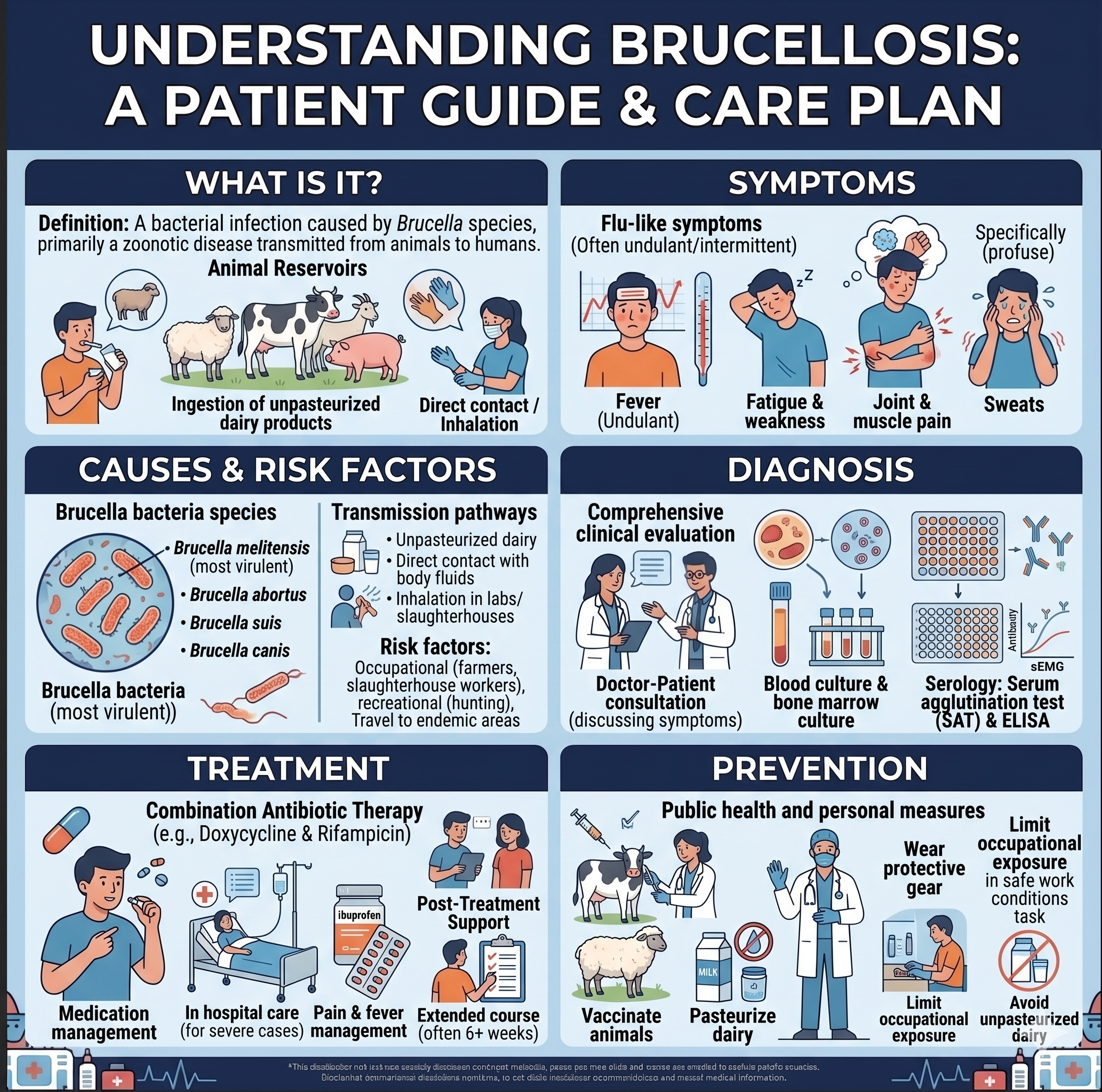
Brucellosis is a bacterial infection that primarily affects animals but can spread to humans. The most common route of transmission is eating or drinking unpasteurized, raw dairy products. The bacteria can also enter the human body through direct contact with infected animals, fluids, or by breathing in contaminated air. While it can cause flu-like symptoms, prompt medical care and long-term management can successfully treat the infection and prevent complications.
Understanding the Condition
Understanding Brucellosis: Causes, Symptoms, and Care
Understanding the Condition
Brucellosis is a bacterial infection that primarily affects animals but can spread to humans. The most common route of transmission is eating or drinking unpasteurized, raw dairy products. The bacteria can also enter the human body through direct contact with infected animals, fluids, or by breathing in contaminated air. While it can cause flu-like symptoms, prompt medical care and long-term management can successfully treat the infection and prevent complications.
Common Symptoms
Initial Flu-Like Symptoms: These typically appear within a few days to several months of infection and include high fever, severe fatigue, joint and muscle pain, headaches, drenching sweats, and loss of appetite.
Recurrent or Chronic Symptoms: Symptoms may disappear for weeks or months only to return. Long-term effects can include chronic fatigue, joint swelling (arthritis), depression, and swelling of organs like the heart, liver, or spleen.
Consultation Guide
Which Specialist to Meet
You should see an Infectious Disease Specialist for expert management of this condition. You may also consult a Primary Care Physician or Internist for initial evaluation and referrals.
Preparations Before Your Visit
Before your appointment, write down all your symptoms, including when they started. Prepare a list of any recent travels, exposure to livestock or farm animals, and whether you have consumed unpasteurized milk or cheese. Bring a list of all current medications and supplements.
Book a doctor visit near me
Symptom Relief Medications: Over-the-counter pain relievers and anti-inflammatory medications may be suggested to manage joint pain, fever, and muscle aches. (Duration: Used as needed during the initial weeks of treatment.)
Follow-Up Monitoring: Attend all follow-up medical appointments and blood tests. This ensures the infection is fully resolved, as symptoms can reappear months after treatment finishes.
Paced Activity and Rest: Allow your body time to heal from chronic fatigue. Gradually increase physical activity while prioritizing consistent, restorative sleep.
Consultation Guide
Combination Antibiotic Therapy: Because the bacteria can live inside your cells, a combination of two or more different antibiotics is prescribed simultaneously to ensure the infection is completely cleared and to reduce the risk of it returning. (Duration: Typically 6 to 8 weeks.)
Abscess Drainage: If the infection causes localized collections of pus (abscesses) in bones, joints, or organs, a surgeon may need to drain them to allow proper healing. (Duration: The procedure takes 1 to 2 hours, with recovery lasting several weeks.)
Diagnostic Procedures
These tests look for the bacteria in your blood or check for specific antibodies that your immune system has created to fight the infection.
What to Expect
A healthcare provider will insert a small needle into a vein in your arm to collect blood. You will feel a quick pinch, and the process takes only a few minutes.
An imaging test used to identify inflammatory changes, fluid, or damage in your joints and bones, particularly in the spine.
What to Expect
You will be asked to remain still or hold your breath for a few seconds while a machine positions itself to capture images. It is entirely painless and completed in minutes.
A computerized tomography scan takes detailed, cross-sectional images of your internal organs and bones to detect abscesses or deep infections.
What to Expect
You will lie on a flat table that slowly slides into a doughnut-shaped scanner. You must lie very still during the scan, which typically takes 10 to 30 minutes. You might receive an oral or intravenous contrast dye to make images clearer.
An ultrasound of the heart to check for signs of endocarditis, a serious complication where the bacteria infects and damages the heart valves.
What to Expect
A technician will apply a warm gel to your chest and press a small wand-like device against your skin. This device uses painless sound waves to create moving pictures of your heart on a screen.
Treatment Options
Medications
Heart Valve Replacement: In rare cases where the infection has severely damaged the heart valves, surgery is required to repair or replace the damaged valve with an artificial one. (Duration: Major surgery requiring several days of hospitalization and months of recovery.)
Prevention & Long-Term Wellbeing
Prevention Strategies
Avoid Raw Dairy: Always choose pasteurized milk, cheese, and ice cream. Pasteurization heats dairy products to kill harmful bacteria like Brucella.
Practice Food Safety: Cook all meats thoroughly to safe internal temperatures to destroy any lingering bacteria.
Use Protective Gear: If you work as a veterinarian, farmer, hunter, or laboratory technician, wear rubber gloves, safety goggles, and protective aprons when handling animal tissues, fluids, or animal births.
Long-Term Management
Tags & Topics
Notice an error or need an update?
Help us keep medical information accurate. Report incorrect info or suggest an edit.


