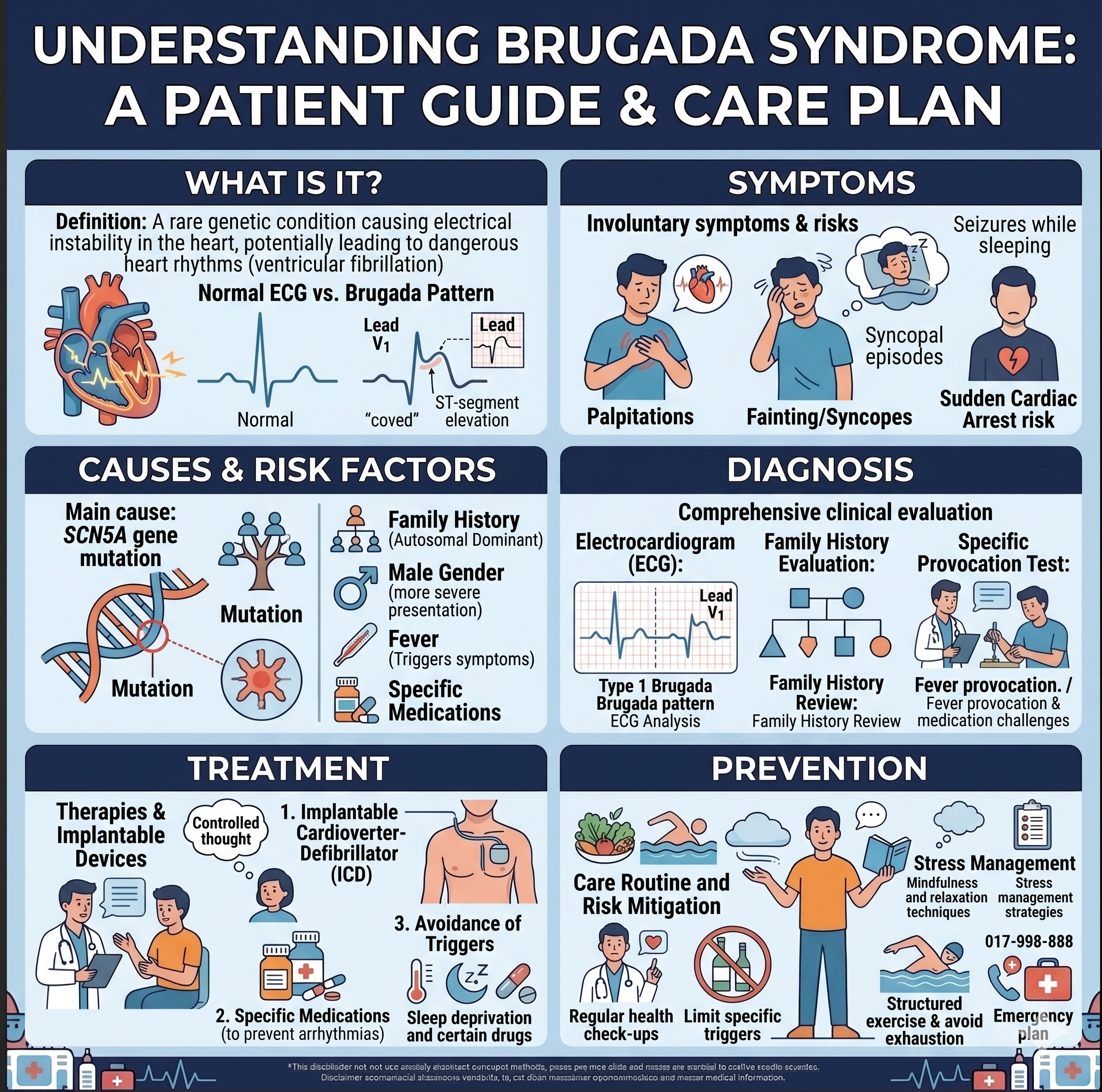
Brugada syndrome (brew-GAH-dah) is an uncommon but serious inherited heart condition affecting the heart's electrical system, leading to potentially dangerous irregular heart rhythms. Individuals with Brugada syndrome face an increased risk of abnormal heartbeats, especially from the heart's lower chambers. Many show no symptoms. Management involves preventive steps like fever reduction and avoiding trigger medications. For some, an implantable cardioverter-defibrillator (ICD) may be necessary to prevent life-threatening rhythm disturbances.
Understanding the Condition
Brugada Syndrome: A Guide to a Rare Heart Rhythm Condition
Understanding the Condition
Brugada syndrome (brew-GAH-dah) is an uncommon but serious inherited heart condition affecting the heart's electrical system, leading to potentially dangerous irregular heart rhythms. Individuals with Brugada syndrome face an increased risk of abnormal heartbeats, especially from the heart's lower chambers. Many show no symptoms. Management involves preventive steps like fever reduction and avoiding trigger medications. For some, an implantable cardioverter-defibrillator (ICD) may be necessary to prevent life-threatening rhythm disturbances.
Common Symptoms
Often Asymptomatic: Many individuals with Brugada syndrome experience no noticeable symptoms and may be unaware of their condition until detected during a medical evaluation.
Before your visit, gather a detailed family medical history, noting any sudden unexplained deaths, fainting spells, or heart rhythm issues. List all current medications (including over-the-counter and supplements) and be prepared to describe any symptoms you've experienced.
Book a doctor visit near me
Regular Medical Follow-ups: Maintain routine appointments with your cardiologist or electrophysiologist to monitor your condition, review symptoms, and ensure treatment effectiveness. ICD wearers require regular device checks.
Consultation Guide
Sudden Fainting (Syncope): Unexpected loss of consciousness, particularly if not clearly linked to other causes, can indicate a serious irregular heart rhythm.
Irregular Heart Rhythms: While often silent, the condition involves abnormal heartbeats, especially from the lower heart chambers, which might be identified during a medical check-up.
Consultation Guide
Which Specialist to Meet
Consult with heart specialists: a Cardiologist (general heart doctor) and an Electrophysiologist (specialist in heart's electrical system). If a genetic link is suspected, a Genetic Counselor provides expertise on inheritance and family risk.
Preparations Before Your Visit
This test examines your DNA to identify specific gene changes (mutations) linked to Brugada syndrome. It helps confirm diagnoses, especially with family history, and assesses risk for relatives. If initial tests are inconclusive but a genetic cause is suspected, genome sequencing (analyzing all DNA) or exome sequencing (focusing on protein-coding DNA) may be performed.
Diagnostic Procedures
Electrocardiogram (ECG or EKG)
An ECG is a quick, painless test measuring the heart's electrical activity. It records electrical signals, revealing patterns characteristic of Brugada syndrome. Sometimes, specific medications are given during an ECG to help uncover these patterns if they aren't visible at rest.
What to Expect
You'll lie down as a technician attaches small, sticky electrodes to your chest, arms, and legs. These connect to a machine that records your heart's electrical signals. The test takes about 5-10 minutes. You'll need to lie still and relax; you won't feel any discomfort.
What to Expect
Typically involves a simple blood draw from your arm or a gentle cheek swab. These procedures are quick with minimal physical risk. For prenatal testing (e.g., amniocentesis), a sample is taken from the womb, carrying a small risk of miscarriage. It's crucial to discuss potential results with your doctor or a genetic counselor beforehand.
Family Screening: If diagnosed, discuss with your doctor whether close family members (parents, siblings, children) should be tested (ECG, genetic testing) to assess their risk.
Emergency Action Plan: Understand cardiac emergency signs and when to seek immediate medical attention, especially for sudden fainting. Inform family about your condition and emergency procedures.
Treatment Options
Fever Management: Promptly treat fevers with appropriate medications to prevent triggering irregular heart rhythms. Avoid medications known to worsen the condition. (Duration: Ongoing, especially during illness.)
Medication Avoidance: Your doctor will provide a list of specific medications (both prescription and over-the-counter) to avoid, as they can provoke dangerous heart rhythms. Always consult healthcare providers before starting new drugs. (Duration: Lifelong vigilance.)
Implantable Cardioverter-Defibrillator (ICD): For high-risk individuals, an ICD is surgically placed under the skin near the collarbone. It constantly monitors heart rhythm and delivers an electrical shock to restore normal rhythm if a dangerous, rapid rhythm is detected. (Duration: Lifelong monitoring and maintenance, including periodic check-ups for function and battery replacement (typically 5-10 years).)
Proactive Fever Management: Monitor body temperature diligently, especially during illness. Use fever-reducing medications as advised to minimize the risk of heart rhythm disturbances.
Awareness of Trigger Medications: Keep an updated list of medications to avoid. Share this with all healthcare providers, including dentists and emergency personnel.
Long-Term Monitoring and Support
Prevention & Long-Term Wellbeing
Lifestyle Adjustments
Prevention
General Lifestyle Considerations: Adopt a healthy lifestyle with a balanced diet, doctor-approved exercise, and moderation of alcohol to support overall heart health.
Tags & Topics
Notice an error or need an update?
Help us keep medical information accurate. Report incorrect info or suggest an edit.


