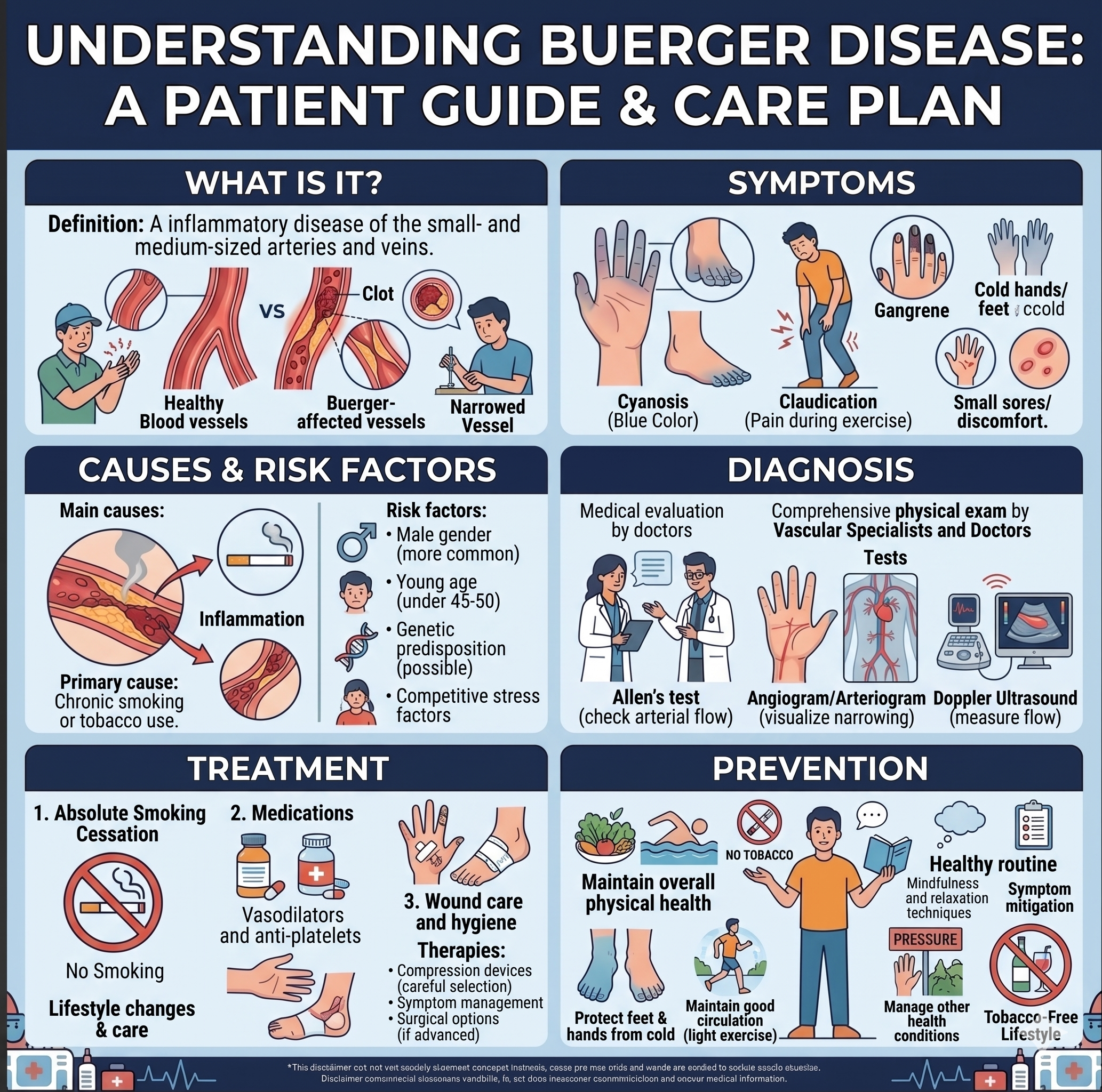
Buerger disease, or thromboangiitis obliterans, is a rare condition where small and medium blood vessels in the arms and legs become inflamed and blocked. This significantly reduces blood flow to the limbs, causing pain, tissue damage, and non-healing sores. Severe cases can lead to gangrene, requiring amputation. It is almost exclusively found in people who use tobacco.
Understanding the Condition
Buerger Disease: Understanding a Rare Blood Vessel Condition Linked to Tobacco Use
Understanding the Condition
Buerger disease, or thromboangiitis obliterans, is a rare condition where small and medium blood vessels in the arms and legs become inflamed and blocked. This significantly reduces blood flow to the limbs, causing pain, tissue damage, and non-healing sores. Severe cases can lead to gangrene, requiring amputation. It is almost exclusively found in people who use tobacco.
Common Symptoms
Tingling and Numbness: A feeling of pins and needles or loss of sensation, typically in fingers or toes.
Skin Color Changes: Skin on hands or feet may appear unusually pale, red, or bluish, varying with natural skin tone.
Raynaud's Phenomenon: Fingers and toes turn stark white, then blue, especially in cold, before potentially flushing red.
Pain with Walking (Claudication): Cramping pain in feet or lower legs during activity, easing with rest. Can become severe, even at rest.
Painful Open Sores: Slow-healing, painful ulcers or sores on fingers and toes due from poor circulation.
Inflamed Veins (Thrombophlebitis): Red, tender, swollen veins just under the skin due to small blood clots.
Consultation Guide
Which Specialist to Meet
Prepare a detailed list of your symptoms, medical history, all medications, and any tobacco use (past and present). Be ready to discuss family medical history and list specific questions for your doctor. Honesty about tobacco use is crucial.
Book a doctor visit near me
Avoid Cold Exposure: Protect hands and feet with warm clothing to prevent blood vessel spasms and Raynaud's symptoms. (Duration: Ongoing)
Pain Relievers: Over-the-counter or prescription medications to manage severe pain from the disease and non-healing sores. (Duration: As needed for symptom relief)
Regular Medical Follow-ups: Consistent doctor visits are crucial to monitor disease progression, manage symptoms, and promptly address any new issues.
Meticulous Hand and Foot Care: Daily inspection, cleaning, moisturizing, and protection from injury and cold are vital. Wear appropriate footwear.
Guided Exercise: Engage in gentle exercise as advised by your doctor to support circulation and overall health.
Consultation Guide
Oral Health Management: Treat gum infections promptly, as good oral hygiene might reduce risk factors.
Avoid Illicit Substances: Refrain from substances like marijuana, which some studies link to similar blood vessel problems.
Diagnostic Procedures
Begin with your primary care doctor, who can refer you to a vascular specialist (surgeon or interventional cardiologist) or a rheumatologist for definitive diagnosis and treatment.
Preparations Before Your Visit
Your doctor will examine your hands and feet for color changes, sores, and assesses pulses in wrists and ankles to gauge blood flow.
What to Expect
The doctor will visually inspect your limbs and manually feel for pulses at various points.
Used to rule out other conditions like autoimmune diseases or clotting disorders, as there's no specific blood test for Buerger disease.
What to Expect
A small blood sample will be drawn, typically from a vein in your arm, using a needle.
Angiogram (Arteriogram)
An X-ray imaging test using a contrast dye injected into blood vessels to visualize blockages or narrowing, revealing characteristic patterns of Buerger disease.
What to Expect
A small tube (catheter) is inserted into an artery (often in the groin), a dye is injected (you may feel a warm sensation), and X-rays are taken.
A non-invasive test using sound waves to image blood vessels and measure blood flow, identifying areas of reduced circulation.
What to Expect
Gel is applied to the skin over the affected area, and a handheld device is moved across your skin, showing blood flow on a screen.
Treatment Options
Medications
Vasodilators: Medications to widen blood vessels and improve circulation, though effectiveness varies. (Duration: Ongoing, as prescribed)
Anti-clotting Medications: Used to prevent blood clot formation, particularly if there's a risk, but don't address primary inflammation. (Duration: Ongoing, as prescribed)
Procedures and Therapies
Sympathectomy: Surgical cutting of nerves to the affected area to reduce vessel constriction, aiming to improve blood flow and lessen pain. (Duration: Single procedure, with potential long-term benefits)
Surgical Procedures
Amputation: Required for severe gangrene (tissue death) that's untreatable, to prevent infection spread. (Duration: Single procedure)
Prevention & Long-Term Wellbeing
Lifestyle and Home Management
Complete Tobacco Cessation: Absolutely essential: quitting all forms of tobacco stops disease progression. (Duration: Lifelong)
Diligent Wound Care: Careful management of any open sores to prevent infection and promote healing. (Duration: Ongoing, as needed)
Prevention
No Tobacco Use: Never starting any tobacco product is the best prevention. For current users, complete cessation is the only way to halt Buerger disease.
Utilize Quitting Resources: Seek help from doctors, counseling, support groups, or nicotine replacement therapy to successfully quit tobacco.
Long-Term Monitoring and Management
Tags & Topics
Notice an error or need an update?
Help us keep medical information accurate. Report incorrect info or suggest an edit.


