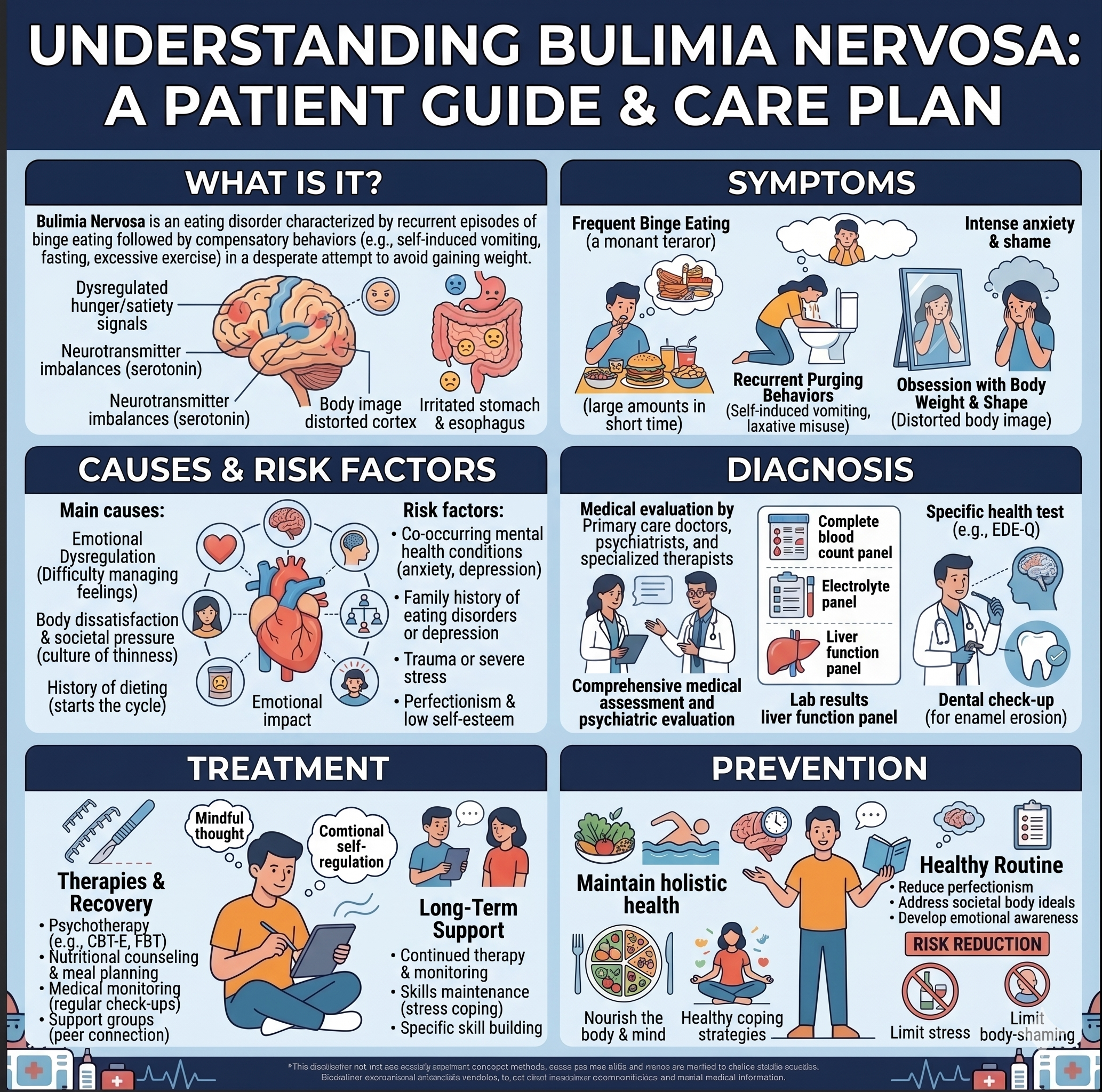
Bulimia nervosa, often simply called bulimia, is a severe eating disorder that can be life-threatening. It involves repeated episodes of binge eating—consuming unusually large amounts of food in a short period, often feeling a loss of control—followed by unhealthy behaviors to prevent weight gain, known as purging. These purging methods can include self-induced vomiting, excessive exercise, or misuse of laxatives or diuretics. Individuals with bulimia often have an intense focus on their body shape and weight, experiencing significant guilt and shame. It's a complex illness influenced by various factors, not a choice, and effective treatment is crucial for recovery.
Understanding the Condition
Bulimia Nervosa: A Comprehensive Guide for Non-Medical Readers
Understanding the Condition
Common Symptoms
Fear of Weight Gain: Persistent worry about gaining weight and engaging in unhealthy weight control methods.
Binge Eating: Regularly consuming unusually large quantities of food in one sitting.
Loss of Control While Eating: Feeling unable to stop eating or control the amount consumed during a binge.
Purging Behaviors: Deliberately vomiting, exercising excessively, or misusing laxatives or enemas after binge eating to prevent weight gain.
Consultation Guide
Psychotherapy (Talk Therapy): A broader term for various therapeutic approaches where you talk with a mental health professional to explore and resolve emotional and behavioral issues. This can help address underlying causes and co-occurring conditions. (Duration: Can range from short-term (a few weeks) to long-term (a year or more), depending on the complexity of the issues.)
Diagnostic Procedures
This is a test that examines a sample of your urine. It helps detect and manage a range of conditions, including infections, kidney disease, and diabetes, by checking the urine's appearance, concentration, and content.
What to Expect
You will be asked to provide a urine sample, usually in a sterile cup. For accuracy, you might be given instructions for a 'clean-catch' method, which involves cleaning the genital area before collecting midstream urine. The sample is then sent to a lab for analysis. The process is quick and non-invasive.
Electrocardiogram (ECG or EKG)
An ECG is a quick and painless test that records the electrical activity of your heart. It helps assess heart rhythm, rate, and overall function, which can be important for identifying complications related to bulimia.
What to Expect
You will lie down on an examination table. Several sticky patches, called electrodes, will be placed on your chest, and sometimes on your arms and legs. Wires connect these electrodes to an ECG machine, which records your heart's electrical signals. You'll need to stay still and might be asked to breathe normally. The test typically takes only a few minutes.
An X-ray is a common imaging test that uses a small amount of radiation to create pictures of the inside of your body, particularly bones. It can help assess bone density or identify physical complications that may arise from bulimia, such as bone weakness or gastrointestinal issues.
What to Expect
You will be positioned on an examination table or asked to stand in front of an X-ray machine. A technician will help you get into the correct position. You may need to remove jewelry or certain clothing items. You'll be asked to remain very still, and sometimes to hold your breath for a few seconds, while the X-ray image is taken. The procedure is painless and usually very quick.
Various blood tests may be performed to check electrolyte levels (like potassium, sodium, chloride), kidney function, liver function, and general nutritional status, all of which can be affected by bulimia.
What to Expect
A healthcare professional will draw a small sample of blood, usually from a vein in your arm, using a needle. You might feel a brief sting or pinch. The blood is collected into a tube and sent to a laboratory for analysis. The entire process of drawing blood typically takes only a few minutes.
Treatment Options
Bulimia nervosa, often simply called bulimia, is a severe eating disorder that can be life-threatening. It involves repeated episodes of binge eating—consuming unusually large amounts of food in a short period, often feeling a loss of control—followed by unhealthy behaviors to prevent weight gain, known as purging. These purging methods can include self-induced vomiting, excessive exercise, or misuse of laxatives or diuretics. Individuals with bulimia often have an intense focus on their body shape and weight, experiencing significant guilt and shame. It's a complex illness influenced by various factors, not a choice, and effective treatment is crucial for recovery.
Misuse of Medications: Taking 'water pills' (diuretics) or laxatives when not medically needed.
Restrictive Eating Patterns: Fasting, severely limiting calories, or avoiding certain foods between binge episodes.
Before your visit, consider noting down your eating patterns, emotional triggers, and any questions you have. Be ready to discuss your medical history, including any current medications, and any mental health concerns.
Book a doctor visit near me
Therapies
Cognitive Behavioral Therapy (CBT): Focuses on identifying and changing unhealthy thinking patterns and behaviors related to food, body image, and self-esteem. (Duration: Often involves 15-20 sessions over several months, but can vary based on individual needs.)
Family-Based Therapy (FBT): Involves family members in the treatment process, particularly beneficial for adolescents, helping the family support healthy eating and behaviors. (Duration: Typically 6-12 months, with declining frequency of sessions.)
Medications
Antidepressants: Certain types of antidepressant medications may be prescribed to help reduce binge-eating and purging behaviors and treat co-occurring depression or anxiety. (Duration: Often long-term, requiring consistent use under medical supervision.)
Nutritional Counseling
Address Co-occurring Conditions: Actively manage mental health issues like depression or anxiety through continued therapy or medication as advised by professionals.
Prevention & Long-Term Wellbeing
Harmful Product Use: Using dietary supplements or herbal products for weight loss, which can be dangerous.
Body Image Dissatisfaction: Extreme unhappiness with one's body shape and weight.
Self-Worth Tied to Appearance: Allowing body shape and weight to determine feelings of self-esteem and value.
Mood Swings: Experiencing significant and frequent changes in mood.
- Consultation Guide
Which Specialist to Meet
A comprehensive care team for bulimia nervosa often includes a general practitioner (primary care physician), a mental health professional (such as a psychiatrist or psychologist), and a registered dietitian.
Preparations Before Your Visit
Dietitian Support: Working with a registered dietitian to establish regular, balanced eating patterns, understand proper nutrition, and address misconceptions about food and weight. (Duration: Ongoing initial sessions (weeks to months), followed by periodic check-ins for long-term support.)
Medical Stabilization
Inpatient or Outpatient Care: For severe cases involving serious medical complications (e.g., electrolyte imbalances, heart problems) or significant risk, a period of more intensive medical supervision or hospitalization may be necessary. (Duration: Varies greatly depending on the severity of complications, from a few days to several weeks.)
Prevention and Long-Term Strategies
Promote Positive Body Image: Encourage individuals, especially children and adolescents, to value themselves for their qualities and achievements rather than solely their physical appearance.
Foster Healthy Eating Habits: Encourage regular, enjoyable family meals without focusing on specific foods as 'good' or 'bad'.
Avoid Weight-Focused Talk: Refrain from discussing weight or body shape in a critical way at home or within social circles.
Discourage Dieting: Actively discourage restrictive dieting, especially those involving unhealthy weight control behaviors like fasting, diet pills, or laxative misuse.
Seek Early Professional Help: Consult a healthcare provider if you notice early signs of an eating problem in yourself or a loved one.
Maintain Support Systems: Stay connected with therapists, dietitians, and support groups to manage challenges and prevent relapse.
Prioritize Self-Care: Engage in stress-reducing activities, ensure adequate sleep, and maintain a balanced lifestyle to support overall mental and physical health.
Tags & Topics
Notice an error or need an update?
Help us keep medical information accurate. Report incorrect info or suggest an edit.


