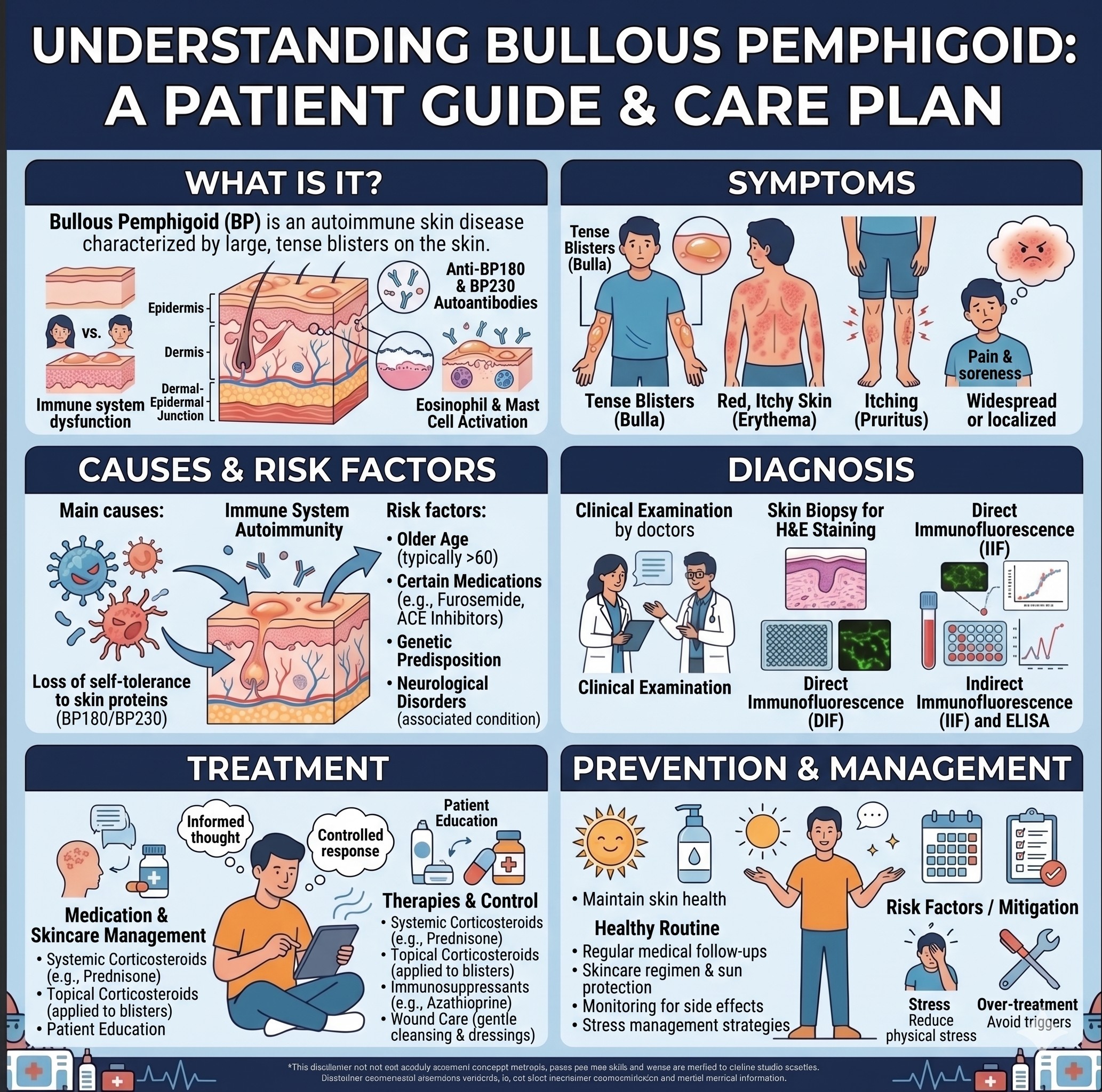
Bullous pemphigoid (BUL-us PEM-fih-goid) is a rare skin condition characterized by the formation of large, fluid-filled blisters. These often appear on areas of skin that naturally crease, such as the upper thighs and armpits. Occasionally, a rash may develop instead of blisters. The affected skin areas are typically very itchy and can be painful. In rare instances, small blisters or sores may also form inside the mouth. This condition occurs when the body's immune system mistakenly attacks a specific layer of its own skin tissue. The exact reason for this immune system response is not fully understood, but in some individuals, it can be triggered by certain types of medications or other medical factors. Bullous pemphigoid is not an infection and cannot be spread from person to person. It is most common in individuals over 60 years of age. While it can sometimes resolve on its own over several months or even years, treatment is usually effective in healing existing blisters and preventing new ones from forming. Blisters typically heal without leaving permanent scars, though temporary changes in skin color may occur.
Understanding the Condition
Bullous Pemphigoid: A Blistering Skin Condition
Understanding the Condition
Common Symptoms
Intense Itching: This can begin weeks or even months before any visible blisters appear on the skin.
Large, Firm Blisters: These fluid-filled blisters are typically large and do not break easily. They commonly form along skin folds. On brown and Black skin, the blisters may appear dark pink, brown, or black, while on white skin, they might be yellow, pink, or red.
Mouth Sores: Less commonly, small blisters or sores can develop inside the mouth or on other moist linings (mucous membranes). This specific symptom points to a rarer form of the condition.
Consultation Guide
Which Specialist to Meet
You should first consult with a general practitioner for an initial assessment. They may then refer you to a dermatologist, a doctor specializing in skin conditions. If blisters affect your eyes, an ophthalmologist (eye specialist) may also need to be consulted.
Preparations Before Your Visit
Before your appointment, it can be helpful to: Make a list of all your symptoms, including when they started and how they've changed. Note down any medications you are currently taking, including over-the-counter drugs, supplements, and herbal remedies. List any other medical conditions you have. Write down key personal information, including recent stresses or major life changes. Prepare a list of questions to ask your doctor.
Book a doctor visit near me
This is a procedure where a small sample of cells or skin is removed from your body and sent to a lab for examination. It is often used to diagnose or rule out specific skin conditions, including bullous pemphigoid. The type of skin biopsy performed depends on your symptoms and the location of the procedure.
Diagnostic Procedures
What to Expect
What to Expect
Treatment Options
Bullous pemphigoid (BUL-us PEM-fih-goid) is a rare skin condition characterized by the formation of large, fluid-filled blisters. These often appear on areas of skin that naturally crease, such as the upper thighs and armpits. Occasionally, a rash may develop instead of blisters. The affected skin areas are typically very itchy and can be painful. In rare instances, small blisters or sores may also form inside the mouth. This condition occurs when the body's immune system mistakenly attacks a specific layer of its own skin tissue. The exact reason for this immune system response is not fully understood, but in some individuals, it can be triggered by certain types of medications or other medical factors. Bullous pemphigoid is not an infection and cannot be spread from person to person. It is most common in individuals over 60 years of age. While it can sometimes resolve on its own over several months or even years, treatment is usually effective in healing existing blisters and preventing new ones from forming. Blisters typically heal without leaving permanent scars, though temporary changes in skin color may occur.
Medications
Inflammation-Reducing and Immune-Suppressing Medicines: The primary goal is to reduce inflammation, suppress the overactive immune system, and control blistering. This often involves oral medications that work throughout the body and sometimes topical creams or ointments applied directly to the skin. These treatments help to heal existing blisters and prevent new ones from forming. (Duration: Treatment typically starts with higher doses and is gradually reduced over several months once the condition is controlled. Many individuals require ongoing, lower-dose treatment for months or even years to prevent flare-ups, as the condition can be persistent or recur.)
Specialized Therapies: In some cases, light therapy or other specialized treatments may be considered, particularly if the condition is persistent or other treatments are not fully effective. These therapies aim to modulate the immune response in the skin. (Duration: Varies depending on the specific therapy and individual response, often conducted over several weeks or months.)
Medication Adherence and Management: Follow your doctor's instructions carefully regarding all prescribed medications. Do not stop or alter doses without medical advice, as this can lead to disease flare-ups. Discuss any potential side effects of your medications with your doctor so they can be managed effectively.
Regular Follow-ups: Maintain regular appointments with your dermatologist to monitor the condition's activity, adjust treatment as needed, and screen for any complications or medication side effects.
Recognize and Avoid Triggers: Work with your doctor to identify and, if possible, avoid any specific triggers for your condition, such as certain medications or environmental factors.
Sun Protection: Protect your skin from excessive sun exposure by wearing protective clothing and using broad-spectrum sunscreen, especially if your medications increase sun sensitivity.
Emotional Support: Living with a chronic skin condition can be challenging. Seek support from family, friends, or support groups, and communicate any emotional distress to your healthcare team.
Prevention & Long-Term Wellbeing
Wound Care and Infection Prevention: Proper care of blisters and open sores is crucial to prevent secondary infections. This involves gentle cleaning, applying protective dressings, and using topical antiseptic or antibiotic creams if recommended by a healthcare professional. (Duration: Ongoing as needed, whenever new blisters form or existing ones break.)
Prevention and Long-Term Monitoring
Gentle Skin Care and Protection: Bathe with mild, fragrance-free cleansers and lukewarm water. Avoid harsh scrubbing or abrasive materials that can irritate the skin and rupture blisters. Pat skin dry gently. Keep skin well-hydrated with emollients to maintain its barrier function. Protect your skin from injury, friction, or pressure that could trigger new blisters or worsen existing ones.
Infection Monitoring: Regularly inspect your skin for any signs of infection, such as increased redness, warmth, swelling, pus, or fever, especially around broken blisters. Report any concerns to your doctor promptly.
Tags & Topics
Notice an error or need an update?
Help us keep medical information accurate. Report incorrect info or suggest an edit.


