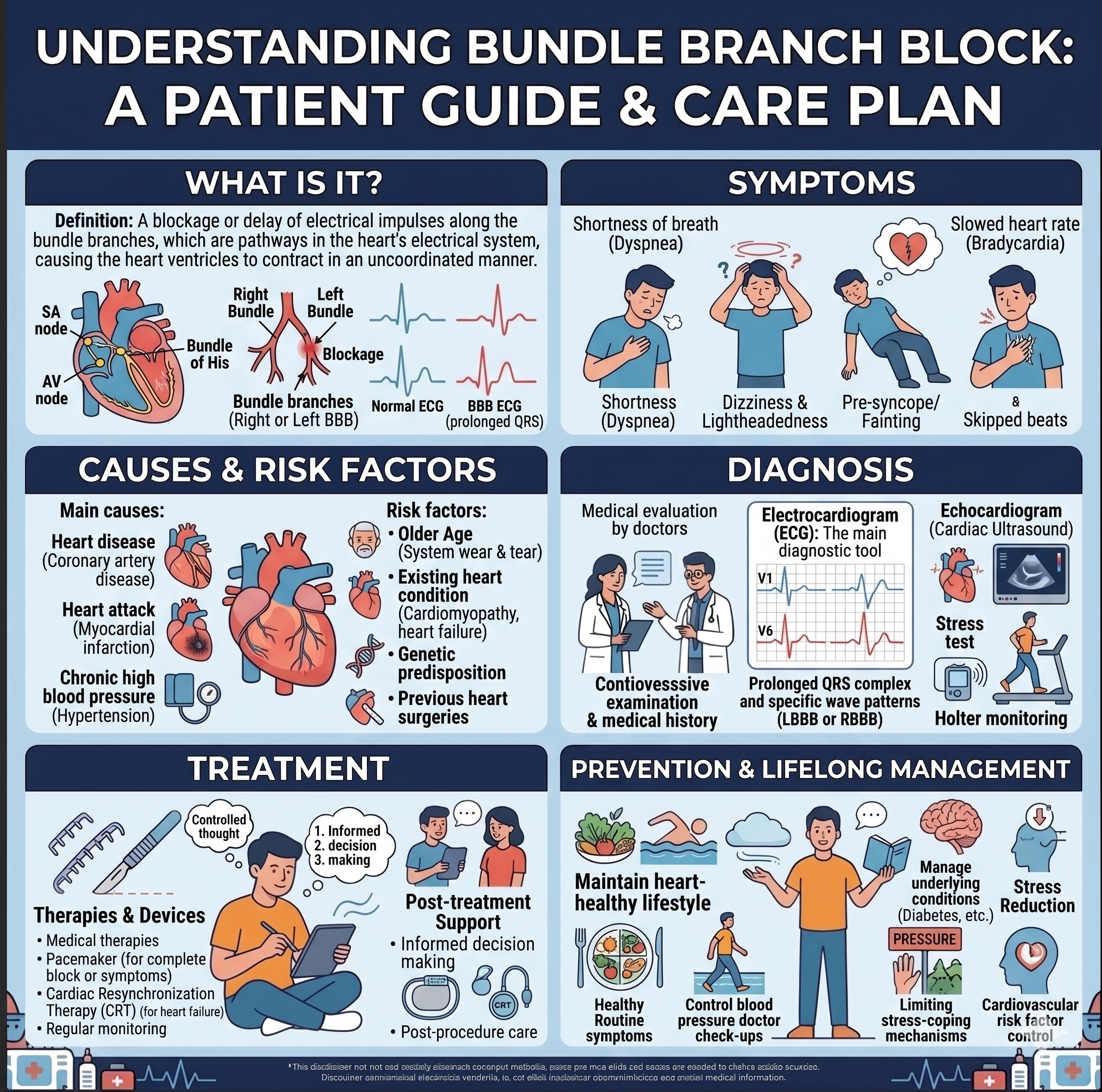
Bundle branch block is a condition where there's a delay or blockage in the electrical signals that tell your heart when to beat. These signals travel along specific pathways to make the heart pump blood effectively. When a block occurs, it can be on the left or right side of your heart's lower pumping chambers (ventricles). While often harmless and requiring no treatment, it can sometimes make it harder for the heart to pump blood. When treatment is needed, it usually involves addressing any underlying health conditions that caused the block.
Understanding the Condition
Bundle Branch Block: Understanding Your Heart's Electrical System
Understanding the Condition
Common Symptoms
No Symptoms: Most people with bundle branch block do not experience any symptoms and may not even know they have the condition.
Fainting or Lightheadedness: In rare cases, individuals may experience fainting spells (syncope) or a feeling of being about to faint (presyncope), especially if the condition is severe or combined with other heart issues.
Consultation Guide
Which Specialist to Meet
You should initially consult your primary care physician. They can refer you to a cardiologist, a doctor who specializes in heart conditions, for further evaluation and management.
Preparations Before Your Visit
Before your visit, make sure to: - Write down any symptoms you're experiencing, even if they seem unrelated to your heart. - List all medications, vitamins, and supplements you currently take, including dosages. - Bring a list of your key medical history, including any previous diagnoses or family history of heart disease. - Prepare a list of questions you want to ask your doctor. - If you have experienced fainting or lightheadedness, be prepared to describe the circumstances in detail.
Book a doctor visit near me
Be Aware of Symptoms: Pay attention to any new or worsening symptoms, particularly episodes of fainting or feeling lightheaded. Report these to your doctor promptly, as they could indicate a change in your heart condition.
Consultation Guide
Bundle branch block is a condition where there's a delay or blockage in the electrical signals that tell your heart when to beat. These signals travel along specific pathways to make the heart pump blood effectively. When a block occurs, it can be on the left or right side of your heart's lower pumping chambers (ventricles). While often harmless and requiring no treatment, it can sometimes make it harder for the heart to pump blood. When treatment is needed, it usually involves addressing any underlying health conditions that caused the block.
An echocardiogram uses sound waves to create moving pictures of your heart. This test allows doctors to see your heart's structure, how well it's pumping blood, and how blood flows through its chambers and valves. It's a common and important test for diagnosing various heart conditions that might be related to or caused by bundle branch block.
Diagnostic Procedures
Electrocardiogram (ECG or EKG)
An ECG is a quick, non-invasive test that records the electrical activity of your heart. It helps your doctor check your heart's rhythm and rate, and can reveal issues like irregular heartbeats or signs of past heart damage, which are crucial for diagnosing bundle branch block.
What to Expect
Small sticky patches called electrodes will be placed on your chest, and sometimes on your arms and legs. Wires connect these patches to an ECG machine, which records your heart's electrical signals. The test is painless, takes only a few minutes, and requires you to lie still while the readings are taken.
What to Expect
You'll lie on an examination table. A special gel will be applied to your chest, and a handheld device called a transducer will be moved across your skin. The transducer sends out sound waves that bounce off your heart, creating images on a monitor. The test is generally painless, though you might feel slight pressure. You may be asked to hold your breath or change positions briefly to get the best images.
Regular Medical Follow-ups: If you have a diagnosis of bundle branch block or an underlying heart condition, consistent check-ups with your cardiologist are important to monitor your heart's electrical activity and overall health, ensuring any changes are caught early.
Treatment Options
Medications for Underlying Conditions: Your doctor may prescribe medications to manage conditions like high blood pressure, high cholesterol, or diabetes, which are often associated with bundle branch block. Treating these underlying issues can alleviate strain on the heart. (Duration: As directed by your doctor, typically ongoing.)
Surgical Procedures
Pacemaker Implantation: If the heart beats dangerously slow due to severe blockages in both electrical bundles, a small battery-powered device called a pacemaker may be surgically placed under the skin near the collarbone. It sends electrical pulses to regulate the heartbeat. (Duration: A permanent device, requiring periodic check-ups and battery replacement typically every 5-10 years, depending on usage and battery life.)
Prevention & Long-Term Wellbeing
Lifestyle and Home Management
Heart-Healthy Lifestyle: Adopting a balanced diet (rich in fruits, vegetables, whole grains), engaging in regular physical activity, maintaining a healthy weight, and avoiding smoking can significantly improve overall heart health and manage conditions that may contribute to bundle branch block. (Duration: Ongoing)
Prevention
Maintain a Healthy Lifestyle: Prioritize a diet rich in fruits, vegetables, and whole grains. Engage in regular physical activity (e.g., brisk walking for 30 minutes most days). Maintain a healthy weight and avoid smoking to reduce your risk of developing heart disease that can lead to bundle branch block.
Manage Chronic Health Conditions: Work closely with your healthcare provider to effectively manage conditions like high blood pressure, diabetes, and high cholesterol. Consistent management can prevent further heart complications and reduce the risk of worsening bundle branch block.
Long-Term Monitoring
Tags & Topics
Notice an error or need an update?
Help us keep medical information accurate. Report incorrect info or suggest an edit.


