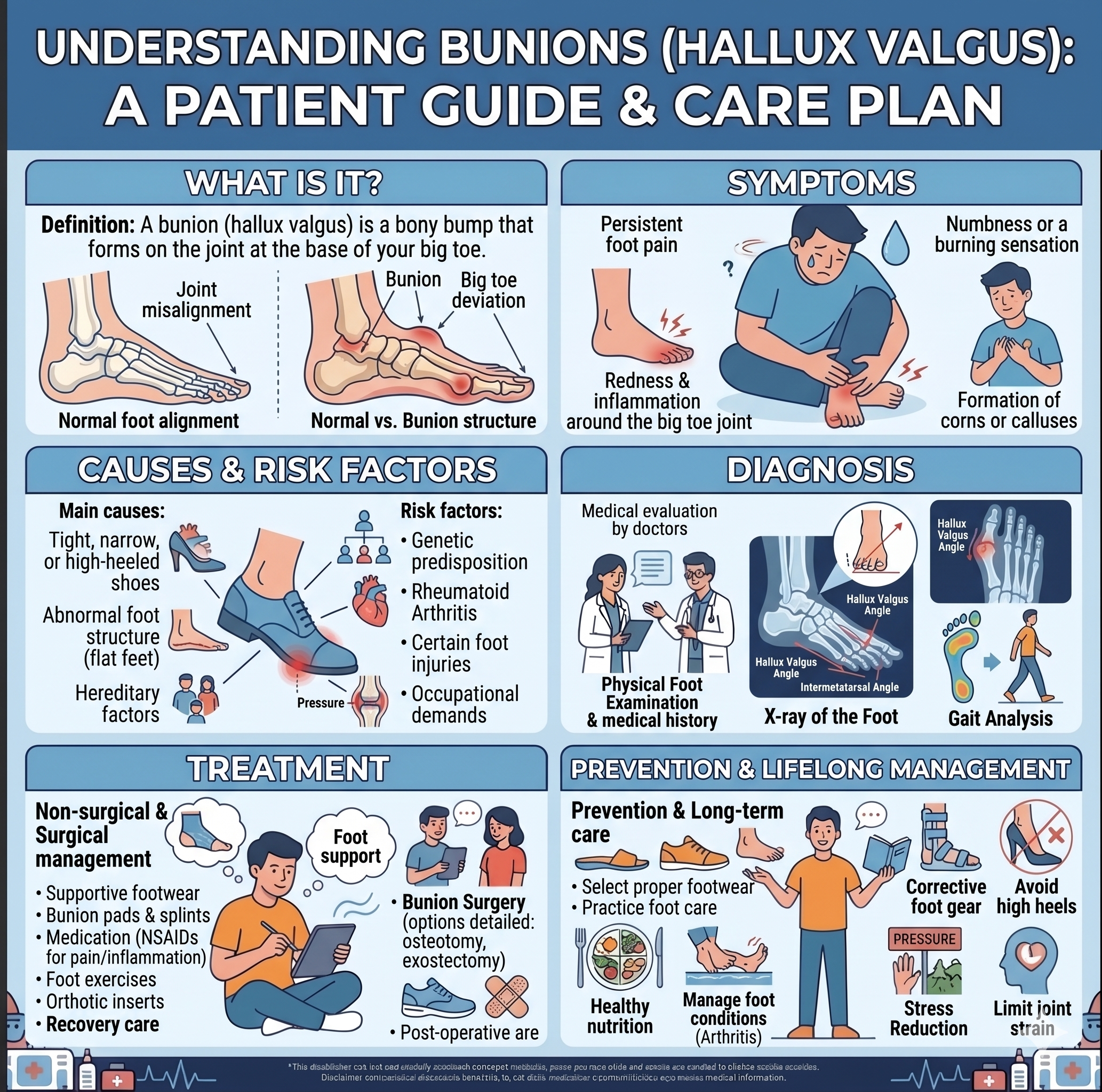
A bunion is a common foot condition characterized by a bony bump that forms on the joint at the base of the big toe. This happens when certain bones in the front part of the foot shift out of their normal position, pulling the big toe inward towards the smaller toes. This forces the big toe's base joint to protrude outwards, creating the bump. The overlying skin can become red, swollen, and painful. While the exact cause isn't fully understood, factors like inherited foot structure, injuries, foot deformities (e.g., flat feet), and inflammatory arthritis contribute. Tight, narrow, or high-heeled shoes can also cause or worsen bunions. Smaller bunions on the little toe joint are called bunionettes.
Understanding the Condition
Bunions: Understanding and Managing Bony Bumps on Your Foot
Understanding the Condition
Common Symptoms
Pain or Soreness: Discomfort in the big toe joint, especially with movement or shoe pressure.
Redness, Swelling, Calluses: Inflammation, warmth, and thickened skin over the bunion or where toes rub.
Limited Toe Movement: Stiffness or difficulty bending and straightening the big toe.
Skin Irritation: Blisters or corns from friction between toes or against footwear.
Numbness or Burning: Possible nerve compression causing tingling or a burning sensation.
Changes in Foot Shape: The big toe increasingly angles toward other toes, sometimes overlapping.
Consultation Guide
Which Specialist to Meet
If you experience persistent big toe pain, a visible bump, reduced toe movement, or difficulty finding comfortable shoes, consult a healthcare professional. You may be referred to a foot specialist like a podiatrist (foot doctor) or an orthopedic foot and ankle specialist (bone, joint, and muscle surgeon for the foot).
Preparations Before Your Visit
Before your visit, list your symptoms, medical history, current medications, and any questions. Be prepared to discuss your usual footwear and consider bringing a pair of typical shoes.
Book a doctor visit near me
Ice Application: Apply ice packs for 15-20 minutes several times daily to reduce pain and swelling, especially after activity. (Duration: As needed for symptom relief.)
Physical Therapy and Exercises: Exercises improve foot and toe muscle strength and flexibility, potentially alleviating symptoms. (Duration: Weeks to months of guided therapy, followed by ongoing home exercises.)
Maintain Healthy Weight: Reducing excess weight lessens stress on feet, alleviating symptoms and preventing progression.
Manage Underlying Conditions: Control conditions like flat feet or arthritis with your doctor, as they influence bunion development.
Foot Strengthening Exercises: Perform simple exercises (e.g., toe curls) to strengthen foot muscles and improve flexibility.
Consider Orthotics: Custom orthotics maintain proper foot alignment, reducing pressure contributing to bunion formation.
Professional Advice for Foot Deformities: If predisposed to bunions due to inherited foot structure, consult a podiatrist for preventive strategies.
Consultation Guide
A bunion is a common foot condition characterized by a bony bump that forms on the joint at the base of the big toe. This happens when certain bones in the front part of the foot shift out of their normal position, pulling the big toe inward towards the smaller toes. This forces the big toe's base joint to protrude outwards, creating the bump. The overlying skin can become red, swollen, and painful. While the exact cause isn't fully understood, factors like inherited foot structure, injuries, foot deformities (e.g., flat feet), and inflammatory arthritis contribute. Tight, narrow, or high-heeled shoes can also cause or worsen bunions. Smaller bunions on the little toe joint are called bunionettes.
Diagnostic Procedures
An X-ray is a quick, painless imaging test using a small amount of radiation to visualize bone structures. For bunions, it clearly shows the alignment of foot bones, the bunion's severity, and any joint damage or arthritis. This information is vital for precise diagnosis and treatment planning.
What to Expect
You'll remove metal objects and be positioned on a table. The technician will capture images of your foot from different angles. You'll need to hold still briefly for each image. The procedure is very short, usually a few minutes, and you won't feel anything. Your doctor will review the images.
Treatment Options
Medications
Oral Pain Relievers and Anti-inflammatories: Over-the-counter or prescription medications to manage pain and reduce inflammation. (Duration: As needed for pain relief; short courses for inflammation.)
Corticosteroid Injections: Injections into the joint reduce inflammation and pain with a corticosteroid and local anesthetic. Limited shots per year due to potential side effects. (Duration: Temporary relief (weeks to months).)
Orthotic Devices and Physical Therapy
Custom Orthotics or Arch Supports: Custom shoe inserts help distribute pressure, support the foot, and stabilize alignment to slow bunion progression. (Duration: Long-term, often daily use.)
Bunionectomy (Bunion Surgery): Considered when non-surgical options fail. Various surgical techniques realign bones, ligaments, and tendons, and remove the bony bump to correct the deformity and reduce pain. The specific procedure depends on bunion severity. (Duration: Recovery typically involves several weeks of limited weight bearing, followed by months of rehabilitation. Full recovery can take up to a year.)
Prevention & Long-Term Wellbeing
Home Remedies & Lifestyle Adjustments
Proper Footwear: Wear wide, comfortable shoes with a low heel and soft sole, allowing ample toe room. Avoid narrow or high-heeled shoes. (Duration: Ongoing for long-term comfort.)
Bunion Pads and Taping: Use protective pads to cushion the bunion. Taping can help support the big toe's natural position. (Duration: As needed for comfort.)
Prevention and Long-Term Care
Choose Proper Footwear: Select shoes with ample toe room and low heels (under 2 inches); avoid narrow, pointed styles to prevent bunion development or worsening.
Regular Foot Inspections: Routinely check feet for redness, swelling, or alignment changes. Early detection aids management.
Tags & Topics
Notice an error or need an update?
Help us keep medical information accurate. Report incorrect info or suggest an edit.


