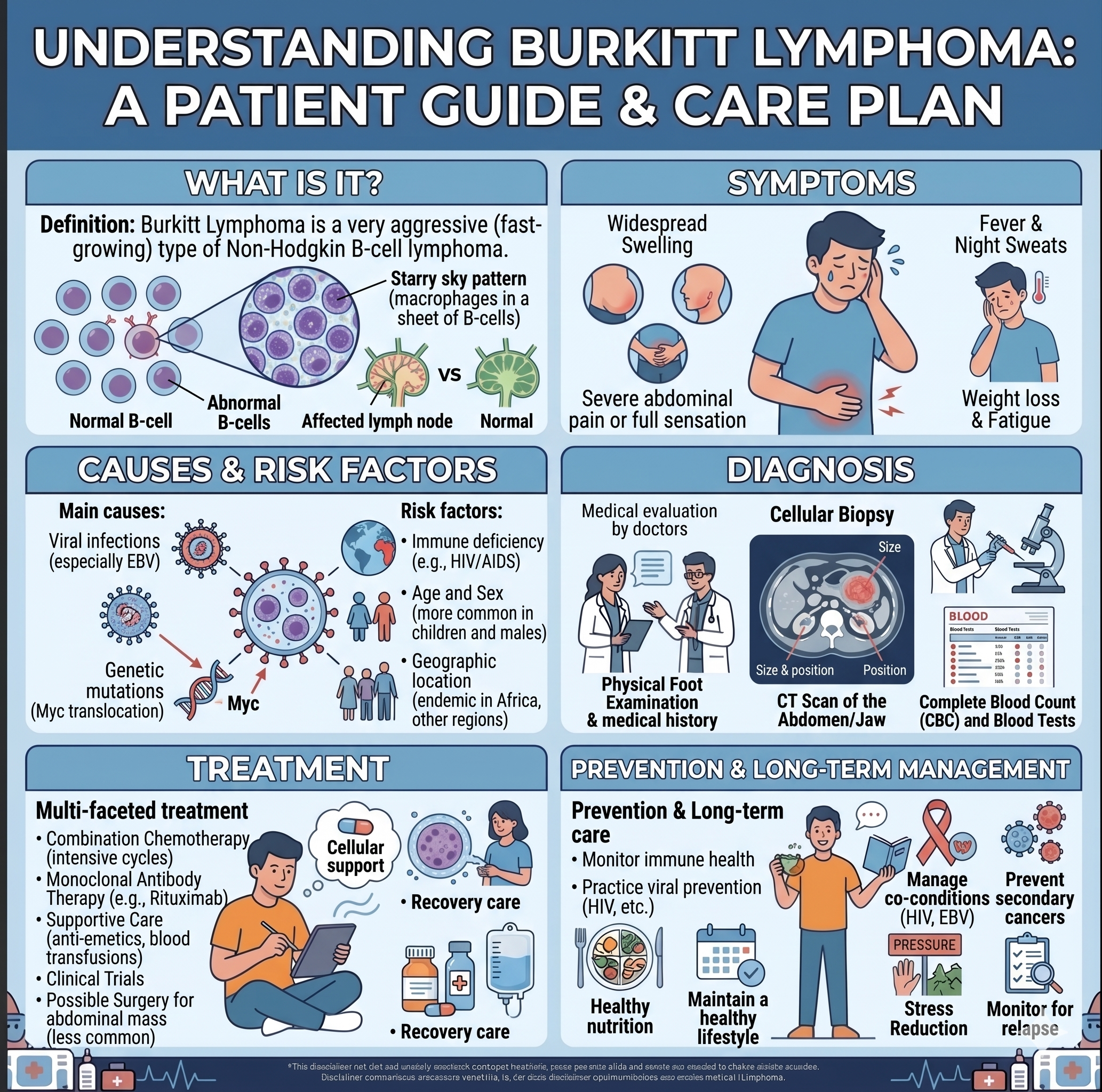
Burkitt lymphoma is a fast-growing cancer that affects a key part of your immune system called the lymphatic system. This system includes organs, glands, vessels, and cell clusters (lymph nodes) that help your body fight germs. Burkitt lymphoma specifically starts in infection-fighting white blood cells called B cells. In this condition, changes occur within these B cells, turning them cancerous. These cancer cells can grow quickly in various parts of the body, including lymph nodes, the jaw or facial bones, intestines, bone marrow, and the brain and spinal cord (central nervous system).There are different types of lymphoma, broadly categorized into Hodgkin lymphoma and non-Hodgkin lymphoma. Burkitt lymphoma is a type of non-Hodgkin lymphoma. It is considered an aggressive cancer, meaning it grows rapidly, but it often responds well to treatment and can be cured, especially when diagnosed and treated early. Treatment typically involves a combination of powerful medications, and sometimes other therapies are used.There are three main types of Burkitt lymphoma:* **Endemic:** Most common in parts of Africa, New Guinea, and South America, primarily affecting children, especially boys. It's strongly linked to the Epstein-Barr virus (EBV), a common virus, and often causes tumors in the jaw, face, or eye area, but can also affect other organs.* **Sporadic:** More common in the United States and parts of Europe, also primarily affecting children, especially boys. This type typically involves the abdomen, especially where the small and large intestines meet, but can also affect lymph nodes, the central nervous system, and other organs. While some cases are associated with past EBV infection, most are not directly linked.* **Immunodeficiency-associated:** This type occurs in individuals with weakened immune systems, such as those with HIV or people taking medications to suppress their immune system after an organ transplant. It commonly affects lymph nodes but can also spread to the bone marrow and central nervous system.When Burkitt lymphoma cells are found in the blood and bone marrow, it may sometimes be referred to as "Burkitt leukemia."
Understanding the Condition
Burkitt Lymphoma: A Guide for Non-Medical Persons
Understanding the Condition
Common Symptoms
General Symptoms: These symptoms can appear anywhere in the body due to fast-growing tumors:* A rapidly growing lump or swelling in lymph nodes (often painless in the neck, armpit, or groin) or other areas like the jaw.* Drenching night sweats.* Unexplained weight loss.* Feeling full very quickly after eating only a small amount.
Abdominal Symptoms (when affecting the bowel area): If the cancer develops in the area where the small and large intestines meet (known as the ileocecal region), symptoms may include:* A fast-growing lump or swelling in the belly.* Belly pain or a feeling of fullness.* Loss of appetite.* Unexplained weight loss.
Consultation Guide
Which Specialist to Meet
If you experience symptoms that concern you, start by consulting your primary care doctor. They may refer you to a specialist such as a hematologist-oncologist (a doctor who specializes in blood disorders and cancer).
Preparations Before Your Visit
Before your visit, consider writing down:* All your symptoms, including when they started and how they've changed.* Key personal information, including any major stresses or recent life changes.* All medications, vitamins, or supplements you take.* Questions you want to ask your doctor.Be prepared to discuss your medical history, including any family history of cancer.
Book a doctor visit near me
A doctor will assess your mental status, coordination, reflexes, balance, muscle strength, and sensation. This might involve simple tasks like walking, touching your nose, answering questions, or having your reflexes checked with a small hammer. The exam is non-invasive and generally quick, taking from a few minutes to an hour or more, depending on your symptoms.
Consultation Guide
Burkitt lymphoma is a fast-growing cancer that affects a key part of your immune system called the lymphatic system. This system includes organs, glands, vessels, and cell clusters (lymph nodes) that help your body fight germs. Burkitt lymphoma specifically starts in infection-fighting white blood cells called B cells. In this condition, changes occur within these B cells, turning them cancerous. These cancer cells can grow quickly in various parts of the body, including lymph nodes, the jaw or facial bones, intestines, bone marrow, and the brain and spinal cord (central nervous system).There are different types of lymphoma, broadly categorized into Hodgkin lymphoma and non-Hodgkin lymphoma. Burkitt lymphoma is a type of non-Hodgkin lymphoma. It is considered an aggressive cancer, meaning it grows rapidly, but it often responds well to treatment and can be cured, especially when diagnosed and treated early. Treatment typically involves a combination of powerful medications, and sometimes other therapies are used.There are three main types of Burkitt lymphoma:* **Endemic:** Most common in parts of Africa, New Guinea, and South America, primarily affecting children, especially boys. It's strongly linked to the Epstein-Barr virus (EBV), a common virus, and often causes tumors in the jaw, face, or eye area, but can also affect other organs.* **Sporadic:** More common in the United States and parts of Europe, also primarily affecting children, especially boys. This type typically involves the abdomen, especially where the small and large intestines meet, but can also affect lymph nodes, the central nervous system, and other organs. While some cases are associated with past EBV infection, most are not directly linked.* **Immunodeficiency-associated:** This type occurs in individuals with weakened immune systems, such as those with HIV or people taking medications to suppress their immune system after an organ transplant. It commonly affects lymph nodes but can also spread to the bone marrow and central nervous system.When Burkitt lymphoma cells are found in the blood and bone marrow, it may sometimes be referred to as "Burkitt leukemia."
A healthcare professional will draw blood from a vein, usually in your arm. This is a quick procedure, similar to any routine blood test, and may cause a brief pinch or discomfort.
Bone Marrow Biopsy and Aspiration
You will typically lie on your side or stomach. The doctor will numb an area on the back of your hip bone (pelvis) with a local anesthetic. You might feel a sting from the numbing medicine. A thin needle is then inserted into the bone to first withdraw liquid marrow (aspiration), which may cause a brief, sharp pain or pulling sensation. Then, a slightly larger needle is used to collect a small piece of solid bone marrow tissue (biopsy), which you may feel as pressure. The entire procedure usually takes about 15-30 minutes. Afterward, you might feel some soreness or bruising at the site.
CT (Computed Tomography) Scan
A CT scan uses special X-ray technology and computer processing to create detailed cross-sectional images (like 'slices') of bones, blood vessels, and soft tissues inside your body. It helps doctors find tumors and see how far the cancer has spread.
You will lie on a narrow table that slides into a large, doughnut-shaped machine. You might receive an injection of a special dye (contrast material) to make certain areas clearer on the scan; this may cause a warm sensation. You will need to lie very still during the scan, which usually takes 10-30 minutes. The machine may make some whirring noises, but the procedure is generally painless.
PET (Positron Emission Tomography) Scan
Prevention (Risk Factor Management)
Managing Immune System Health: For individuals with weakened immune systems (e.g., due to HIV or post-transplant immunosuppression), closely following medical advice to manage their underlying condition and immune function can help reduce the risk of immunodeficiency-associated Burkitt lymphoma.
Diagnostic Procedures
Blood tests analyze samples of your blood to check for abnormal cells or markers that might indicate a problem with your immune system or the presence of cancer.
What to Expect
These procedures collect samples of bone marrow (the spongy tissue inside certain bones where blood cells are made) for examination. A bone marrow aspiration removes a liquid sample, while a biopsy removes a small piece of solid tissue. These tests help determine if the bone marrow is healthy and whether cancer cells are present.
What to Expect
What to Expect
A PET scan is an imaging test that helps reveal the metabolic or biochemical function of your body's tissues and organs. It uses a radioactive drug (tracer) that is absorbed by cells with high metabolic activity, like cancer cells, which then appear as bright spots on the scan. It's often combined with a CT scan (PET-CT) for more precise location.
What to Expect
A small amount of a radioactive tracer will be injected into a vein, usually in your arm. You'll then wait for about an hour for the tracer to travel throughout your body. After this, you'll lie on a table that slides into the PET scanner. You'll need to remain very still for about 30-60 minutes while the scanner takes images. The process is generally painless, but you may feel a warm sensation from the tracer.
Lumbar Puncture (Spinal Tap)
This procedure involves inserting a thin needle into the lower back to collect a sample of cerebrospinal fluid (CSF), the fluid that surrounds and protects your brain and spinal cord. It's used to check for cancer cells in the central nervous system.
What to Expect
You will typically lie on your side with your knees drawn up to your chest. The doctor will clean and numb an area in your lower back. A thin needle is then carefully inserted between two vertebrae to collect a small amount of CSF. You might feel pressure or discomfort during the needle insertion, but it should not be extremely painful. The procedure takes about 20-30 minutes. You may be asked to lie flat for a few hours afterward to help prevent headaches.
Neurological Examination
A neurological exam checks how well different parts of your nervous system (brain, spinal cord, nerves, and muscles) are working. This helps doctors assess for any impact of the cancer on these areas.
What to Expect
Clinical Trials: Clinical trials are research studies that test new treatments or new ways of using existing treatments. They offer access to cutting-edge therapies not yet widely available and can be an option for some patients with Burkitt lymphoma. (Duration: Varies widely based on the specific trial protocol, which can range from several months to years.)
Treatment Options
Medication-Based Therapies
Chemotherapy: Chemotherapy uses powerful medications to kill fast-growing cancer cells throughout the body. Given the aggressive nature of Burkitt lymphoma, it often requires intensive chemotherapy regimens. (Duration: Typically given in cycles over several months (e.g., 3-6 months), with breaks in between to allow the body to recover.)
Immunotherapy: Immunotherapy treatments help your body's own immune system recognize and fight cancer cells. These therapies can enhance the immune response against Burkitt lymphoma cells. (Duration: Duration varies significantly depending on the specific therapy and patient response, potentially lasting several months to over a year.)
Regular Follow-Up: Even after successful treatment, Burkitt lymphoma has a risk of coming back (relapse). Regular follow-up appointments with your medical team, including physical exams and imaging scans, are crucial to monitor for any signs of recurrence. The risk of relapse is higher if the central nervous system was involved.
Lifestyle Support: Maintaining a healthy lifestyle through balanced nutrition, regular gentle exercise (as advised by your doctor), adequate sleep, and stress management techniques can support overall well-being during and after treatment.
Infection Management: If your Burkitt lymphoma was linked to an infection like HIV or EBV, managing these underlying conditions is important. For instance, individuals with HIV will continue to receive appropriate antiviral therapy. Preventing common infections through good hygiene and vaccinations (as recommended by your doctor) is also vital, especially with a weakened immune system.
Psychological Support: Coping with cancer and its potential for relapse can be emotionally challenging. Seeking support from counselors, support groups, or mental health professionals can help manage anxiety, fear, and depression.
Prevention & Long-Term Wellbeing
Bone Marrow Transplant (Stem Cell Transplant): This procedure replaces diseased bone marrow with healthy blood-forming stem cells. It's often used when high-dose chemotherapy is needed, as it can damage bone marrow. The new stem cells can come from your own body (autologous) or a donor (allogeneic). (Duration: Preparation involves intensive chemotherapy (typically days to weeks), followed by the transplant itself (a single infusion). Full recovery and monitoring take several months to a year or more.)
Radiation Therapy: Radiation therapy uses high-energy beams to kill cancer cells or shrink tumors. Modern techniques precisely target the cancerous areas while minimizing damage to healthy tissues. (Duration: Often given daily for a few weeks, depending on the area being treated and the goals of therapy.)
Long-Term Monitoring and Relapse Prevention
Awareness of Infection Risks: While direct prevention is difficult, understanding the links between certain infections (like Epstein-Barr virus, HIV, and malaria) and Burkitt lymphoma can help inform health vigilance, especially in at-risk populations. However, for most individuals, these infections are common and usually do not lead to lymphoma.
Tags & Topics
Notice an error or need an update?
Help us keep medical information accurate. Report incorrect info or suggest an edit.


