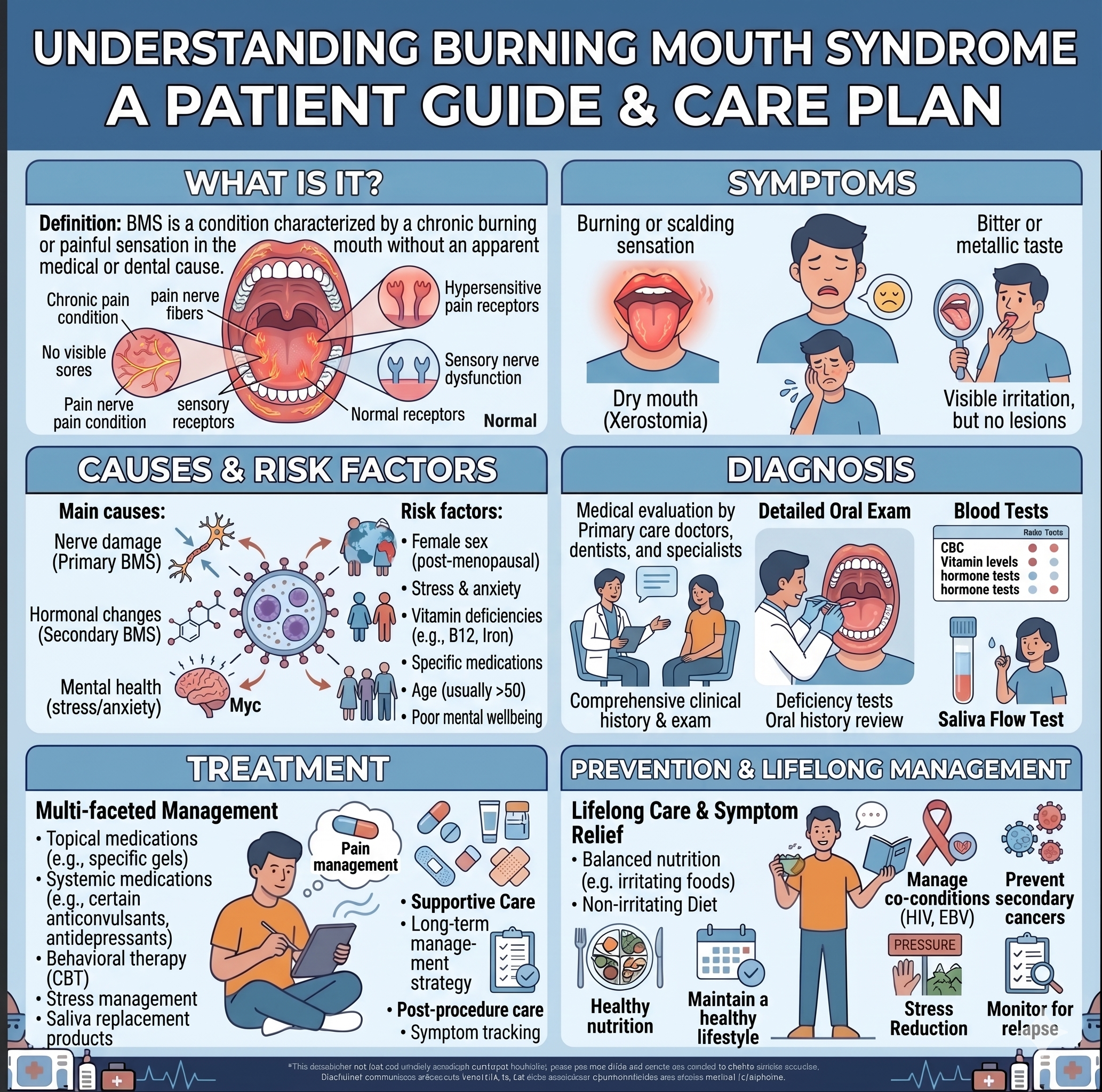
Burning Mouth Syndrome (BMS) is a condition where you experience a persistent or recurring burning sensation in your mouth without any clear physical cause. This uncomfortable feeling, often described as a scald from a hot drink, can affect your tongue, gums, lips, inside of your cheeks, or the roof of your mouth, and sometimes the entire mouth. While it can appear suddenly or develop slowly, identifying the exact cause can be challenging. Despite this, working closely with your healthcare team can effectively help manage and reduce your symptoms.
Understanding the Condition
Burning Mouth Syndrome: A Comprehensive Guide
Understanding the Condition
Burning Mouth Syndrome (BMS) is a condition where you experience a persistent or recurring burning sensation in your mouth without any clear physical cause. This uncomfortable feeling, often described as a scald from a hot drink, can affect your tongue, gums, lips, inside of your cheeks, or the roof of your mouth, and sometimes the entire mouth. While it can appear suddenly or develop slowly, identifying the exact cause can be challenging. Despite this, working closely with your healthcare team can effectively help manage and reduce your symptoms.
Common Symptoms
Burning or Scalding Sensation: A common feeling, often on the tongue, but can affect lips, gums, roof of mouth, or throat. Discomfort can start mild and worsen throughout the day, last all day, or come and go.
Dry Mouth and Increased Thirst: A persistent feeling of mouth dryness, often leading to increased thirst.
Changes in Taste: May include a bitter or metallic taste, or a partial to complete loss of taste.
Unusual Sensations: Experiencing tingling, stinging, or numbness in the mouth.
Consultation Guide
Which Specialist to Meet
Consult with an oral medicine specialist, ENT (Ear, Nose, Throat) doctor, neurologist, or your general dentist. Your general practitioner can help guide you to the right specialist.
Preparations Before Your Visit
Before your appointment, keep a detailed symptom diary noting onset, triggers, and relieving factors. List all current medications and supplements. Be ready to discuss your medical history, recent illnesses, and any significant life stressors.
Book a doctor visit near me
This imaging method uses X-rays and computer processing to create detailed cross-sectional images of your body's bones, blood vessels, and soft tissues. It helps rule out structural issues or nerve problems that might be causing your symptoms.
Dietary Modifications: Limit acidic, spicy foods, and carbonated drinks, which can irritate the mouth. (Duration: Ongoing, as needed for symptom control)
Tobacco Cessation: Stop all tobacco product use. (Duration: Permanent)
Stress Management: Practice relaxation techniques like meditation or deep breathing to reduce anxiety and stress. (Duration: Ongoing)
Addressing Underlying Medical Conditions
Medication Review: Doctor may adjust current medications, especially blood pressure ones, if they cause symptoms. (Duration: One-time review with potential long-term changes)
Endocrine Disorder Management: Treat underlying diabetes or underactive thyroid to improve symptoms. (Duration: Long-term, ongoing)
Medications for Symptom Relief
Ongoing Stress Reduction: Regularly practice stress-reducing activities for symptom control.
Regular Medical Check-ups: Follow up with your healthcare team to monitor symptoms and treatments.
Diagnostic Procedures
Performed to identify potential allergic reactions to substances like certain foods, flavorings, or dental materials that might be irritating your mouth.
What to Expect
Small amounts of suspected allergens are gently pricked or scratched onto your skin, typically on the forearm or back. You'll then be observed for about 15-20 minutes for signs of redness, swelling, or itching, indicating a reaction. The process is quick, usually causing only mild, temporary discomfort.
Complete Blood Count (CBC)
A blood test that measures red blood cells, white blood cells, and platelets. It helps assess overall health and can detect conditions like anemia, infections, or nutrient deficiencies potentially linked to mouth discomfort.
What to Expect
A small blood sample is drawn from a vein in your arm, usually with a minor pinch. The collection is quick, and a bandage is applied afterward. No special preparation is typically required.
CT Scan (Computed Tomography Scan)
What to Expect
You will lie on a table that slides into a large, ring-shaped machine. You must remain still and may be asked to hold your breath briefly. The scan is painless, but the machine can be noisy. Sometimes, a contrast dye is used to enhance image clarity.
Treatment Options
Oral Condition Treatment: Treat conditions like dry mouth, fungal infections, or inflammation with specific medications or denture adjustments. (Duration: Varies (weeks to ongoing))
Nutritional Support: Supplements to correct deficiencies in iron, zinc, or B vitamins. (Duration: Weeks to months; then maintenance if needed)
Allergy Management: Avoid identified triggers. May use allergy medications. (Duration: Ongoing)
Gastroesophageal Reflux Disease (GERD) Treatment: Medications or lifestyle changes to manage stomach acid reflux. (Duration: Weeks to months; possibly ongoing)
Nerve Pain Modulators: Medications originally for depression or seizures, used in low doses to calm overactive pain nerves. (Duration: Weeks to months, potentially long-term)
Topical Anesthetics/Rinses: Prescribed numbing mouth rinses or gels for temporary relief. (Duration: As needed for flare-ups)
Therapies
Cognitive Behavioral Therapy (CBT): Talk therapy to manage chronic pain, anxiety, and distress by changing thought patterns. (Duration: Typically 8-20 sessions, with ongoing self-management)
Adherence to Treatment Plan: Diligently follow all prescribed medications and recommendations.
Avoid Tobacco Products: Permanently avoid all tobacco to support oral and general health.
Prevention & Long-Term Wellbeing
Home Remedies & Lifestyle Adjustments
Oral Hygiene & Irritant Avoidance: Use mild, alcohol-free mouthwashes and non-abrasive toothpastes. Avoid aggressive tongue brushing. (Duration: Ongoing daily)
Consistent Oral Hygiene: Maintain a gentle oral hygiene routine using non-irritating products.
Mindful Diet & Hydration: Limit irritating foods/drinks; ensure adequate water intake.
Tags & Topics
Notice an error or need an update?
Help us keep medical information accurate. Report incorrect info or suggest an edit.


