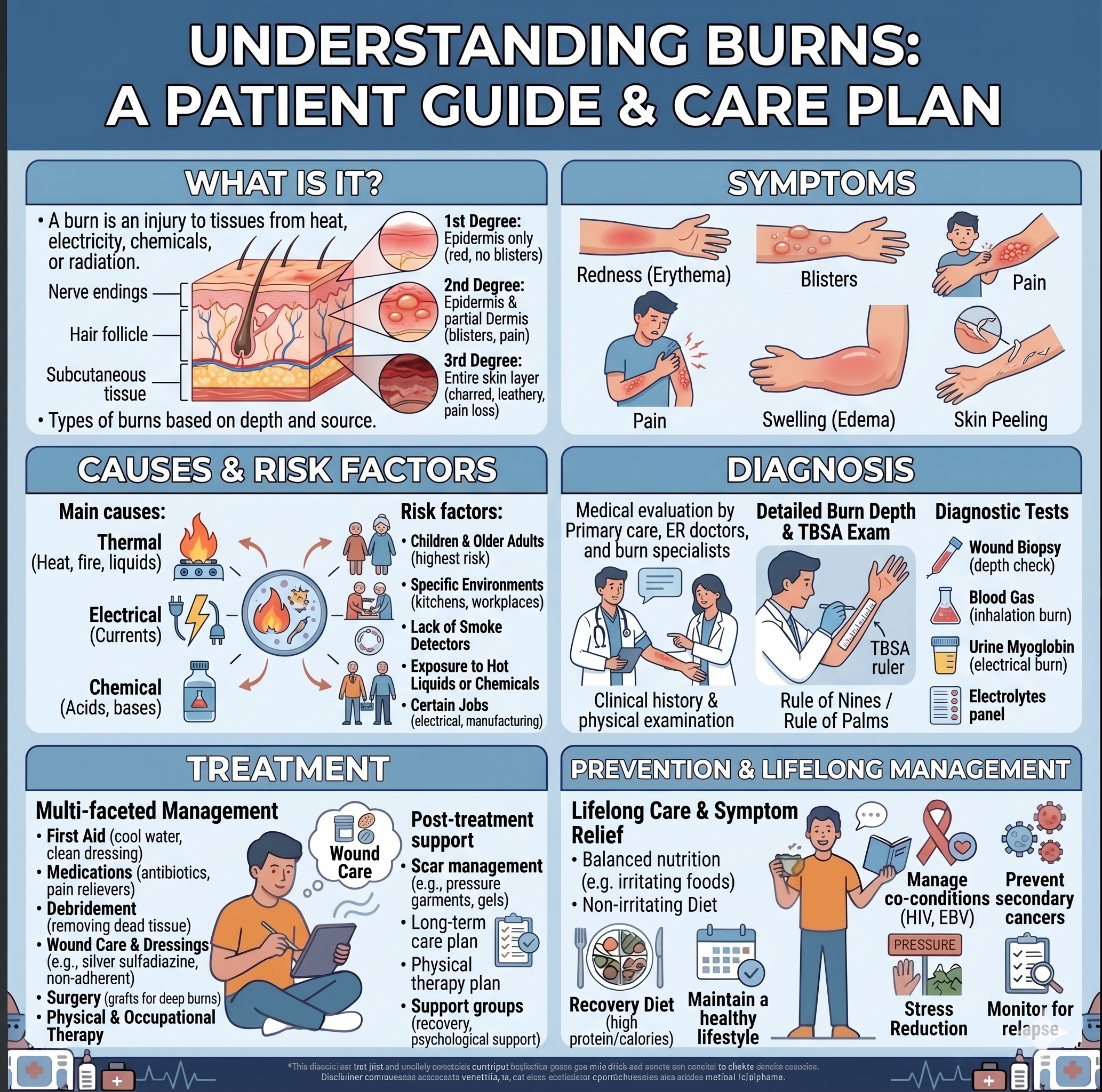
Burns are injuries to the body's tissues caused by heat, chemicals, electricity, radiation, or extreme cold. They can range from minor skin damage to severe, life-threatening emergencies. The severity and location of a burn determine its treatment, which can vary from simple first aid for minor cases to extensive medical care, specialized burn center treatment, and long-term follow-up for more serious injuries.
Understanding the Condition
Common Symptoms
First-Degree Burn (Superficial): This minor burn affects only the outermost layer of skin. Symptoms include pain, redness, or other changes in skin color, and the skin may feel dry.
Before your visit, be ready to describe how the burn occurred, its size, and any immediate symptoms. Note any first aid you applied. Bring a list of your current medications and medical conditions. You might want to take pictures of the burn if it's changing rapidly, but always prioritize immediate medical care if necessary.
Book a doctor visit near me
Consultation Guide
Burns are injuries to the body's tissues caused by heat, chemicals, electricity, radiation, or extreme cold. They can range from minor skin damage to severe, life-threatening emergencies. The severity and location of a burn determine its treatment, which can vary from simple first aid for minor cases to extensive medical care, specialized burn center treatment, and long-term follow-up for more serious injuries.
Second-Degree Burn (Partial-Thickness): This burn affects the outer and second layers of skin. It often causes swelling, red, white, or splotchy skin, and fluid-filled blisters. The pain can be severe. Deeper second-degree burns may lead to scarring.
Third-Degree Burn (Full-Thickness): This most severe type of burn damages all layers of skin and can extend into the fat and muscle below. Burned areas may appear black, brown, or white, and the skin may have a tough, leathery texture. Because nerves can be destroyed, there might be little to no pain in the burned area itself.
When to Seek Immediate Medical Care (Call 911): Seek immediate help for burns that appear deep (involving all skin layers), make the skin dry and leathery, look charred, or have patches of white, brown, or black. Also, get urgent care if a burn is larger than 3 inches (about 8 cm) wide, covers the hands, feet, face, neck, groin, buttocks, or a major joint, or completely encircles an arm or leg. Difficulty breathing from smoke inhalation, headache or nausea after fire exposure, rapid swelling, and major burns from chemicals, gunpowder, explosions, or electricity (including lightning) also require immediate medical attention. Severe sunburns with a fever over 103°F (39°C), vomiting, confusion, fainting, dehydration, or signs of infection also warrant urgent care.
Consultation Guide
Which Specialist to Meet
A healthcare professional will draw a sample of your blood, typically from a vein in your arm, using a small needle. This is a quick procedure that may cause a brief pinch or sting.
A chest X-ray produces images of your heart, lungs, and airways. It's used if there's concern about smoke inhalation or breathing problems, which are common complications of burns.
Diagnostic Procedures
A healthcare professional will visually inspect the burn to determine its depth, size, and location. They will assess for signs of infection or other complications. This is the primary diagnostic method for burns.
What to Expect
You will be asked to describe how the burn happened. The doctor will examine the burned area, possibly gently touching it to assess sensation and depth. They may also check your vital signs like heart rate and breathing.
Blood tests may be performed to check for dehydration, electrolyte imbalances, infection, or damage to internal organs, especially with severe or electrical burns.
What to Expect
What to Expect
You will stand or sit against a flat surface, and an X-ray technician will ask you to hold still and possibly take a deep breath. You may be asked to change positions for different views. The process is quick and painless, lasting only a few minutes.
Water Temperature Control: Set your water heater thermostat to below 120°F (48.9°C) to prevent scalding, particularly important for older adults and young children. Always test bathwater temperature before getting in or placing a child in it.
Childproofing and Supervision: Block small children's access to heat sources like stoves, outdoor grills, fireplaces, and space heaters. Always check car seat straps and buckles for excessive heat before placing a child in the seat.
Electrical and Chemical Safety: Handle electrical appliances and cords with care. Keep chemicals such as strong acids, lye, paint thinner, and gasoline stored securely and out of reach of children, and use them with appropriate safety gear.
Sun Protection: Limit exposure to direct sunlight, especially during peak hours. Use broad-spectrum sunscreen, wear protective clothing, and seek shade to prevent sunburns.
Long-Term Monitoring and Care
Scar Management: Follow recommendations for pressure garments, massage, and moisturizing to minimize scarring. Individuals with darker skin tones have an increased risk of raised, thick scars (keloids or hypertrophic scars) and may benefit from specialist consultation.
Monitoring for Complications: Regularly check burn scars for new sores or changes in appearance, as skin cancer can sometimes develop in old burn scars. Report any non-healing sores to your healthcare provider. Continue physical and occupational therapy as advised to prevent contractures and maintain function.
Mental Health Support: Be aware of potential long-term emotional impacts such as depression or anxiety. Seek counseling or join support groups if you or a loved one are struggling with the psychological effects of a burn injury.
Treatment Options
Home Remedies & First Aid (for minor burns)
Cooling the Burn: Immediately hold the burned area under cool (not cold) running tap water for several minutes, or apply a clean, cool, damp cloth until the pain subsides. Do not use ice. (Duration: 5 to 20 minutes)
Protecting the Burn: After cooling, cover the burn with a sterile, non-stick bandage or a clean cloth. Avoid breaking blisters. For pain, use over-the-counter pain relievers. (Duration: Until healed, typically a few days to a week)
Medical Treatments (for moderate to severe burns)
Pain Management: Stronger pain medications are often prescribed to manage the severe pain associated with deeper burns. (Duration: As needed during healing and recovery, potentially weeks to months)
Fluid Replacement: Intravenous (IV) fluids are given to prevent dehydration and maintain blood volume, which can be dangerously low after widespread burns. (Duration: Hours to days, depending on burn severity)
Skin Grafting: For deep second-degree and third-degree burns, healthy skin is taken from another part of the body (donor site) and surgically transplanted to cover the burned area, helping the wound close and heal. (Duration: One or more surgeries over days to weeks, followed by months of recovery and physical therapy)
Escharotomy/Fasciotomy: In severe, full-thickness burns, tight, leathery burned tissue (eschar) can restrict blood flow or breathing. Surgical cuts are made to relieve pressure and restore circulation. (Duration: Performed immediately as needed, with subsequent wound care)
Therapies and Rehabilitation
Prevention & Long-Term Wellbeing
Burns: Understanding, Care, and Prevention
- Understanding the Condition
For minor burns, you might see a primary care physician. For more severe or complex burns, specialists such as a burn specialist (a surgeon or physician specializing in burn care), emergency medicine physician, critical care specialist, plastic surgeon, physical therapist, occupational therapist, dietitian, or mental health professional may be involved. A wound care specialist might also assist with healing.
Preparations Before Your Visit
Wound Care and Infection Prevention: This involves carefully cleaning the burn wound, removing dead tissue (debridement), and applying specialized dressings or topical antibacterial creams to prevent infection and promote healing. Tetanus shots may also be administered. (Duration: Daily or every few days for weeks to months)
Nutritional Support: Increased caloric and protein intake is crucial to support healing, often requiring specialized diets or nutritional supplements. (Duration: Weeks to months during recovery)
Physical and Occupational Therapy: Essential for maintaining flexibility, strength, and range of motion, and preventing contractures (tightening of skin/muscles) as burns heal. Therapists teach exercises and use splints or pressure garments. (Duration: Months to years, often ongoing during recovery)
Psychological Support: Counseling and support groups can help individuals cope with the emotional trauma, body image changes, and depression/anxiety often associated with severe burns. (Duration: As needed, potentially long-term)
Prevention
Kitchen Safety: Never leave cooking food unattended on the stove. Turn pot handles toward the back of the stove, or cook on back burners. Keep hot liquids, especially in mugs or kettles, out of reach of children and pets. Always check food temperature before serving to children. Avoid cooking while holding a child or wearing loose-fitting clothes that could catch fire.
Tags & Topics
Notice an error or need an update?
Help us keep medical information accurate. Report incorrect info or suggest an edit.


