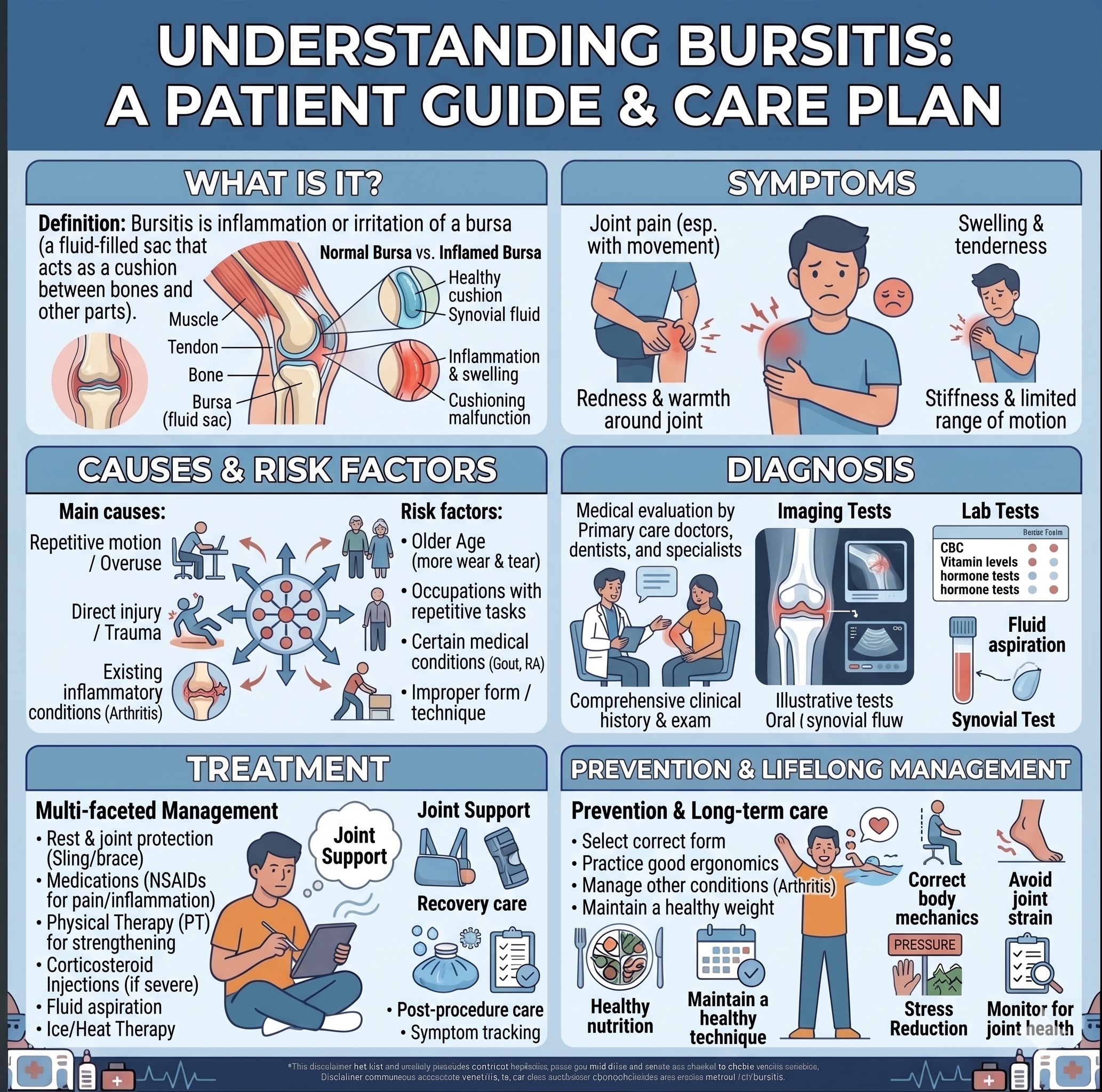
Bursitis (bur-SY-tis) is a painful condition where small, fluid-filled sacs called bursae (bur-SEE), which cushion joints like tiny pillows, become inflamed. Located near joints such as the shoulder, elbow, hip, knee, heel, or big toe, bursae reduce friction between bones, tendons, and muscles. Bursitis often results from repetitive motion or sustained pressure. It usually improves within weeks with treatment, but flare-ups are common.
Understanding the Condition
Bursitis: A Guide to Understanding, Symptoms, and Care
Understanding the Condition
Common Symptoms
Achy or Stiff Joint: The affected joint may feel achy or stiff, particularly after rest.
Pain with Movement or Pressure: Pain increases when moving the joint or applying pressure.
Swelling and Redness: Swelling, redness, and warmth around the joint are common.
Severe or Disabling Symptoms (Seek Medical Care): Seek medical care for disabling pain, sudden inability to move a joint, excessive swelling/redness/bruising/rash, or sharp, shooting pain during activity, as these may signal a serious issue or infection.
Consultation Guide
Which Specialist to Meet
You might start by seeing your primary care physician. For persistent or severe cases, they may refer you to an orthopedic surgeon (who focuses on bones, joints, and related soft tissues) or a rheumatologist (who specializes in inflammatory conditions).
Preparations Before Your Visit
Before your appointment, be ready to describe your symptoms, when they started, what makes them worse or better, and any triggers. List all medications and your medical history, and prepare questions.
Book a doctor visit near me
An X-ray is a quick, painless imaging test that creates pictures of structures inside your body, especially bones. It helps rule out other conditions like fractures or arthritis, which might have similar symptoms to bursitis, even though bursitis itself primarily involves soft tissue and isn't directly visible on an X-ray.
Recognize Early Symptoms: Be aware of the signs of a bursitis flare-up (pain, swelling, redness) and address them promptly with rest and conservative measures to prevent worsening.
Modify Activities: If certain activities consistently trigger bursitis, consider altering how you perform them or finding alternative ways to achieve your goals to protect your joints.
Consultation Guide
Antibiotics: If the bursitis is caused by a bacterial infection, your doctor will prescribe antibiotics to eliminate the infection. (Duration: Duration depends on the infection type and severity, often 7-14 days.)
Physical Therapy: Exercises to improve flexibility, strengthen muscles around the joint, and correct poor posture or movement patterns can help relieve pain, prevent recurrence, and restore joint function. (Duration: Therapy sessions may continue for several weeks to months, with home exercises being a long-term commitment.)
Bursa Aspiration: If there is significant fluid buildup in the bursa, a doctor may drain the fluid using a needle. This relieves pressure and pain, and the fluid can be analyzed for infection. (Duration: A one-time procedure, with potential follow-up if fluid reaccumulates.)
Diagnostic Procedures
A doctor will carefully examine the affected joint, checking for tenderness, swelling, redness, and evaluating your range of motion. This initial assessment helps guide further diagnostic steps.
What to Expect
The doctor will visually inspect the area, gently touch the joint to pinpoint pain or swelling, and ask you to move the joint in various directions to assess your flexibility and identify any limitations.
What to Expect
You will be asked to remove any jewelry or metal objects that could obstruct the images. You'll then be positioned on a table or stand, and the technician will ask you to remain still for a few seconds while the images are taken. The procedure is typically very fast, usually lasting only a few minutes, and is painless. You may need to change positions for different views.
Ultrasound (Sonography)
Diagnostic ultrasound uses high-frequency sound waves to create live images of soft tissues inside your body, including bursae, tendons, and muscles. It can effectively show inflammation, fluid buildup within the bursa, and help confirm a bursitis diagnosis while ruling out other soft tissue problems. It's a safe procedure that uses low-power sound waves and involves no radiation.
What to Expect
You will lie on an examination table. A clear, water-based gel will be applied to the skin over the affected area. This gel helps the handheld device, called a transducer, glide smoothly and ensures optimal contact for sound wave transmission. The technician will gently press the transducer against your skin and move it around, capturing real-time images that are displayed on a monitor. You might feel slight pressure from the transducer, but the procedure is generally painless and typically takes 15-30 minutes.
Treatment Options
Bursitis (bur-SY-tis) is a painful condition where small, fluid-filled sacs called bursae (bur-SEE), which cushion joints like tiny pillows, become inflamed. Located near joints such as the shoulder, elbow, hip, knee, heel, or big toe, bursae reduce friction between bones, tendons, and muscles. Bursitis often results from repetitive motion or sustained pressure. It usually improves within weeks with treatment, but flare-ups are common.
Home Remedies and Conservative Care
Rest: Limiting the use of the affected joint is crucial to reduce irritation and inflammation. This may involve avoiding activities that worsen pain. (Duration: Initial relief can be felt within days, with significant improvement often within a few weeks.)
Ice Application: Applying ice packs to the affected area for 15-20 minutes several times a day can help reduce swelling and pain. (Duration: As needed, typically for the first few days of a flare-up.)
Padding and Protection: Using cushions or pads, especially for knee or elbow bursitis, can help protect the bursa from direct pressure and further trauma. (Duration: Ongoing as long as the aggravating activity continues.)
Medications
Pain Relievers and Anti-inflammatories: Over-the-counter options like ibuprofen or naproxen can help manage pain and reduce inflammation. Stronger prescription anti-inflammatory medications may be prescribed if needed. (Duration: Typically taken as needed or for a course of several days to weeks.)
Corticosteroid Injections: A doctor may inject a powerful anti-inflammatory medication directly into the bursa. This can provide rapid and significant pain relief and reduce swelling. (Duration: Relief usually lasts for weeks to months, but repeated injections are generally limited.)
Bursae Removal (Bursectomy): In rare cases, when bursitis is severe, chronic, and does not respond to other treatments, surgical removal of the inflamed bursa may be recommended. This is often done using minimally invasive techniques. (Duration: Surgical recovery can take several weeks to months, followed by physical therapy for rehabilitation.)
Prevention & Long-Term Wellbeing
Prevention
Use Protective Padding: If your job or hobbies involve frequent kneeling or leaning on elbows, use pads or cushions to reduce direct pressure on your bursae.
Lift Correctly: Always bend your knees when lifting heavy objects. This reduces strain on the bursae in your hips and lower back.
Avoid Overburdening Joints: Instead of carrying heavy loads, use a dolly, wheeled cart, or backpack to distribute weight and reduce stress on your shoulder bursae.
Take Frequent Breaks: When performing repetitive tasks, alternate between activity and rest, or switch to different activities to give specific joints a break.
Maintain a Healthy Weight: Excess body weight places additional stress on joints, particularly the hips and knees, increasing the risk of bursitis.
Exercise Regularly: Strengthening the muscles around your joints provides better support and protection, reducing the risk of bursitis.
Warm-up and Stretch: Before engaging in strenuous activities, warm up your muscles and perform gentle stretches to prepare your joints and reduce injury risk.
Long-Term Monitoring and Management
Address Underlying Conditions: If you have medical conditions like rheumatoid arthritis, gout, or diabetes, work with your doctor to manage them effectively, as they can increase your risk of bursitis.
Tags & Topics
Notice an error or need an update?
Help us keep medical information accurate. Report incorrect info or suggest an edit.


