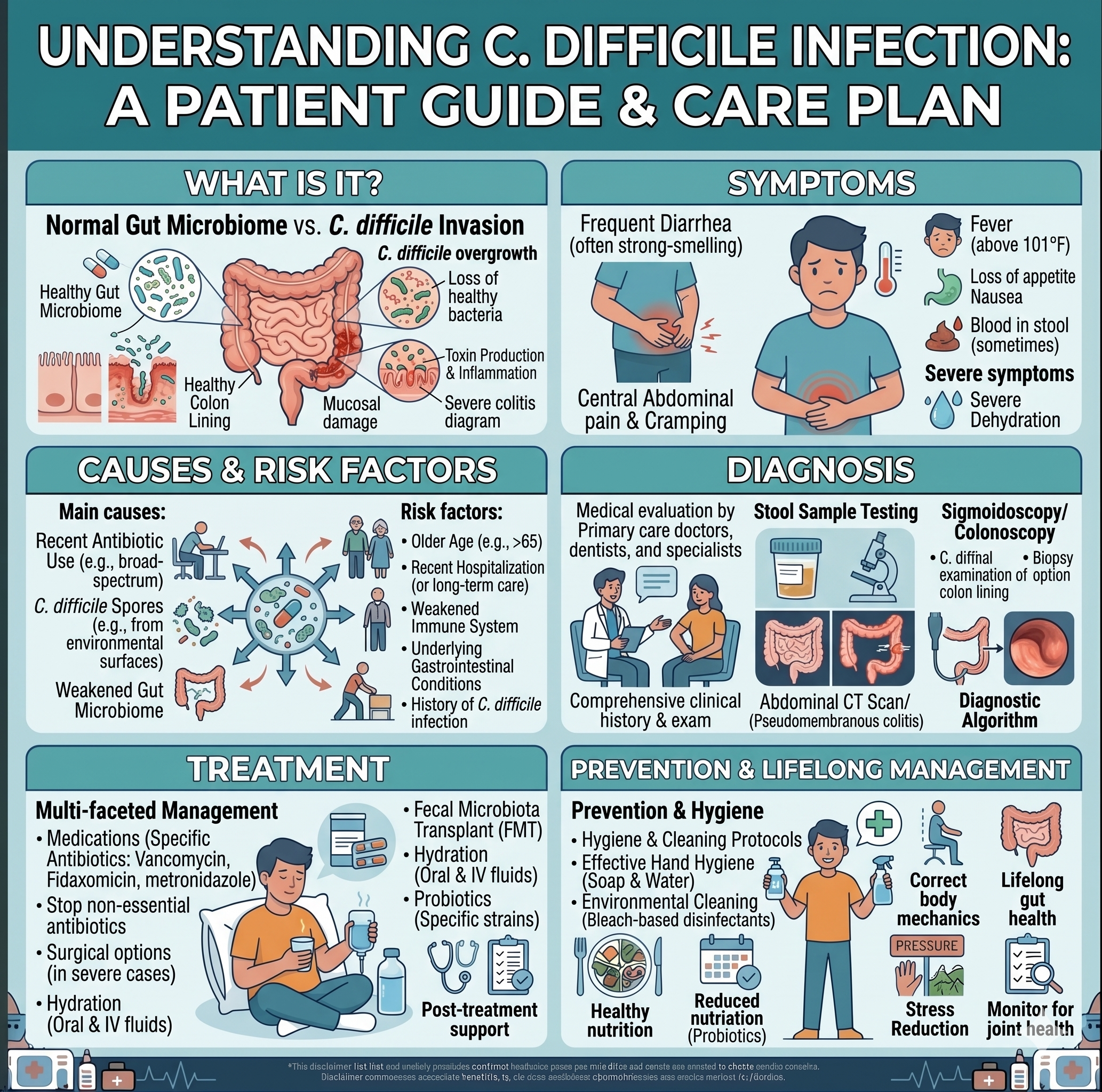
Clostridioides difficile, commonly known as C. diff, is a type of bacterium that can cause an infection in your colon, which is the longest part of your large intestine. The symptoms can vary from mild diarrhea to severe, life-threatening damage to the colon. This infection often develops after a person has taken antibiotic medicines, and it most frequently affects older adults, especially those in hospitals or long-term care facilities. However, C. diff can also affect people outside of these settings, and certain aggressive strains can cause serious infections in younger individuals. Historically, this bacterium was known as Clostridium difficile.
Understanding the Condition
Understanding C. difficile Infection (C. diff)
Understanding the Condition
Clostridioides difficile, commonly known as C. diff, is a type of bacterium that can cause an infection in your colon, which is the longest part of your large intestine. The symptoms can vary from mild diarrhea to severe, life-threatening damage to the colon. This infection often develops after a person has taken antibiotic medicines, and it most frequently affects older adults, especially those in hospitals or long-term care facilities. However, C. diff can also affect people outside of these settings, and certain aggressive strains can cause serious infections in younger individuals. Historically, this bacterium was known as Clostridium difficile.
Common Symptoms
Mild to Moderate Symptoms: Symptoms typically appear 5 to 10 days after starting an antibiotic, but can emerge as early as one day or as late as three months later. Common signs include:* Watery diarrhea three or more times a day for over 24 hours.* Mild discomfort and tenderness in the belly area.
Severe Symptoms: Severe C. diff infection can lead to significant fluid loss (dehydration) and inflammation of the colon, which might even develop raw, bleeding, or pus-filled patches. Signs of a severe infection include:* Frequent watery diarrhea, sometimes 10 to 15 times a day.* Intense belly cramping and pain.* Rapid heart rate.* Symptoms of dehydration, such as extreme thirst or infrequent urination.* An elevated white blood cell count, indicating your body is fighting a serious infection.* Kidney problems.* Loss of appetite.* A noticeably swollen belly.* Unexplained weight loss.* Blood or pus visible in your stool.
Consultation Guide
Which Specialist to Meet
You should first consult your primary care doctor or a family physician if you suspect C. diff. If the infection is severe or persistent, your doctor may refer you to a gastroenterologist (a specialist in digestive diseases) or an infectious disease specialist.
Preparations Before Your Visit
Before your appointment, gather the following information:* A detailed list of your symptoms, including when they started and how often they occur.* All medications you are currently taking or have recently taken, especially any antibiotics, along with vitamins and supplements.* Information about any recent hospital stays, nursing home visits, or other medical conditions.* Be prepared to discuss your typical diet and how much fluid you've been drinking.* Write down any questions you have for your doctor.
Book a doctor visit near me
Adhere to Follow-Up Care: Attend all scheduled follow-up appointments with your doctor to monitor your recovery, assess for any lingering symptoms, and discuss strategies to prevent recurrence.
Recognize Recurrence Symptoms: Be vigilant for any return of C. difficile symptoms, such as watery diarrhea or abdominal pain. If symptoms reappear, seek medical attention promptly, as early treatment is vital for recurrent infections.
Consultation Guide
You will receive a special container and instructions on how to collect a small stool sample at home, ensuring it is clean and uncontaminated. You will then return the sample to your clinic or a lab for testing. This procedure is non-invasive, quick, and typically causes no discomfort.
CT Scan (Computed Tomography Scan)
This diagnostic procedure allows a doctor to visually examine the inside of your rectum and the lower part of your large intestine using a thin, flexible tube equipped with a light and camera (called a sigmoidoscope). It helps identify inflammation, raw tissue, bleeding, or other damage caused by a severe C. difficile infection.
Diagnostic Procedures
Stool Test for C. difficile
This is the most common and primary method to diagnose a C. difficile infection. A laboratory analyzes a sample of your stool (feces) to detect the presence of C. difficile bacteria or the harmful toxins they produce.
What to Expect
A CT scan uses special X-ray equipment and computer processing to create detailed cross-sectional images of your body, including your colon. This imaging test helps doctors assess the extent of colon inflammation or identify severe complications like toxic megacolon (an enlarged colon) or a bowel perforation (a hole in the intestine).
What to Expect
You will lie on a motorized table that slides into a large, doughnut-shaped machine. The scanner rotates around your body, taking multiple X-ray images. You may be asked to hold your breath briefly at certain points. Sometimes, a special 'contrast dye' is given intravenously or orally to make certain structures more visible. The procedure is generally painless and lasts about 10 to 30 minutes.
Flexible Sigmoidoscopy
What to Expect
Treatment Options
Medications
Stopping Current Antibiotics: If your C. diff infection was triggered by another antibiotic you were taking, your doctor will likely stop that medication to prevent further disruption of your gut bacteria. (Duration: Immediate cessation)
Targeted Antibiotics: Your doctor will prescribe specific antibiotics that are highly effective against C. difficile. These medications work to kill the harmful C. diff bacteria in your colon while minimizing impact on the beneficial bacteria. (Duration: Typically 10 to 14 days)
Fecal Microbiota Transplant (FMT): For individuals with recurrent C. difficile infections that don't respond to standard antibiotic treatment, FMT may be an option. This procedure involves transferring healthy stool bacteria from a carefully screened donor into your colon to restore a balanced and healthy gut microbiome. (Duration: Usually a single procedure, with ongoing monitoring)
Surgical Procedures
Colon Removal (Colectomy): In rare, life-threatening cases where the colon is severely damaged by C. difficile (e.g., toxic megacolon or a perforation), emergency surgery to remove part or all of the colon may be necessary to save the patient's life. (Duration: Requires hospitalization, with several weeks to months for recovery)
Fluid and Electrolyte Replacement: For patients experiencing severe dehydration due to diarrhea, intravenous (IV) fluids may be administered in a hospital to replenish lost water and essential minerals (electrolytes) critical for body functions. (Duration: As needed, typically for several days during acute illness)
Maintain Hydration and Nutrition: Focus on maintaining good hydration and a balanced diet to support your gut health during recovery. Discuss with your doctor whether probiotics or dietary changes might be beneficial after your antibiotic treatment.
Prevention & Long-Term Wellbeing
You will likely need to follow specific dietary guidelines and use an enema to clean your lower bowel before the procedure. During the exam, you'll lie on your side, and the doctor will gently insert the lubricated sigmoidoscope into your rectum and guide it into the lower colon. You might feel some pressure or mild cramping. The doctor can visualize the lining and, if necessary, take small tissue samples for further analysis. The procedure typically takes 10 to 20 minutes; sedation is usually not required.
Prevention
Judicious Antibiotic Use: Only take antibiotics when absolutely necessary and exactly as prescribed by your doctor. Antibiotics can disrupt the natural balance of beneficial bacteria in your gut, making you more vulnerable to C. difficile. Ask your doctor if a shorter course or a 'narrow-spectrum' antibiotic (which targets fewer types of bacteria) is appropriate.
Thorough Hand Hygiene: Wash your hands meticulously with soap and warm water for at least 20 seconds, especially after using the restroom and before eating. Alcohol-based hand sanitizers are generally ineffective against C. difficile spores, making soap and water crucial for prevention.
Healthcare Setting Precautions: If you are in a hospital, nursing home, or visiting someone there, ensure that healthcare workers follow strict infection control protocols. Patients with C. diff infection should typically be in a private room, and staff/visitors should wear disposable gloves and gowns. All surfaces must be disinfected carefully with bleach-containing products, as C. diff spores can survive other cleaners.
Food Safety Practices: Practice good food hygiene, including thoroughly cooking meats and other foods, and proper handling to minimize exposure to various bacteria.
Long-Term Wellbeing
Tags & Topics
Notice an error or need an update?
Help us keep medical information accurate. Report incorrect info or suggest an edit.


