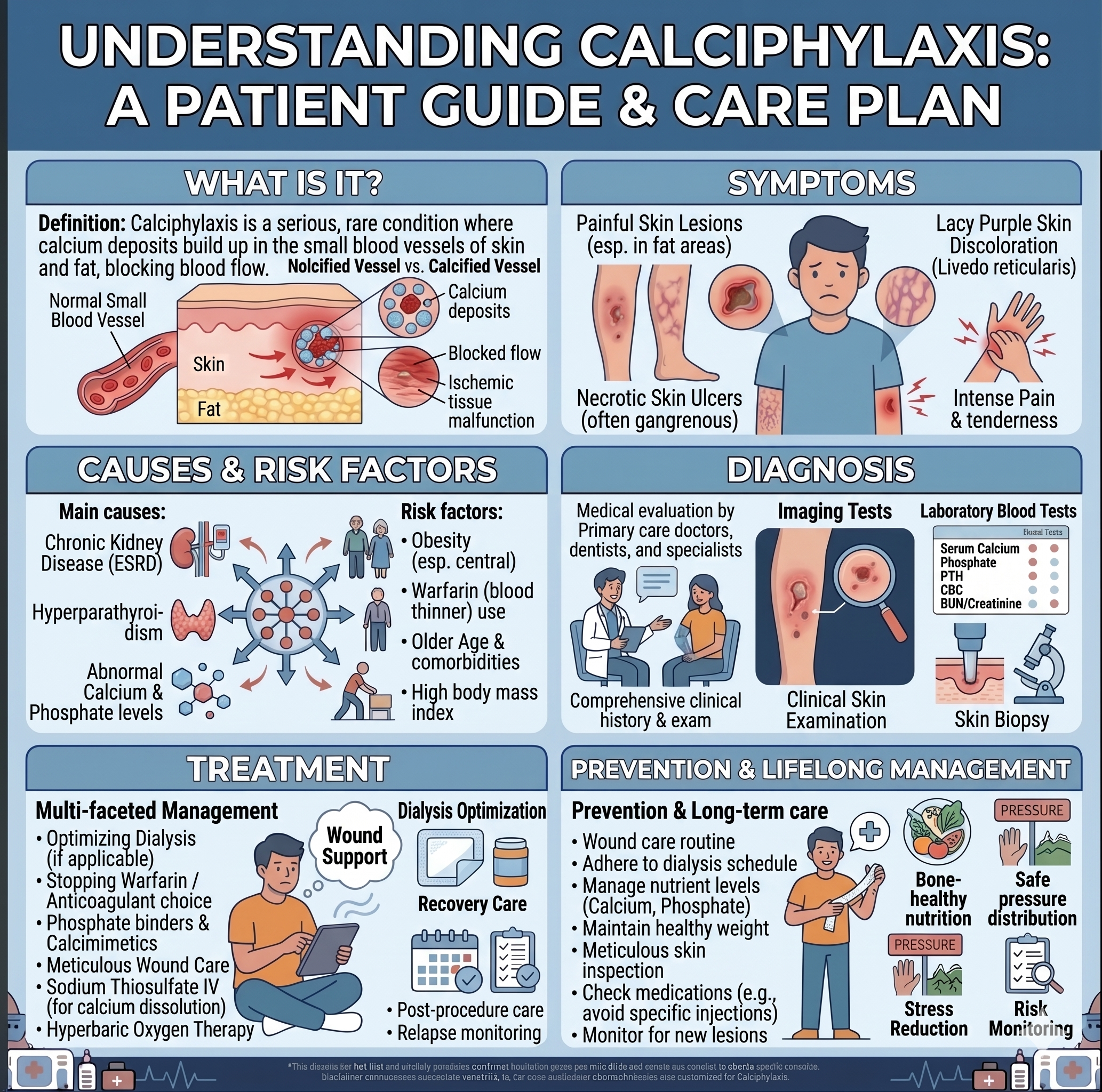
Calciphylaxis (kal-sih-fuh-LAK-sis) is a rare, severe condition where calcium builds up in tiny blood vessels within fat and skin. This hardening and narrowing of vessels reduce blood flow, leading to extremely painful skin sores (ulcers) and blood clots. Most commonly seen in people with advanced kidney failure, especially those on dialysis, these ulcers are highly prone to life-threatening infections. Early diagnosis and intensive management are crucial.
Understanding the Condition
Calciphylaxis: A Rare Skin and Blood Vessel Disease
Understanding the Condition
Common Symptoms
Skin Patterns: Large, net-like, purple-pink patterns on the skin.
Painful Lumps and Ulcers: Deep, intensely painful lumps under the skin often developing into open wounds. These ulcers frequently have a black or brown crust, do not heal naturally, and tend to form in fatty areas (stomach, thighs, buttocks, breasts) but can appear anywhere.
Infections: Non-healing ulcers are highly susceptible to severe, life-threatening infections.
Consultation Guide
Which Specialist to Meet
You should consult a nephrologist (kidney specialist) due to the strong link with kidney failure. A dermatologist (skin specialist) and wound care specialist are essential for managing skin lesions. An endocrinologist (gland specialist) might be involved if parathyroid issues are a factor.
Preparations Before Your Visit
Before your visit, list all symptoms (onset, progression). Bring a complete list of current medications and supplements. Be ready to discuss medical history, especially kidney conditions, diabetes, or liver problems. Prepare any questions for your doctor.
Book a doctor visit near me
The doctor will visually inspect your skin and may gently touch affected areas. You will answer questions about your symptoms, general health, and family history. This is a non-invasive part of the diagnostic process.
Diagnostic Procedures
Calciphylaxis (kal-sih-fuh-LAK-sis) is a rare, severe condition where calcium builds up in tiny blood vessels within fat and skin. This hardening and narrowing of vessels reduce blood flow, leading to extremely painful skin sores (ulcers) and blood clots. Most commonly seen in people with advanced kidney failure, especially those on dialysis, these ulcers are highly prone to life-threatening infections. Early diagnosis and intensive management are crucial.
Physical Examination and Medical History
What to Expect
Blood samples measure calcium, phosphorus, albumin, kidney function, parathyroid hormone, and inflammation/clotting markers.
What to Expect
A healthcare professional will draw blood from a vein, usually in your arm, with a small needle. You might feel a brief sting. The process takes only a few minutes, allowing you to resume normal activities immediately.
This definitive test involves surgically removing a small skin sample from an affected area for microscopic examination. Pathologists identify calcium deposits in blood vessels.
What to Expect
The biopsy site will be cleaned and numbed with local anesthetic, so you should feel pressure, not pain. A small skin piece will be removed; the site will then be stitched or bandaged. Mild soreness or bruising may occur for a few days.
Long-Term Wellbeing and Complication Prevention (if diagnosed)
Diligent Wound Care: Meticulous daily wound care (cleaning, specialized dressings) is paramount to prevent infections and promote ulcer healing. Work closely with specialists.
Treatment Options
Your doctor examines skin for characteristic patterns, lumps, and ulcers. Inquires about medical history (kidney disease, dialysis, diabetes, medications).
Medications
Pain Relievers: Strong prescription pain medications, oral or topical, are crucial to manage severe pain from calciphylaxis ulcers. (Duration: Ongoing, as needed.)
Procedures, Medications, Home Remedies
Medications, Procedures
Calcium and Phosphate Lowering Medications: Medications like phosphate binders (taken with meals) and other agents reduce high blood calcium and phosphorus, key contributors to the disease. (Duration: Long-term, often lifelong.)
Parathyroid Gland Surgery (Parathyroidectomy): Surgical removal of part or all of overactive parathyroid glands may be considered if causing significantly high calcium, normalizing mineral balance. (Duration: A single surgical procedure; recovery typically weeks.)
Medications
Blood Clot Prevention Medications: Medications reduce blood clotting to prevent new clots in small blood vessels, worsening calciphylaxis. (Duration: Long-term, often ongoing.)
Medications to Improve Blood Flow: Therapies enhance blood flow to affected areas, aiming to deliver more oxygen and nutrients. (Duration: Ongoing, as directed.)
Optimization of Dialysis Regimen: For dialysis patients, the dialysis prescription may be adjusted to more effectively remove calcium and phosphorus and correct metabolic imbalances. (Duration: Ongoing, as part of routine dialysis care.)
Strict Blood Mineral Control: For kidney disease or dialysis patients, diligent management of blood calcium and phosphorus is crucial via prescribed medications (e.g., phosphate binders) and diet restrictions.
Regular Medical Follow-ups: Consistent check-ups monitor kidney function, mineral levels, and health, enabling early detection and management.
Management of Underlying Conditions: Managing conditions like diabetes, liver failure, and clotting disorders helps reduce calciphylaxis risk.
Prompt Infection Treatment: Report infection signs (redness, warmth, increased pain, pus) immediately for urgent antibiotic treatment; infections are life-threatening.
Nutritional Support and Hydration: Good nutrition and hydration are essential for overall health and wound healing.
Ongoing Pain Management: Work with your medical team for adequate pain control, improving quality of life and wound care participation.
Avoiding Skin Trauma: Protect skin from injuries or pressure, especially in prone areas, as trauma can worsen the condition.
Prevention & Long-Term Wellbeing
Specialized Wound Care: Meticulous daily cleaning and specialized dressings are vital for healing and infection prevention, often requiring professional or trained care. (Duration: Daily and ongoing until ulcers heal, which can take many months.)
Antibiotics: Prescribed to fight bacterial infections in ulcers, administered orally or intravenously depending on severity. (Duration: Typically 10-14 days, or longer for severe infections.)
Debridement: Surgical or dressing-assisted removal of dead or infected tissue from ulcers to aid healing and reduce infection risk. (Duration: As needed during wound care visits.)
Prevention of Calciphylaxis Progression
Tags & Topics
Notice an error or need an update?
Help us keep medical information accurate. Report incorrect info or suggest an edit.


