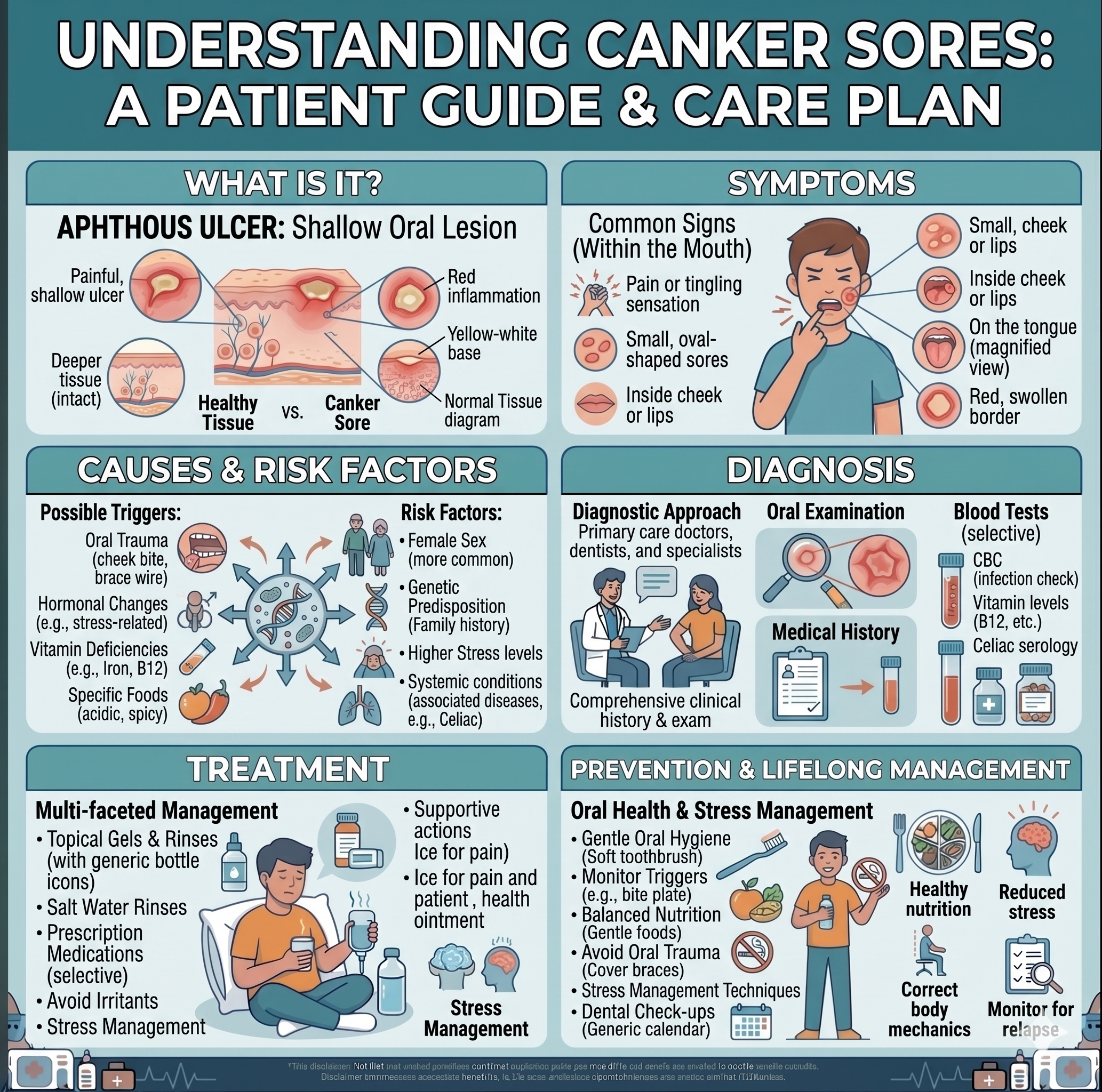
Canker sores, also known as aphthous ulcers, are small, painful open sores inside your mouth or at the base of your gums. Unlike cold sores, they aren't on the lips and aren't contagious. Though often harmless and healing in one to two weeks, they can make eating and speaking difficult. Consult a doctor or dentist if sores are unusually large, painful, or don't heal.
Understanding the Condition
Canker Sores: Understanding and Management
Understanding the Condition
Canker sores, also known as aphthous ulcers, are small, painful open sores inside your mouth or at the base of your gums. Unlike cold sores, they aren't on the lips and aren't contagious. Though often harmless and healing in one to two weeks, they can make eating and speaking difficult. Consult a doctor or dentist if sores are unusually large, painful, or don't heal.
Common Symptoms
General Appearance and Sensation: Canker sores typically appear as round or oval lesions with a white or yellow center and a red border. They form inside the mouth, including on or under the tongue, inside cheeks or lips, at the gum base, or on the soft palate. A tingling or burning sensation may precede their appearance by a day or two.
Minor Canker Sores: Most common, these are usually small, oval-shaped with a red edge, and heal without scarring in one to two weeks.
Major Canker Sores: Less common, these are larger, deeper, and often round with defined borders (though irregular when very large). Extremely painful, they can take up to six weeks to heal and may leave noticeable scarring.
Consultation Guide
Which Specialist to Meet
Consult your family doctor or a dentist for unusually large, painful, persistent canker sores, or those not healing within two weeks.
Preparations Before Your Visit
Before your visit, list symptoms (onset, pain level, what helps/worsens), current medications, supplements, and vitamins. Note any recent mouth injuries, stressful events, new oral products, and family history of canker sores.
Book a doctor visit near me
The doctor will use a light to examine your mouth. They'll ask about symptom onset, frequency, pain, and potential triggers like diet or stress. This quick, painless process helps confirm the diagnosis.
For severe, persistent, or frequently recurring sores, especially with other concerning symptoms, blood tests may be recommended. These help rule out underlying nutritional deficiencies (e.g., vitamin B-12, folate, iron, zinc) or systemic health issues.
Consultation Guide
A small blood sample will be drawn from your arm. This common, quick procedure may cause a brief pinch. The sample goes to a lab for analysis, and your doctor will discuss results.
Oral Medications (for severe cases): In very severe or recurrent cases, oral medications might manage inflammation or underlying causes, though this is rare for typical canker sores. (Duration: As prescribed by your doctor.)
Professional Procedures (for severe, non-healing sores)
Chemical Cautery: A doctor may apply a chemical solution to burn away tissue, sealing the area, reducing pain, and potentially speeding healing. (Duration: A single application.)
Diagnostic Procedures
A healthcare professional, typically a doctor or dentist, diagnoses canker sores primarily by visual inspection of your mouth and reviewing your medical history. They look for the sore's characteristic appearance.
What to Expect
Blood Tests (Optional)
What to Expect
Treatment Options
Saltwater Rinses: Rinsing with warm salt water can cleanse sores, reduce inflammation, and provide temporary pain relief. (Duration: Use several times daily as needed.)
Baking Soda Paste or Rinse: Applying a baking soda paste or rinsing with a solution helps neutralize acids, soothe sores, and reduce discomfort. (Duration: Apply or rinse as needed.)
Milk of Magnesia: Dabbing milk of magnesia directly onto the sore helps coat it, protecting from irritation and offering relief. (Duration: Apply a few times a day.)
Ice Application: Holding ice on the sore temporarily numbs the area, reducing pain and swelling. (Duration: Apply for short intervals (5-10 minutes) as needed.)
Over-the-Counter (OTC) Options
Topical Pain Relievers: Numbing gels, pastes, or liquids applied directly provide temporary pain relief; some also form a protective barrier. (Duration: Apply as directed, typically several times daily.)
Specialized Mouth Rinses: Mouthwashes for canker sores may contain ingredients to reduce pain, inflammation, or protect from bacteria. (Duration: Use as directed, usually for days to a week.)
Prescription Medications
Topical Anti-inflammatory/Steroid Treatments: For larger, more painful, or persistent sores, doctors may prescribe stronger topical medications (rinse or gel) to reduce inflammation and promote healing. (Duration: Use as prescribed, typically one to two weeks.)
Laser Treatment: Low-level laser therapy can reduce pain and inflammation for severe canker sores, encouraging faster healing. (Duration: Typically a single, quick session.)
Prevention & Long-Term Wellbeing
Prevention
Mind Your Diet: Identify and avoid foods that trigger irritation, such as nuts, chips, pretzels, spicy or salty foods, and acidic fruits (e.g., pineapple, oranges). Also, avoid known food sensitivities or allergies.
Maintain Nutritional Balance: Eat plenty of fruits, vegetables, and whole grains to prevent deficiencies (like vitamin B-12, zinc, folate, iron) that can contribute to sores.
Practice Gentle Oral Hygiene: Brush gently after meals with a soft brush and floss daily. Avoid toothpastes and rinses with sodium lauryl sulfate, which can irritate mouth tissues and trigger sores.
Protect Your Mouth from Injury: If using braces or dental appliances, ask your dentist about orthodontic wax to cover sharp edges preventing mouth tissue injury.
Manage Stress: Since emotional stress can trigger sores, practice stress-reduction techniques like meditation or deep breathing to potentially reduce outbreak frequency.
Long-Term Management
Regular Dental Check-ups: Maintain regular dentist visits for overall oral health and to discuss recurring canker sore concerns.
Monitor Recurrence Patterns: Track when sores appear, their severity, and potential triggers. This helps identify patterns for targeted prevention strategies with your healthcare provider.
Seek Professional Advice for Changes: Consult your doctor or dentist promptly if sores change, become more frequent, severe, or don't respond to usual care.
Tags & Topics
Notice an error or need an update?
Help us keep medical information accurate. Report incorrect info or suggest an edit.


