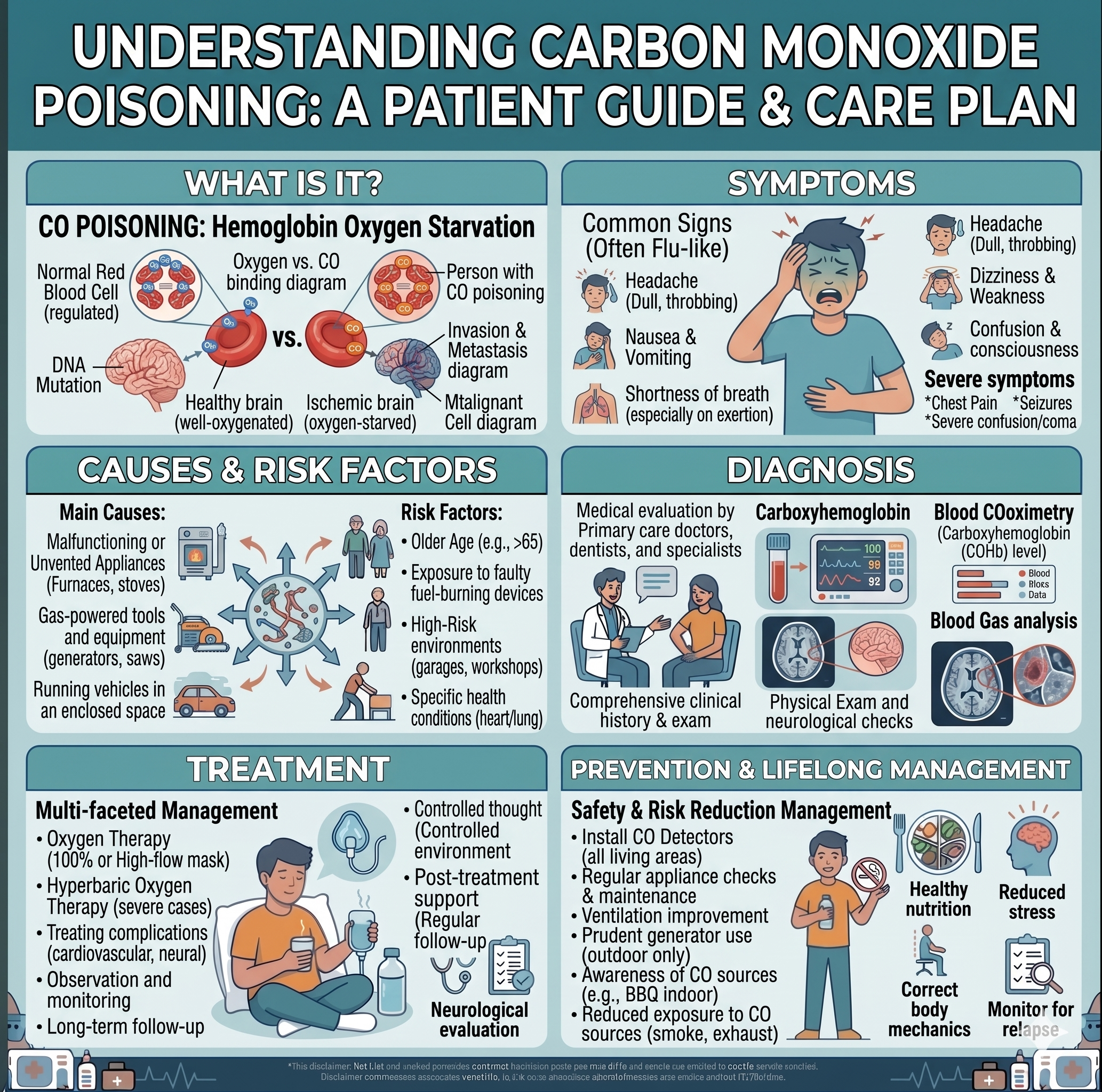
Carbon monoxide (CO) is an invisible, odorless, and tasteless gas. It's produced when common fuels like gasoline, wood, propane, or charcoal burn. When appliances or engines that use these fuels are not properly vented, carbon monoxide can build up in enclosed spaces to dangerous levels.This happens because CO replaces oxygen in your red blood cells. Without enough oxygen, vital organs like the brain and heart are quickly damaged, which can lead to severe health problems or even death. If you suspect carbon monoxide poisoning, it's crucial to get into fresh air and seek emergency medical care immediately. Call 911 or your local emergency services, especially if someone is unconscious or unresponsive.
Understanding the Condition
Carbon Monoxide Poisoning: Understanding the Invisible Danger
Understanding the Condition
Common Symptoms
Flu-Like Symptoms (Without Fever): Early signs can be mistaken for the flu and may include nausea or vomiting, shortness of breath, blurred vision, and sleepiness.
Severe Symptoms: As poisoning worsens, symptoms can include loss of muscle control and loss of consciousness.
Delayed Neurological Symptoms: These can appear after recovery, especially in older individuals or those who lost consciousness during exposure. Symptoms might include memory loss, personality changes, and movement problems.
Consultation Guide
Which Specialist to Meet
For immediate, severe poisoning, emergency medical services (paramedics, emergency room doctors) are critical. For follow-up care and management of lingering effects, you might consult a primary care physician, a neurologist (for brain or nervous system issues), or a cardiologist (for heart-related complications).
Preparations Before Your Visit
If you are conscious and able, be prepared to describe your symptoms, the environment where the exposure occurred, and any potential sources of carbon monoxide (e.g., a running car, a faulty furnace). This information helps emergency responders and medical staff quickly assess the situation.
Book a doctor visit near me
Consultation Guide
Carbon monoxide (CO) is an invisible, odorless, and tasteless gas. It's produced when common fuels like gasoline, wood, propane, or charcoal burn. When appliances or engines that use these fuels are not properly vented, carbon monoxide can build up in enclosed spaces to dangerous levels.This happens because CO replaces oxygen in your red blood cells. Without enough oxygen, vital organs like the brain and heart are quickly damaged, which can lead to severe health problems or even death. If you suspect carbon monoxide poisoning, it's crucial to get into fresh air and seek emergency medical care immediately. Call 911 or your local emergency services, especially if someone is unconscious or unresponsive.
Diagnostic Procedures
Blood Test for Carbon Monoxide (Carboxyhemoglobin Level)
This is the primary diagnostic test to confirm carbon monoxide poisoning. It measures the level of carboxyhemoglobin in your blood. Carboxyhemoglobin is formed when carbon monoxide binds to hemoglobin in your red blood cells, preventing oxygen from doing so. A higher level indicates more severe poisoning.
What to Expect
A healthcare professional will take a small sample of blood, usually from a vein in your arm, using a needle. You might feel a brief sting or pinch. The blood sample is then sent to a laboratory for analysis to determine the amount of carbon monoxide present.
Install Carbon Monoxide Detectors: Place detectors near sleeping areas and on every level of your home, including your basement. Test batteries at least twice a year. If the alarm sounds, evacuate immediately and call emergency services. Detectors are also available for RVs and boats.
Ensure Proper Ventilation: Never leave a car running in an attached garage, even with the garage door open. Use gas appliances (stoves, ovens, generators, camp stoves, space heaters) only as intended and with adequate ventilation. Generators should never be used indoors or in enclosed spaces like basements or garages.
Professional Appliance Maintenance: Have all gas, oil, or coal-burning appliances professionally installed and inspected yearly by a qualified service technician. This includes furnaces, water heaters, and fireplaces. Keep fireplace chimneys and flues clean and in good repair annually.
Do Not Block Vents or Chimneys: During remodeling or home maintenance, ensure that appliance vents and chimneys are not blocked by debris, tarps, or other obstructions. Proper airflow is essential for safe operation.
Address Source Before Re-entry: If carbon monoxide poisoning has occurred in your home, do not re-enter until the source of the leak has been identified and professionally repaired. A qualified service professional must check and fix any faulty appliances or systems.
Treatment Options
Immediate and Medical Care
Fresh Air: The most immediate step is to move the affected individual to fresh air as quickly as possible. This helps to stop further exposure and allows the body to begin clearing carbon monoxide. (Duration: Immediate action upon suspected exposure.)
Standard Oxygen Therapy: In a medical setting, you will be given high-concentration oxygen through a mask placed over your nose and mouth. This speeds up the removal of carbon monoxide from your blood and helps restore oxygen to your tissues. (Duration: Typically several hours, or until carbon monoxide levels in the blood return to a safe range.)
Hyperbaric Oxygen Therapy (HBOT): This treatment involves breathing pure oxygen in a special pressurized chamber. The air pressure inside the chamber is 2 to 3 times higher than normal atmospheric pressure. This significantly increases the amount of oxygen your blood can carry, helping to replace carbon monoxide faster and deliver more oxygen to damaged tissues. It is particularly used for severe poisoning, if you've lost consciousness, or if you are pregnant. (Duration: Sessions typically last 1.5 to 2 hours. Multiple sessions may be required depending on the severity of poisoning and how you respond.)
Prevention & Long-Term Wellbeing
Prevention and Long-Term Wellbeing
Tags & Topics
Notice an error or need an update?
Help us keep medical information accurate. Report incorrect info or suggest an edit.


