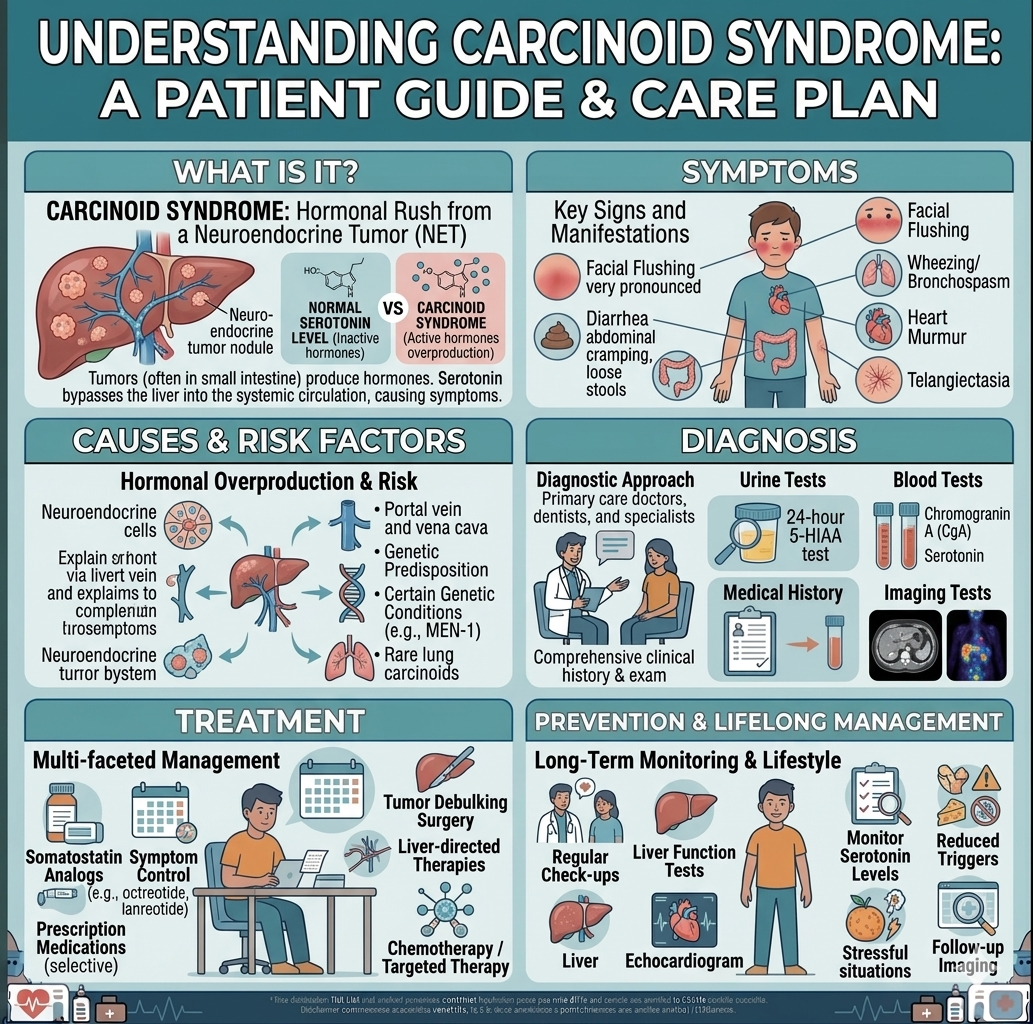
Carcinoid syndrome is a rare condition that occurs when certain cancerous tumors, called carcinoid tumors, release specific chemicals into the bloodstream. These chemicals can cause a variety of noticeable signs and symptoms throughout the body. Carcinoid tumors are a type of neuroendocrine tumor, meaning they originate from cells that produce hormones. They are most commonly found in the digestive system (like the stomach, small intestine, appendix, colon, and rectum) or the lungs. The syndrome typically appears when these tumors have grown or spread, often to the liver. While the liver normally neutralizes these chemicals, if the tumor has spread to the liver itself, the chemicals can bypass this filtering process, leading to symptoms. Treatment usually focuses on managing the cancer and relieving symptoms, as a complete cure may not be possible once the syndrome develops.
Understanding the Condition
Carcinoid Syndrome: Understanding a Rare Condition
Understanding the Condition
Carcinoid syndrome is a rare condition that occurs when certain cancerous tumors, called carcinoid tumors, release specific chemicals into the bloodstream. These chemicals can cause a variety of noticeable signs and symptoms throughout the body. Carcinoid tumors are a type of neuroendocrine tumor, meaning they originate from cells that produce hormones. They are most commonly found in the digestive system (like the stomach, small intestine, appendix, colon, and rectum) or the lungs. The syndrome typically appears when these tumors have grown or spread, often to the liver. While the liver normally neutralizes these chemicals, if the tumor has spread to the liver itself, the chemicals can bypass this filtering process, leading to symptoms. Treatment usually focuses on managing the cancer and relieving symptoms, as a complete cure may not be possible once the syndrome develops.
Common Symptoms
Skin Flushing: This is a common symptom where the skin on your face and upper chest suddenly feels hot and changes color, ranging from pink to deep purple. These flushing episodes can last anywhere from a few minutes to several hours or even longer. While they can occur without a clear reason, they are sometimes triggered by stress, physical activity, or drinking alcohol.
Consultation Guide
Which Specialist to Meet
If you experience symptoms that concern you, start by discussing them with your primary care physician. They may refer you to specialists such as an oncologist (a doctor specializing in cancer), a gastroenterologist (for digestive system issues), a pulmonologist (for lung issues), or an endocrinologist (for hormone-related conditions). These specialists will work together to diagnose and manage your condition.
Preparations Before Your Visit
Before your appointment, make a list of all your symptoms, including when they started, how often they occur, and anything that seems to make them better or worse. Write down your complete medical history, including any other health conditions and all medications or supplements you are taking. Prepare a list of questions you want to ask your doctor to ensure you get all the information you need.
Book a doctor visit near me
During a CT scan, you will lie on a motorized table that slides into a large, donut-shaped machine. The scanner will rotate around you, taking X-ray images from various angles. You may hear buzzing or clicking noises as the machine operates. Depending on what is being examined, you might receive a contrast dye either orally or through an intravenous (IV) line in your arm. This dye helps certain areas show up more clearly on the images. It's important to remain still during the scan, and you may be asked to hold your breath for short periods. The entire procedure usually takes 15 to 30 minutes.
Symptom-Relieving Medications: These medications are prescribed to help manage the specific symptoms caused by the chemicals released by the tumor, such as flushing. They work by blocking the effects of these chemicals or reducing their production. (Duration: Taken as prescribed, often on an ongoing basis to maintain symptom control.)
Symptom Tracking: Keep a detailed log of your symptoms, noting their frequency, intensity, and any potential triggers. This information is invaluable for your doctors to assess treatment effectiveness and make necessary adjustments.
Stress Management: Stress can sometimes trigger or worsen symptoms of carcinoid syndrome. Practices such as meditation, deep breathing exercises, yoga, or engaging in hobbies can help manage stress and improve quality of life.
Support Networks: Connecting with support groups, whether online or in person, can provide emotional comfort and practical advice from others who understand what you are going through. Family and friends can also be a vital source of support.
Diagnostic Procedures
CT Scan (Computerized Tomography Scan)
A CT scan is an imaging technique that uses specialized X-ray equipment and computer processing to create detailed cross-sectional images, or 'slices,' of bones, blood vessels, and soft tissues inside your body. It provides much more detail than a standard X-ray and is used to diagnose diseases or injuries and to help plan treatments.
What to Expect
Regular Medical Check-ups: Consistent follow-up appointments with your healthcare team are crucial for monitoring tumor growth, checking for disease progression, and adjusting treatments as needed. These visits often include blood tests and imaging scans.
Treatment Options
Medications
Biological Therapy for Cancer: Also known as immunotherapy, this treatment uses substances made from living organisms to treat cancer. It works by boosting your body's own immune system to recognize and attack cancer cells. Cancer cells often have ways to hide from the immune system, and biological therapy helps overcome these defenses. (Duration: Administered in cycles, typically over several months or longer, depending on the specific therapy and response to treatment.)
Chemotherapy: Chemotherapy involves the use of powerful drugs to kill fast-growing cells, which primarily include cancer cells. These drugs can be given alone or in combinations to treat various cancers. (Duration: Administered in cycles, often over several months, with breaks between cycles to allow the body to recover.)
Healthy Lifestyle Choices: Maintaining a balanced diet, engaging in regular, moderate physical activity, and ensuring adequate sleep can support your overall health and resilience during treatment. Discuss appropriate exercise levels and dietary needs with your doctor.
Prevention & Long-Term Wellbeing
Cryoablation for Cancer: This is a minimally invasive procedure that uses extreme cold to destroy cancer cells. Thin metal probes are inserted into the tumor site, and a special gas is circulated through them to freeze and kill the nearby cancerous tissue. (Duration: Typically a single session, though it may be repeated if necessary. Recovery is usually quick, lasting days to weeks.)
Radiofrequency Ablation for Cancer: This minimally invasive procedure uses electrical energy to create heat, which then destroys cancer cells. A needle-like probe is guided to the tumor using imaging, and electrical current is passed through it, heating and killing the surrounding cancer tissue. (Duration: Usually a single session, with potential for repetition. Recovery typically involves a few days to a week of mild discomfort.)
Long-Term Management and Monitoring
Tags & Topics
Notice an error or need an update?
Help us keep medical information accurate. Report incorrect info or suggest an edit.


