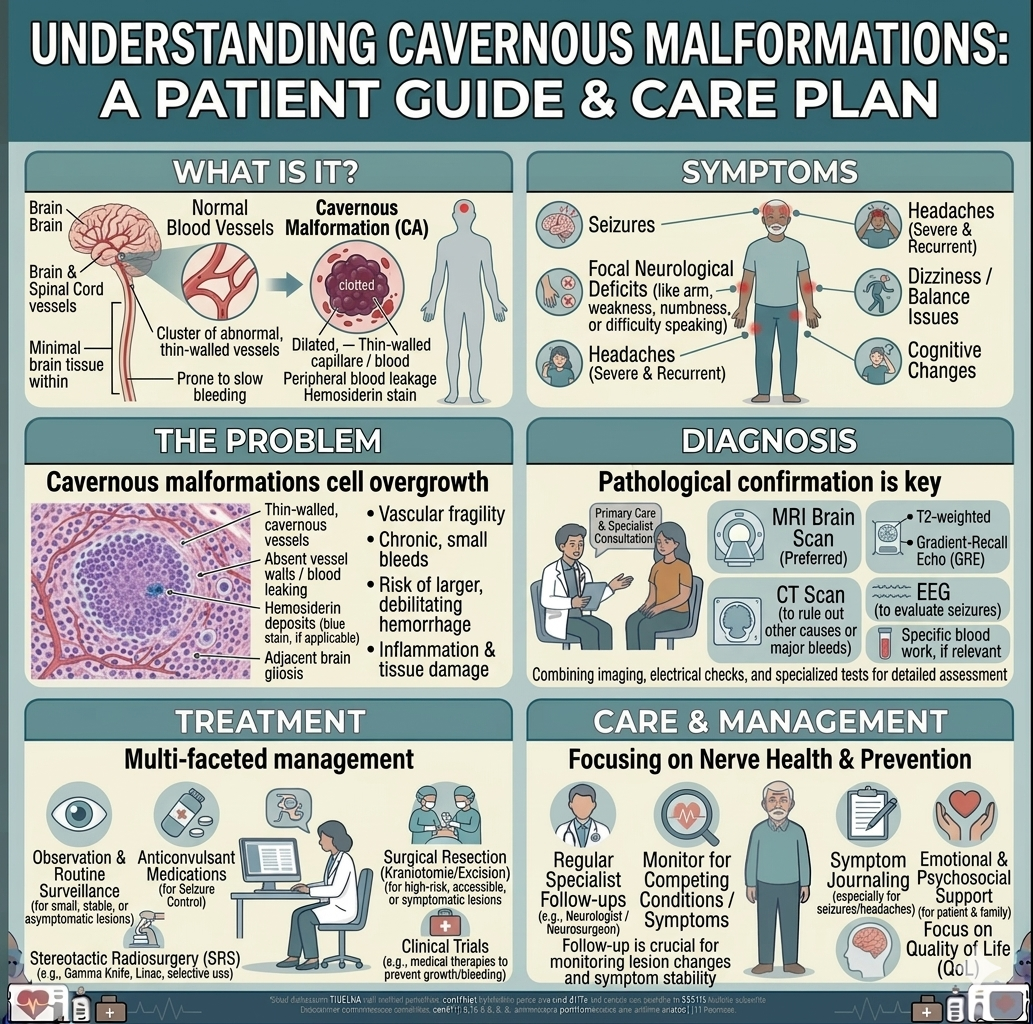
Cavernous malformations are clusters of unusually formed, fragile blood vessels that can occur in the brain or spinal cord. These vessels are thin-walled and contain slow-moving or clotted blood, often resembling a small mulberry. While many people live without symptoms, these malformations can sometimes leak blood, leading to bleeding (hemorrhage) in the brain or spinal cord. They vary in size, typically less than half an inch. Most cases happen without a clear cause (sporadic), but about 20% are inherited within families (familial), often involving multiple malformations.
Understanding the Condition
Understanding Cavernous Malformations
Understanding the Condition
Cavernous malformations are clusters of unusually formed, fragile blood vessels that can occur in the brain or spinal cord. These vessels are thin-walled and contain slow-moving or clotted blood, often resembling a small mulberry. While many people live without symptoms, these malformations can sometimes leak blood, leading to bleeding (hemorrhage) in the brain or spinal cord. They vary in size, typically less than half an inch. Most cases happen without a clear cause (sporadic), but about 20% are inherited within families (familial), often involving multiple malformations.
Common Symptoms
No Symptoms: Many cavernous malformations may not cause any noticeable symptoms.
Seizures: If a malformation is on the outer surface of the brain, it can trigger seizures.
Headaches: Severe or unusual headaches can be a symptom, especially after bleeding.
Weakness or Numbness: Weakness or a strange feeling in the arms or legs, similar to stroke symptoms, may occur.
Speech Difficulties: Trouble speaking clearly or finding the right words.
Memory and Attention Issues: Problems with memory, focus, or general cognitive function.
Balance and Walking Problems: Difficulty maintaining balance or coordinating movements, leading to an unsteady gait.
Vision Changes: Symptoms such as double vision or blurred vision.
Bowel and Bladder Problems: Difficulties with bladder or bowel control, especially if the malformation is in the spinal cord.
Worsening Symptoms: Symptoms can become more severe over time, particularly with repeated bleeding episodes.
Consultation Guide
Which Specialist to Meet
You should consult with a neurologist, a doctor specializing in brain and nervous system disorders. For potential surgical intervention, a neurosurgeon would be involved. If there's a family history, a genetic counselor can provide specialized advice.
Preparations Before Your Visit
Before your visit, gather your full medical history, list all your symptoms and when they started, and note any family history of similar conditions. Bring any previous medical records or imaging results if available. Prepare a list of questions to ask your doctor.
Book a doctor visit near me
Symptom Management Medications: Medicines may be prescribed to manage specific symptoms like seizures (anti-seizure medications) or severe headaches. (Duration: Ongoing, as needed to control symptoms.)
Craniotomy for Malformation Removal: This surgical procedure involves carefully removing a section of the skull to access and remove the cavernous malformation. It is typically performed when the malformation is accessible and causing significant symptoms, repeated bleeding, or increasing in size. The goal is to remove the malformation without damaging surrounding healthy brain or spinal cord tissue. (Duration: A single procedure, followed by a recovery period of several weeks to months.)
Watchful Waiting: For malformations that are not causing symptoms or are located in hard-to-reach areas, doctors may recommend close monitoring with regular MRI scans to check for changes or signs of bleeding, rather than immediate intervention. (Duration: Long-term, with periodic follow-up appointments and imaging.)
Screening At-Risk Family Members: Individuals with a known familial history may undergo screening with MRI scans to detect malformations early, even before symptoms appear.
Long-Term Monitoring and Management
Symptom Management: Working with your doctor to effectively manage any ongoing symptoms like headaches, seizures, or neurological deficits can significantly improve quality of life.
Neurological Follow-Up: Regular follow-up appointments with a neurologist are crucial to assess neurological function, adjust treatments, and discuss any new or worsening symptoms.
Diagnostic Procedures
Magnetic Resonance Imaging (MRI)
An MRI scan uses powerful magnets and radio waves to create detailed images of the brain and spinal cord. It is the most effective way to detect cavernous malformations and any associated bleeding.
What to Expect
You will lie on a movable table that slides into a large tunnel-like scanner. You need to remain very still during the scan, which can take 30 to 60 minutes. The machine can be noisy, so you may be offered earplugs or headphones. In some cases, a contrast dye may be injected into a vein to highlight blood vessels more clearly.
Genetic testing examines your DNA to identify specific gene changes linked to familial cavernous malformations. It can confirm an inherited form of the condition and is often recommended if you have multiple malformations without a related vein anomaly or a family history of the condition.
What to Expect
A small sample of blood is typically drawn from your arm, or a saliva sample may be collected. This process is usually quick and involves minimal physical risk. The sample is then sent to a lab for analysis. Genetic counseling often accompanies testing to help you understand the implications of the results for yourself and your family.
Treatment Options
Medications
Regular Imaging Scans: Periodic MRI scans are essential to monitor existing malformations for changes in size, new malformations, or signs of bleeding, especially for those not undergoing immediate treatment.
Lifestyle Adjustments: Maintaining a healthy lifestyle, including managing blood pressure and avoiding medications that thin the blood (unless medically necessary and approved by your doctor), can be beneficial in reducing potential risks.
Prevention & Long-Term Wellbeing
Prevention and Early Detection
Genetic Counseling for Familial Cases: If there is a family history of cavernous malformations, genetic counseling can help assess risk, understand inheritance patterns, and guide screening decisions for family members.
Tags & Topics
Notice an error or need an update?
Help us keep medical information accurate. Report incorrect info or suggest an edit.


