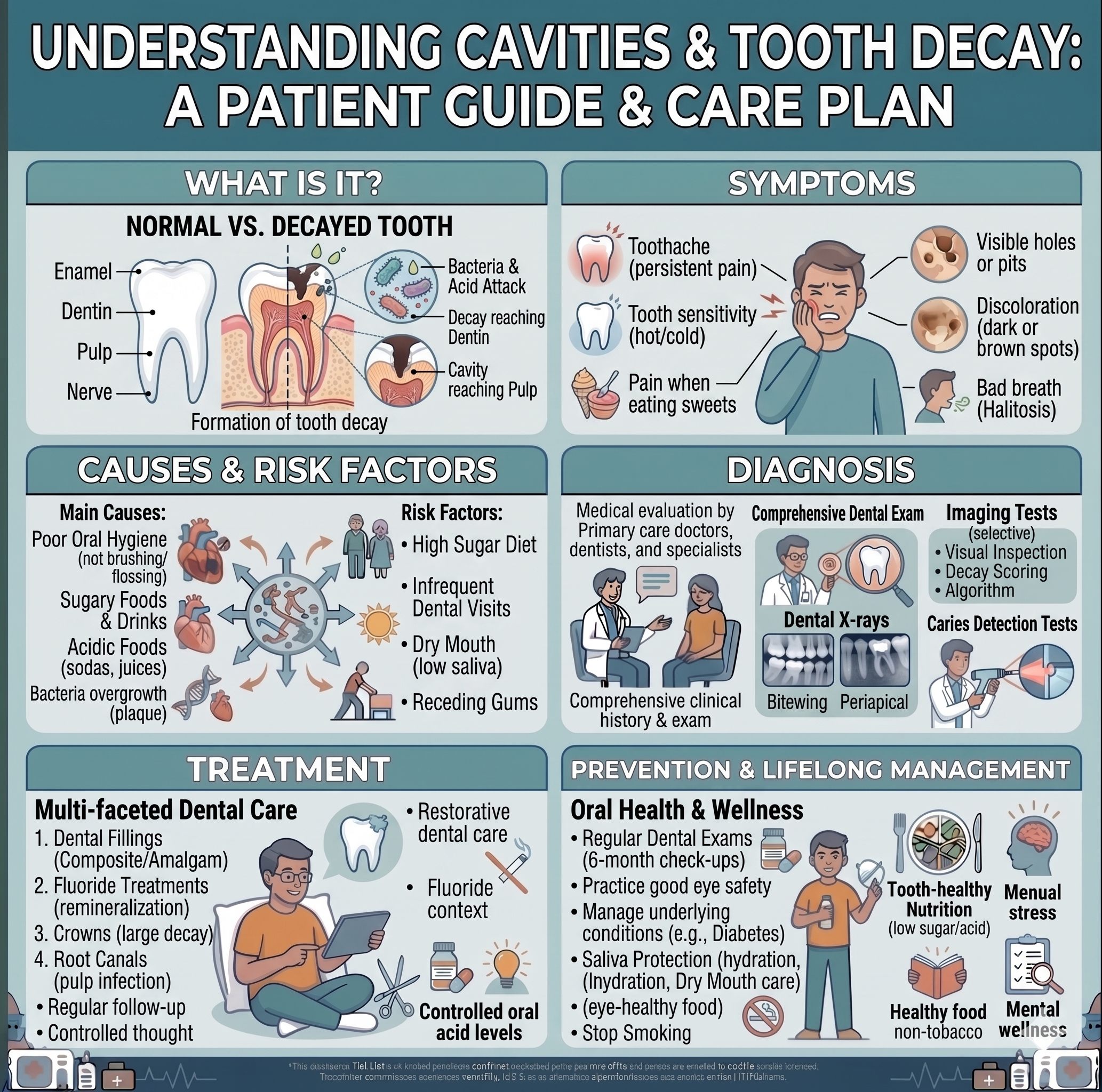
Cavities, also known as tooth decay, are damaged areas on the hard surface of your teeth. These damages create tiny openings or holes that can lead to significant tooth pain, infections, and even tooth loss. Cavities are primarily caused by bacteria in your mouth, frequent snacking, sipping sugary drinks, and insufficient oral hygiene. This condition is a widespread health problem, affecting people of all ages, from babies to older adults. If left untreated, cavities can grow larger, impacting deeper layers of your teeth. Regular dental check-ups and maintaining good brushing and flossing habits are crucial for protecting your teeth from decay.
Understanding the Condition
Cavities and Tooth Decay: A Guide for Non-Medical Persons
Understanding the Condition
Common Symptoms
No Symptoms in Early Stages: When a cavity is just starting, you may not experience any noticeable symptoms.
Toothache and General Pain: Pain can range from a mild ache to a sharp, sudden pain, especially when biting down.
Tooth Sensitivity: You might feel discomfort or pain when consuming foods or drinks that are sweet, hot, or cold.
Visible Holes or Pits: As decay progresses, you may notice small openings or holes forming on the surface of your teeth.
Tooth Staining: Affected teeth may develop brown, black, or white stains on any surface.
Consultation Guide
Which Specialist to Meet
Before your dental visit, gather any relevant medical and dental history, including a list of medications you currently take. Be prepared to discuss your dietary habits, particularly your consumption of sugary foods and drinks, and your daily oral hygiene routine. Make a list of any symptoms you've experienced, such as pain or sensitivity, and note how long they've been present. Don't hesitate to ask any questions you have about your dental health or the recommended treatments.
Book a doctor visit near me
Consultation Guide
Cavities, also known as tooth decay, are damaged areas on the hard surface of your teeth. These damages create tiny openings or holes that can lead to significant tooth pain, infections, and even tooth loss. Cavities are primarily caused by bacteria in your mouth, frequent snacking, sipping sugary drinks, and insufficient oral hygiene. This condition is a widespread health problem, affecting people of all ages, from babies to older adults. If left untreated, cavities can grow larger, impacting deeper layers of your teeth. Regular dental check-ups and maintaining good brushing and flossing habits are crucial for protecting your teeth from decay.
You will be seated in a dental chair, and a dental assistant will place a small sensor or film holder inside your mouth, which you may be asked to bite down on gently. A lead apron will be placed over your chest and lap for protection. The X-ray machine will be positioned next to your head, and you'll be asked to remain still for a few seconds while the images are taken. This process is repeated several times to capture different angles of your mouth. The procedure is quick, causes no physical discomfort, and the radiation exposure is minimal.
Diagnostic Procedures
For initial diagnosis and treatment of cavities, you should consult a general dentist. For more complex cases involving extensive decay, infections, or tooth loss, your dentist may refer you to an endodontist (for root canals), a prosthodontist (for crowns or tooth replacement), or an oral surgeon (for extractions or advanced surgical procedures). If your cavities are linked to underlying health conditions like severe dry mouth, heartburn, or eating disorders, your dentist may advise consulting your general practitioner or relevant medical specialist.
Preparations Before Your Visit
A visual inspection of your teeth and mouth using specialized dental tools. Your dentist will look for visible signs of decay, such as holes, pits, or discolored spots on your teeth, and check for any tenderness or sensitivity.
What to Expect
You will be seated in a dental chair, and the dentist will examine your teeth, gums, and tongue using a small mirror and a dental explorer (a thin, pointed instrument) to probe the tooth surfaces for soft spots or areas of decay. They may also use a bright light to get a clear view. This part of the examination is generally quick and painless, though you might feel slight pressure if the dentist probes a sensitive area.
A diagnostic imaging test that uses small amounts of radiation to capture detailed pictures of the inside of your teeth and jawbones. X-rays are crucial for detecting cavities that are not visible during a standard oral exam, such as decay between teeth, under existing fillings, or problems with tooth roots and surrounding bone.
What to Expect
Treatment Options
Restorative Treatments
Fillings: The decayed portion of the tooth is removed, and the resulting hole is filled with a durable material to restore the tooth's structure and function. (Duration: One dental visit, typically 30-60 minutes.)
Crowns: For extensive decay or a weakened tooth, a custom-made cap is placed over the entire tooth to restore its shape, strength, and appearance. (Duration: Usually two dental visits over 1-2 weeks.)
Root Canal Treatment: When decay reaches the inner pulp of the tooth, causing infection, the inflamed or infected pulp is removed, the inside of the tooth is cleaned and disinfected, and then sealed. (Duration: One or two dental visits, typically 60-90 minutes each.)
Tooth Extraction: If a tooth is severely damaged by decay and cannot be saved with other treatments, it may need to be removed to prevent further complications. (Duration: One dental visit, typically 30-60 minutes, with subsequent healing time.)
Preventive and Supportive Treatments
Fluoride Treatments: Professional application of a high-concentration fluoride gel, foam, or varnish to strengthen tooth enamel and help reverse very early stages of decay. (Duration: A few minutes per visit, typically recommended every 3-6 months for high-risk individuals.)
Antibacterial Rinses: Prescription mouth rinses containing antiseptic agents can be used to significantly reduce harmful bacteria in the mouth, particularly for individuals at high risk of decay. (Duration: As directed by your dentist, often for a few weeks or longer periods.)
Regular Dental Check-ups and Cleanings: Visit your dentist regularly for professional cleanings and oral examinations. This allows for early detection and treatment of potential issues before they become severe, and helps maintain overall oral health.
Consider Dental Sealants: Especially for children, a protective plastic coating can be applied to the chewing surfaces of back teeth. This seals off grooves and pits, preventing food and bacteria from getting trapped and causing decay.
Professional Fluoride Treatments: If you are identified as being at high risk for cavities, your dentist may recommend periodic professional fluoride applications or prescription fluoride rinses/gels to provide extra protection.
Managing Underlying Health Conditions
Address Dry Mouth: If you experience chronic dry mouth, consult your dentist or doctor. Saliva plays a vital role in washing away food and neutralizing acids, so reduced saliva flow significantly increases cavity risk.
Manage Heartburn and GERD: If you suffer from frequent heartburn or gastroesophageal reflux disease (GERD), seek medical advice. Stomach acid reflux can severely erode tooth enamel, making teeth vulnerable to decay.
Seek Support for Eating Disorders: Eating disorders that involve repeated vomiting can expose teeth to stomach acid, leading to significant enamel erosion and increased cavity risk. Professional help is essential for both general health and oral health.
Prevention & Long-Term Wellbeing
Brush Regularly with Fluoride Toothpaste: Brush your teeth thoroughly at least twice a day, and ideally after every meal or sugary snack, using a toothpaste that contains fluoride. This helps remove food particles and plaque.
Floss Daily: Use dental floss or an interdental cleaner once a day to remove plaque and food debris from between your teeth and under the gumline, areas that a toothbrush cannot effectively reach.
Diet and Lifestyle Choices
Limit Sugary and Acidic Foods/Drinks: Reduce your frequent consumption of foods and beverages high in sugar and acids, as these provide fuel for decay-causing bacteria. If you do consume them, try to do so with meals or rinse your mouth with water afterward.
Drink Fluoridated Tap Water: Many public water supplies contain added fluoride, a natural mineral that strengthens tooth enamel and helps prevent cavities. Choosing tap water over bottled water often provides this benefit.
Chew Sugar-Free Gum: Chewing sugar-free gum after meals can stimulate saliva flow, which helps wash away food particles and neutralize acids, thereby protecting your teeth.
Professional Dental Care and Protective Measures
Tags & Topics
Notice an error or need an update?
Help us keep medical information accurate. Report incorrect info or suggest an edit.


