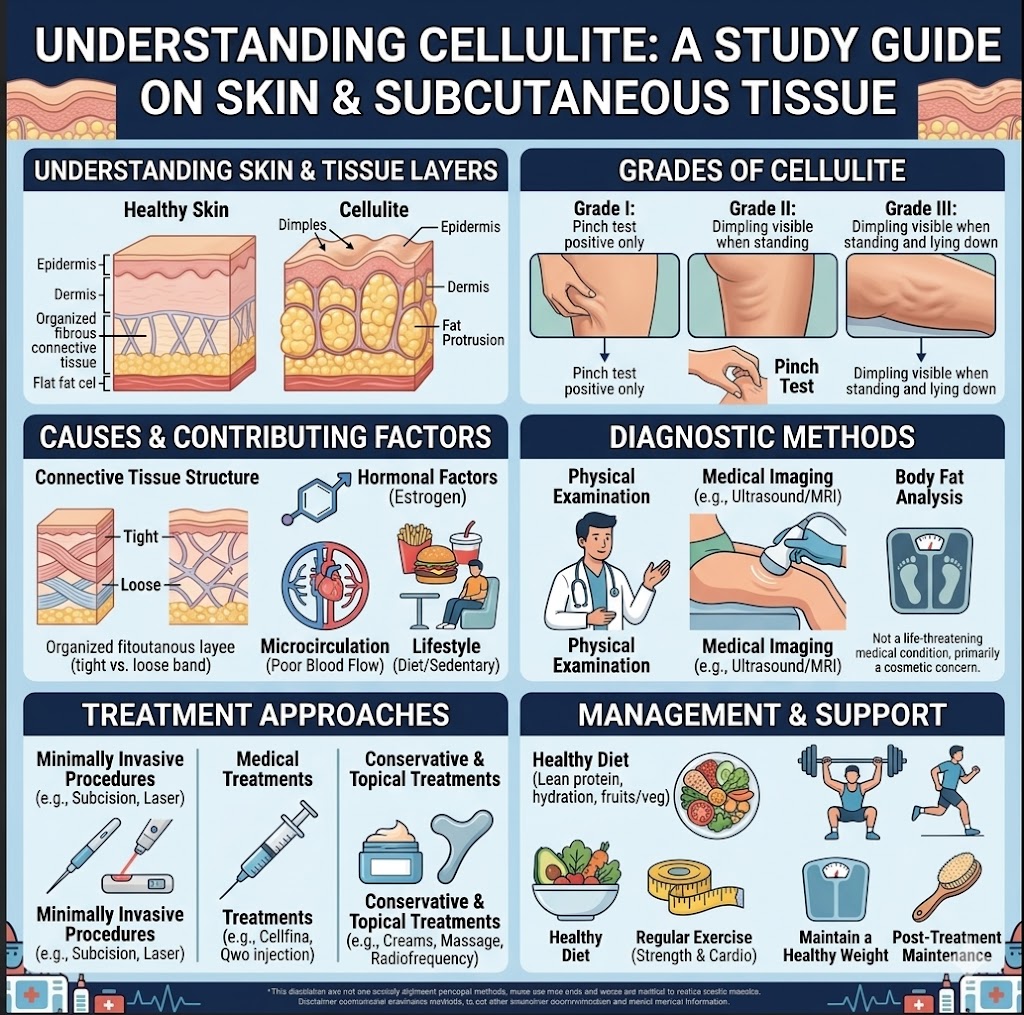
Cellulite is a highly common, entirely harmless skin condition that produces a bumpy, dimpled appearance on the flesh. It is most frequently found on the thighs, hips, buttocks, and abdomen. This condition is significantly more prevalent in women than in men. While cellulite poses no medical risk, many individuals seek to improve their skin's appearance through lifestyle changes, topical creams, or medical procedures. Treatments are available, though they typically offer gradual, temporary improvements rather than permanent results.
Understanding the Condition
Understanding Cellulite: Causes, Symptoms, and Management Options
Understanding the Condition
Common Symptoms
Dimpled or Bumpy Texture: The skin appears uneven, puckered, or dimpled. This is frequently described as resembling the texture of an orange peel or cottage cheese.
Mild Cellulite: In its mildest form, the dimpling is not visible while standing or lying down, but appears only when the skin is pinched or compressed in affected areas like the thighs.
Severe Cellulite: In more severe cases, the skin looks continuously rumpled and uneven, featuring pronounced peaks, deep valleys, and draped folds that are visible in any posture.
Consultation Guide
Which Specialist to Meet
You can discuss cellulite with a primary care doctor, a board-certified dermatologist (a specialist in skin conditions), or a plastic surgeon who specializes in aesthetic procedures.
Preparations Before Your Visit
Consultation Guide
Subcision: A dermatologist or surgeon inserts a tiny needle just under the skin to break up the tough, fibrous connective bands that pull down on the tissue and cause dimpling. (Duration: The procedure takes about 45 to 60 minutes. Results can appear quickly and have been shown to last up to three years.)
Diagnostic Procedures
Clinical Visual and Physical Examination
Cellulite is diagnosed through a straightforward clinical evaluation. There are no lab tests or imaging studies required to identify it. The physician will visually assess the skin and physically evaluate its elasticity.
What to Expect
During the examination, the doctor will inspect your skin in the areas of concern. You will be asked to stand, sit, and potentially lie down so the doctor can observe how muscle movement and gravity affect the skin's texture. The doctor may also gently pinch the skin to evaluate tissue thickness and the underlying connective bands. This process is completely non-invasive, painless, and takes less than 15 minutes.
Treatment Options
Cellulite is a highly common, entirely harmless skin condition that produces a bumpy, dimpled appearance on the flesh. It is most frequently found on the thighs, hips, buttocks, and abdomen. This condition is significantly more prevalent in women than in men. While cellulite poses no medical risk, many individuals seek to improve their skin's appearance through lifestyle changes, topical creams, or medical procedures. Treatments are available, though they typically offer gradual, temporary improvements rather than permanent results.
Before your appointment, write down when you first noticed the cellulite, any topical creams or treatments you have already tried, and details about your diet and exercise habits. Prepare a list of questions regarding treatment safety, expected results, recovery times, and costs, as cosmetic procedures are typically not covered by health insurance.
Book a doctor visit near me
In-Office Procedures and Therapies
Laser and Radiofrequency Treatments: These devices deliver targeted thermal energy to the skin, which helps stimulate collagen production, improve skin elasticity, and temporarily thicken the outer skin layers to mask underlying fat. (Duration: Requires multiple weekly sessions initially. Results typically last between 6 months to a year, requiring periodic maintenance sessions.)
Acoustic Wave Therapy: A handheld device delivers sound waves into the connective tissues to break up structural fibers, stimulate blood circulation, and boost collagen production. (Duration: Performed twice weekly for 6 weeks. Results typically last up to six months, with maintenance treatments required to sustain the effect.)
Surgical Procedures
Surgical Body Contouring (Liposuction): A surgical procedure that uses suction to remove targeted fat deposits. While it shapes the body, it is not a cure for cellulite and can sometimes make skin dimpling more pronounced if the skin lacks elasticity. (Duration: The surgery takes 1 to 3 hours depending on the target areas. Recovery takes several weeks, and the contouring results are long-lasting as long as a stable weight is maintained.)
Topical and Home Treatments
Topical Creams: Over-the-counter creams containing active ingredients like caffeine (to dehydrate fat cells temporarily) or retinol (to thicken the skin over time by boosting collagen) are applied directly to the skin. (Duration: Must be applied daily. Visible benefits are mild and will disappear entirely if you stop using the product.)
Prevention & Long-Term Wellbeing
Prevention and Long-Term Lifestyle Management
Regular Physical Activity: Incorporate a mix of cardiovascular exercises and strength training. Building muscle tone in the thighs, buttocks, and abdomen can smooth the appearance of the skin and reduce the visibility of cellulite.
Healthy Weight Management: Maintain a stable, healthy weight. While lean individuals also get cellulite, excess body fat can make the dimpling more pronounced. Avoid rapid weight cycles, which can stretch and loosen the skin.
Nutrient-Dense Diet: Consume a diet rich in fruits, vegetables, lean proteins, and whole grains. These foods contain vital antioxidants and nutrients that support skin structure and overall tissue health.
Adequate Hydration: Drink plenty of water throughout the day. Well-hydrated skin remains more elastic, plump, and healthy, which can help minimize the puckered appearance of cellulite.
Tags & Topics
Notice an error or need an update?
Help us keep medical information accurate. Report incorrect info or suggest an edit.


