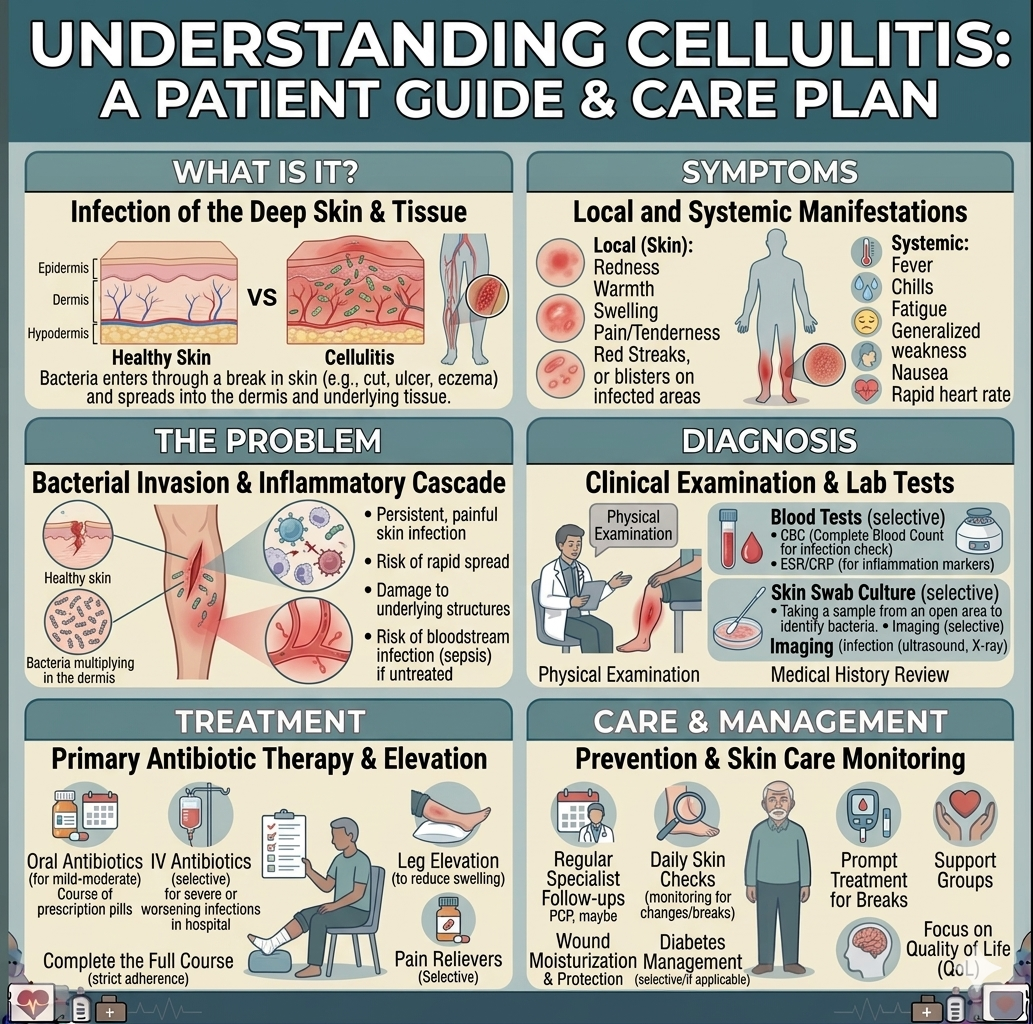
Cellulitis (pronounced 'sel-u-LIE-tis') is a common and potentially serious bacterial infection that spreads rapidly through the deeper layers of the skin. It typically occurs when bacteria enter the body through a break in the skin, such as a cut, scrape, surgical wound, or even dry, cracked skin. While it can appear anywhere on the body, it most frequently affects the lower leg and usually only one side. If left untreated, the infection can spread into the tissues beneath the skin, lymph nodes, and even the bloodstream, leading to severe complications. Prompt medical attention and antibiotic treatment are crucial for recovery.
Understanding the Condition
Cellulitis: A Guide to Skin Infection
Understanding the Condition
Common Symptoms
Redness: The affected skin appears red, often with an expanding pattern.
Swelling: The infected area becomes noticeably swollen.
Warmth: The skin over the infection feels warm to the touch.
Pain or Tenderness: The infected area is typically painful or tender when touched.
Fever: Systemic symptoms like fever may develop as the infection progresses.
Rapid Growth: The rash or affected area tends to grow quickly in size.
Consultation Guide
Which Specialist to Meet
Before your appointment, make a note of when your symptoms started, any recent skin injuries or breaks, and your full medical history. Be prepared to discuss any allergies and all current medications you are taking.
Book a doctor visit near me
This is the primary way cellulitis is diagnosed. A healthcare provider will carefully examine your skin and assess your symptoms.
Antibiotics (Oral): These medications target and kill the bacteria causing the infection. Oral antibiotics are typically prescribed for mild to moderate cases. (Duration: Typically 5 to 10 days, but follow your doctor's exact instructions and complete the full course even if symptoms improve.)
Pain Relievers: Over-the-counter pain medication can help manage pain and reduce fever. (Duration: As needed for symptom relief.)
Recognize Early Symptoms: Be aware of the signs of cellulitis (redness, warmth, swelling, pain) so you can seek medical attention quickly if symptoms appear.
Consultation Guide
Protect Your Skin: Wear appropriate clothing, footwear, and gloves when gardening or performing activities that could cause cuts or scrapes. Trim fingernails and toenails carefully to avoid injury.
Promptly Treat Skin Injuries: Clean any cuts, scrapes, or wounds immediately with antiseptic, apply an antibiotic ointment, and cover with a sterile bandage until healed. Watch for signs of infection.
Regular Follow-Up: If you experience frequent episodes of cellulitis, work with your doctor to identify and address underlying risk factors. This may involve ongoing management of chronic conditions.
Diagnostic Procedures
What to Expect
The doctor will visually inspect the affected area for characteristic signs like redness, swelling, and warmth. They will also gently touch the skin to check for tenderness and may look for any entry points for bacteria, such as cuts, insect bites, or rashes like athlete's foot. Your temperature and lymph nodes may also be checked to assess the severity of the infection.
In more severe cases, if the infection is widespread, or if initial treatments are not effective, blood tests may be ordered.
What to Expect
A small sample of blood will be taken, usually from a vein in your arm, using a needle. This test can help determine if the infection has spread into your bloodstream, identify the specific type of bacteria causing the infection, or rule out other conditions. You might feel a brief sting or pinch during the blood draw.
Treatment Options
Cellulitis (pronounced 'sel-u-LIE-tis') is a common and potentially serious bacterial infection that spreads rapidly through the deeper layers of the skin. It typically occurs when bacteria enter the body through a break in the skin, such as a cut, scrape, surgical wound, or even dry, cracked skin. While it can appear anywhere on the body, it most frequently affects the lower leg and usually only one side. If left untreated, the infection can spread into the tissues beneath the skin, lymph nodes, and even the bloodstream, leading to severe complications. Prompt medical attention and antibiotic treatment are crucial for recovery.
You should initially see your primary care provider (family doctor or general practitioner). If the infection is severe, recurrent, or doesn't respond to initial treatment, you might be referred to a dermatologist (skin specialist) or an infectious disease specialist.
Preparations Before Your Visit
Medications
Antibiotics (Intravenous - IV): For severe infections, if the infection is rapidly spreading, or if oral antibiotics are ineffective, antibiotics may be administered directly into your vein. (Duration: Varies depending on severity, often requiring hospitalization and several days of treatment before switching to oral antibiotics.)
Elevation of Affected Limb: Raising the infected limb above heart level helps reduce swelling and discomfort. (Duration: As needed, especially during the initial phase of treatment.)
Cool, Damp Compresses: Applying cool, damp compresses to the affected area can help soothe discomfort. (Duration: As needed for comfort.)
Manage Underlying Skin Conditions: Seek treatment for chronic skin conditions like athlete's foot, eczema, or dermatitis, as these can compromise the skin barrier and increase infection risk.
Address Swelling (Edema): If you have swelling in your limbs, elevate them regularly and follow your doctor's advice on managing the edema to prevent skin breaks.
Long-Term Monitoring and Management
Prophylactic Antibiotics: For individuals with recurrent cellulitis, a doctor might recommend taking long-term, low-dose antibiotic treatment to prevent future infections.
Prevention & Long-Term Wellbeing
Prevention
Practice Good Skin Hygiene: Keep your skin clean by washing regularly with soap and water, especially after any skin injury. Dry thoroughly after washing.
Keep Skin Well-Moisturized: Use lotions or creams to prevent dry, cracked skin, which can create entry points for bacteria.
Tags & Topics
Notice an error or need an update?
Help us keep medical information accurate. Report incorrect info or suggest an edit.


