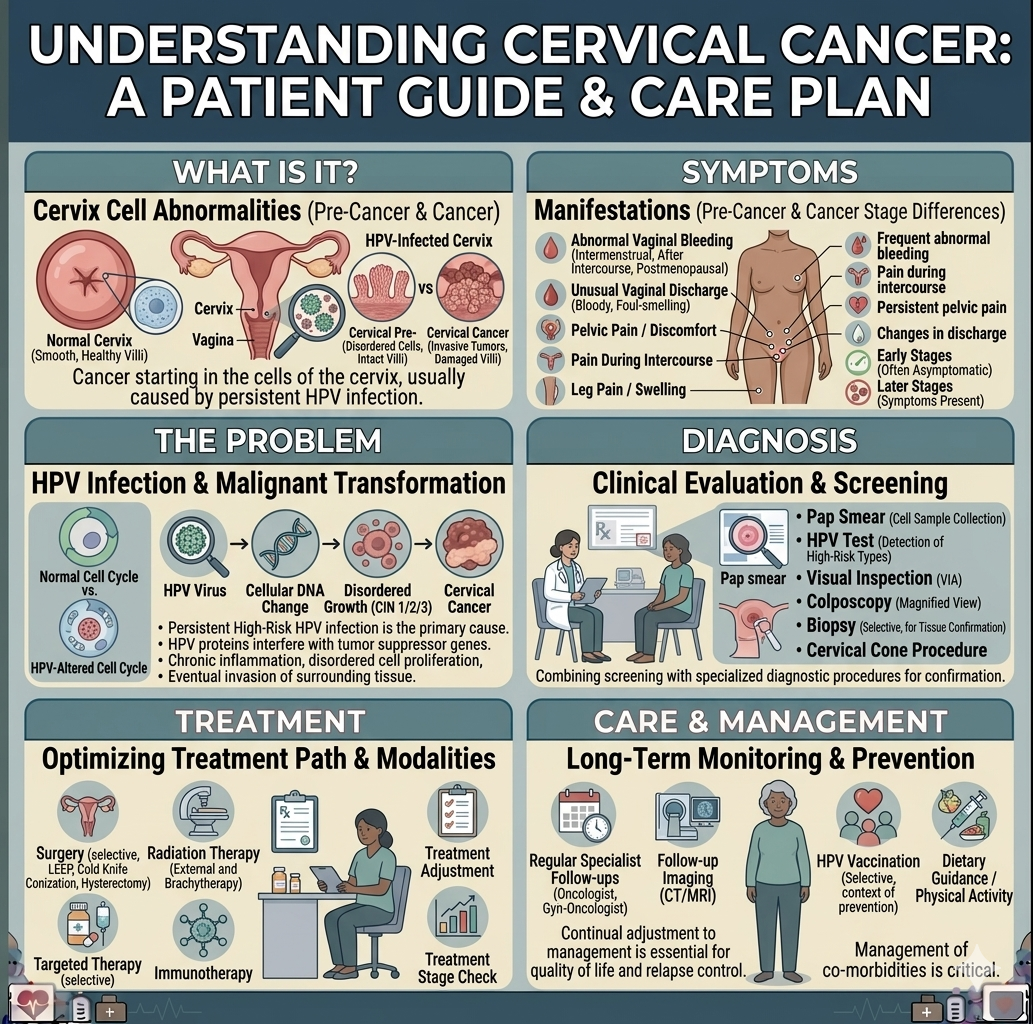
Cervical cancer is a type of cancer that begins in the cervix, which is the lower part of the uterus connecting to the vagina. Most cases are caused by certain strains of the Human Papillomavirus (HPV), a common infection spread through sexual contact. While the body's immune system usually clears HPV, persistent infections can lead to changes in cervical cells, eventually causing cancer. Regular screening tests and the HPV vaccine are crucial for reducing the risk of developing cervical cancer. Treatment often involves surgery, medication, and radiation therapy.
Understanding the Condition
Common Symptoms
No Symptoms in Early Stages: In its early stages, cervical cancer often does not cause any noticeable symptoms. This is why regular screening is so important for early detection.
Unusual Vaginal Bleeding: This includes bleeding after sexual intercourse, bleeding between menstrual periods, or any vaginal bleeding after menopause has begun.
Heavier or Longer Menstrual Periods: Menstrual bleeding that is unusually heavy or lasts longer than your typical period.
Abnormal Vaginal Discharge: A watery, bloody vaginal discharge that may be heavy and could have a foul odor.
Pelvic Pain or Pain During Sex: Discomfort or pain in the pelvic area, or pain experienced during sexual intercourse.
Consultation Guide
Which Specialist to Meet
Before your visit, make a list of any symptoms you're experiencing, including when they started and how often they occur. Gather your medical history, including any previous Pap test results and vaccinations. List all medications you're currently taking, including over-the-counter drugs and supplements. Prepare a list of questions you have for the doctor so you can make the most of your appointment.
Book a doctor visit near me
If a suspicious area is found during a colposcopy, a small tissue sample (biopsy) is taken from the cervix for laboratory testing to determine if cancer cells are present. A cone biopsy, also called conization, involves surgically removing a larger cone-shaped piece of tissue, often to treat or more definitively diagnose pre-cancer or early cancer. Cervical cysts (like nabothian cysts) are generally benign sacs on the cervix and are rarely cancerous; a biopsy is only done if they look concerning or cause unusual symptoms.
Palliative Care: This is specialized medical care focused on providing relief from pain and other symptoms of a serious illness, as well as managing treatment side effects. It aims to improve quality of life for both the person with cancer and their family, provided alongside other active treatments. (Duration: Palliative care can be ongoing throughout the course of the illness, adapting to changing needs.)
Consultation Guide
Cervical cancer is a type of cancer that begins in the cervix, which is the lower part of the uterus connecting to the vagina. Most cases are caused by certain strains of the Human Papillomavirus (HPV), a common infection spread through sexual contact. While the body's immune system usually clears HPV, persistent infections can lead to changes in cervical cells, eventually causing cancer. Regular screening tests and the HPV vaccine are crucial for reducing the risk of developing cervical cancer. Treatment often involves surgery, medication, and radiation therapy.
Often performed alongside a Pap test, this test checks for the presence of high-risk types of the Human Papillomavirus (HPV) that are most likely to cause cervical cancer.
You will lie on an exam table like for a Pap test. A speculum is inserted. A special vinegar solution may be applied to your cervix to make abnormal cells more visible, which might cause a mild burning or tingling sensation. The doctor will use a colposcope (a magnifying scope that stays outside your body) to examine the cervix closely.
Biopsy (Cervical Biopsy or Cone Biopsy)
You will lie on a motorized table that slides into a large, doughnut-shaped machine. You may be asked to hold your breath briefly at times. Sometimes, a contrast dye is given orally or intravenously to enhance the images, which might cause a warm sensation or metallic taste.
Diagnostic Procedures
You should consider seeing a gynecologist, a doctor specializing in women's reproductive health. If cervical cancer is suspected or diagnosed, you may be referred to a gynecologic oncologist, a surgeon who specializes in cancers of the female reproductive system.
Preparations Before Your Visit
This test involves collecting cells from your cervix to check for abnormal changes or cancer cells. It can also detect precancerous conditions like cervical dysplasia, where cells look different from typical cervical cells but are not yet cancer. Dysplasia can range from mild to severe and may go away on its own or, over time, could turn into cancer.
What to Expect
You will lie on an exam table. A doctor or nurse will insert a speculum into your vagina to gently hold the vaginal walls apart. A small brush or spatula is then used to collect cells from your cervix. You might feel a brief sensation of pressure or a slight scraping, but the procedure is usually quick.
What to Expect
The procedure is similar to a Pap test. Cells are collected from the cervix, sometimes from the same sample taken for the Pap test, and then sent to a lab to check for HPV DNA.
If your Pap test results are abnormal, a colposcopy is used to get a closer look at your cervix, vagina, and vulva with a special magnifying instrument. This helps identify any suspicious areas that may need a biopsy.
What to Expect
What to Expect
For a standard cervical biopsy, during the colposcopy, the doctor will remove a small piece of tissue. You might feel a brief pinch or cramp; a local anesthetic may be used. For a cone biopsy, it is usually performed under anesthesia (you'll be asleep or partly sedated). A surgeon will remove the cone-shaped tissue. After the procedure, you may experience cramping and vaginal discharge for a period of time.
CT Scan (Computerized Tomography Scan)
A CT scan uses specialized X-ray equipment and computer processing to create detailed cross-sectional images, or 'slices,' of bones, blood vessels, and soft tissues inside the body. It helps determine the extent of cancer spread.
What to Expect
An X-ray is a quick imaging test that uses a small amount of radiation to create pictures of the structures inside your body, especially bones. It can be used to check for spread to other areas.
What to Expect
You will be positioned between an X-ray machine and a plate that captures the image. You may need to hold still or hold your breath for a few seconds during the exposure. The procedure is painless and very quick.
Routine Pap Tests (Screening): Regular Pap tests can detect precancerous cell changes in the cervix, allowing them to be monitored or treated before they develop into cancer. Most medical guidelines suggest starting routine Pap tests around age 21 and repeating them every few years, based on your age and previous results.
Practice Safe Sex: Reducing your risk of sexually transmitted infections (STIs), including HPV, can lower your risk of cervical cancer. This includes consistently using condoms during sexual activity and limiting your number of sexual partners.
Don't Smoke: Smoking tobacco increases the risk of cervical cancer. If you don't smoke, don't start. If you do smoke, seek support to help you quit, as smoking can make HPV infections more persistent and increase cancer risk.
Long-Term Monitoring and Support
Treatment Options
Cervical Cancer: Understanding, Prevention, and Treatment
Understanding the Condition
Surgical Procedures
Surgery to Remove Cancerous Tissue: For very early-stage cancer, a surgeon may remove only the cancerous tissue and a small margin of healthy tissue around it, preserving the rest of the cervix and uterus. This can sometimes be a fertility-sparing option. (Duration: Surgery typically takes a few hours, with recovery lasting several weeks depending on the extent of the procedure.)
Hysterectomy: This involves surgically removing the uterus and potentially the cervix. This can be done through a large incision (open abdominal hysterectomy), or using minimally invasive techniques like laparoscopic or robotic-assisted surgery, which involves smaller incisions and often leads to less pain and quicker recovery. (Duration: The surgery itself typically lasts a few hours. Recovery can range from a few weeks for minimally invasive procedures to several months for open surgery.)
External Beam Radiation: This treatment uses a machine outside your body to direct high-energy beams to precisely target and kill cancer cells. (Duration: Typically, treatments are given daily, five days a week, for several weeks (e.g., 5-7 weeks).)
Brachytherapy (Internal Radiation): This involves placing radioactive material directly inside or very close to the cancer. This allows higher doses of radiation to be delivered to the tumor while minimizing exposure to surrounding healthy tissues. (Duration: Depending on the specific method, this can involve a few treatment sessions over several days or weeks, or permanent implants.)
Medications
Chemotherapy: Chemotherapy uses powerful drugs to kill fast-growing cancer cells throughout the body. These drugs can be given intravenously or orally. (Duration: Administered in cycles, with periods of treatment followed by rest, typically over several months.)
Targeted Therapy: These medicines focus on specific abnormalities or weaknesses within cancer cells, aiming to stop their growth or kill them while causing less harm to healthy cells. (Duration: Treatment can be ongoing for months or even years, depending on the response and type of medication.)
Chemoradiation: Often, radiation therapy is used in combination with low-dose chemotherapy. The chemotherapy drugs can make cancer cells more sensitive to radiation, enhancing the effectiveness of the treatment. (Duration: The combined treatment plan typically lasts several weeks to months, mirroring the radiation schedule with concurrent chemotherapy.)
Consistent Follow-Up Care: After treatment, regular follow-up appointments are crucial to monitor for any signs of cancer recurrence, manage long-term side effects, and ensure overall health and wellbeing.
Healthy Lifestyle Choices: Maintaining a balanced diet, engaging in regular physical activity, and practicing stress-reduction techniques can support your immune system and overall health during and after cancer treatment.
Open Communication with Your Healthcare Team: Always feel comfortable asking questions, seeking second opinions, and discussing any concerns or changes in your health with your doctors and nurses. Being informed is key to managing your health effectively.
Prevention & Long-Term Wellbeing
Prevention
HPV Vaccination: Receiving the HPV vaccine can significantly reduce your risk of cervical cancer and other HPV-related cancers. It is recommended for young individuals, typically starting in pre-teen years, and for some adults up to age 45.
Tags & Topics
Notice an error or need an update?
Help us keep medical information accurate. Report incorrect info or suggest an edit.


