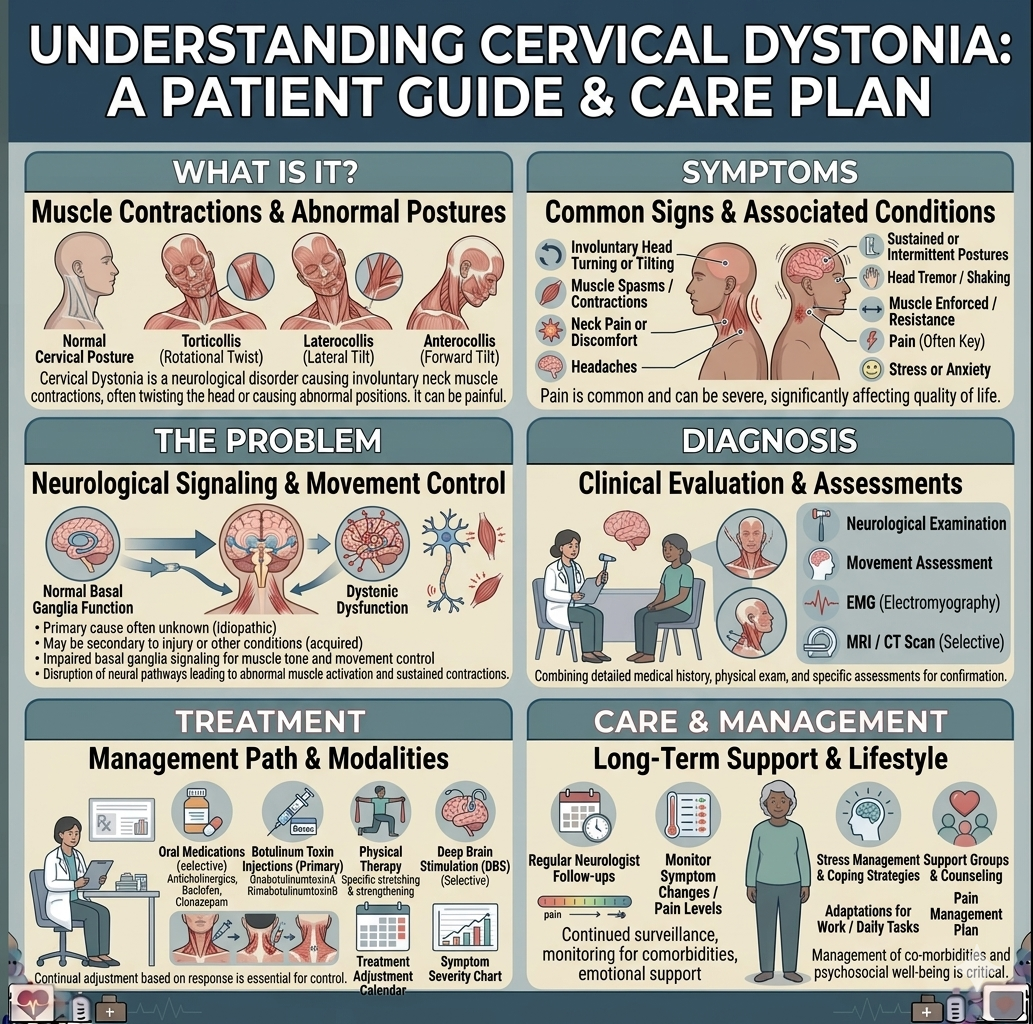
Cervical dystonia, also known as spasmodic torticollis, is a rare and painful neurological disorder that causes the neck muscles to contract involuntarily. These contractions force the head to twist, turn, or tilt uncontrollably in various directions. While it can develop at any age, it is most frequently diagnosed in middle-aged individuals and is more common in women than men. Although there is no cure, diverse treatments are available to manage symptoms and improve daily functioning.
Understanding the Condition
Understanding Cervical Dystonia (Spasmodic Torticollis)
Understanding the Condition
Cervical dystonia, also known as spasmodic torticollis, is a rare and painful neurological disorder that causes the neck muscles to contract involuntarily. These contractions force the head to twist, turn, or tilt uncontrollably in various directions. While it can develop at any age, it is most frequently diagnosed in middle-aged individuals and is more common in women than men. Although there is no cure, diverse treatments are available to manage symptoms and improve daily functioning.
Common Symptoms
Abnormal Head Posture: The neck muscles contract involuntarily, pulling the chin toward the shoulder, or tilting the head sharply forward, backward, or sideways.
Head Jerking: Sudden, repetitive, and uncontrollable jerking movements of the head.
Radiating Neck Pain: Significant discomfort and stiffness in the neck that can travel down into the shoulders, sometimes becoming severe and exhausting.
You should consult a neurologist, ideally one who specializes in movement disorders. If your symptoms are accompanied by severe pain, you may also be referred to a physical therapist or a pain management specialist.
Preparations Before Your Visit
Before your appointment, keep a detailed symptom diary logging when the spasms occur, how long they last, and what triggers or relieves them. List all current medications, previous head or neck injuries, and any family history of movement disorders. Prepare a list of questions regarding treatment options and long-term management.
Book a doctor visit near me
Botulinum Toxin Injections: Targeted injections administered directly into the overactive neck muscles to block chemical signals that cause contractions, relaxing the muscle tissue. (Duration: Administered every 3 to 4 months; this is an ongoing, long-term therapy to maintain symptom control.)
Consultation Guide
Tension Headaches: Frequent, persistent headaches caused by chronic strain and tension in the neck muscles.
Spasm Spread: Involuntary muscle contractions that can eventually extend to adjacent areas of the body, such as the face, jaw, arms, and trunk.
Consultation Guide
Which Specialist to Meet
Diagnostic Procedures
Electromyography (EMG)
A diagnostic procedure used to evaluate the health of your muscles and the motor neurons (nerve cells) that control them by translating electrical signals into visual data.
What to Expect
During a needle EMG, a specialist inserts a very thin, sterile needle electrode directly into your affected neck muscles. You may feel a slight pinch or discomfort as the needle enters. The electrode records the electrical activity while your muscles are at rest and when you contract them.
Nerve Conduction Study (NCS)
Typically performed alongside an EMG, this study measures the speed and strength of electrical signals moving through your peripheral nerves.
What to Expect
The technician will place adhesive electrode patches on your skin. They will apply a mild, brief electrical pulse to stimulate specific nerves. You will feel a safe, sudden tingling sensation or muscle twitch.
Clinical Neurological and Physical Examination
An in-depth assessment of your posture, reflexes, muscle strength, and the range of motion in your neck and shoulders to pinpoint which muscle groups are contracting.
What to Expect
The physician will physically examine your neck, ask you to perform simple movements, and apply gentle pressure to test muscle resistance and reflex responses.
Treatment Options
Medications
Oral Muscle Relaxants and Nerve-Signal Regulators: Prescription oral medications designed to reduce muscle stiffness, calm spasms, or block specific neurotransmitters that trigger involuntary movements. (Duration: Taken daily on a continuous basis, with frequent dosage adjustments managed by your neurologist.)
Surgical Procedures
Deep Brain Stimulation (DBS): A surgical procedure where thin electrodes are implanted into specific areas of the brain. They are connected to a pacemaker-like generator implanted under the skin of the chest to regulate irregular brain activity. (Duration: A permanent surgical implant requiring lifelong monitoring, with battery replacements every few years and regular electronic adjustments.)
Therapies
Physical and Occupational Therapy: Tailored stretching and strengthening exercises to improve neck flexibility, correct posture, and rebuild muscle strength. (Duration: Several months of weekly clinical sessions combined with a lifelong daily home-exercise program.)
Sensory Tricks (Geste Antagoniste): Gently touching the opposite side of the face, chin, or the back of the head, which can temporarily disrupt the neurological signals and stop a spasm. (Duration: Used as needed throughout the day for immediate, temporary relief.)
Prevention & Long-Term Wellbeing
Prevention and Long-Term Management
Stress Reduction Techniques: Practice mindfulness, meditation, deep breathing exercises, or gentle yoga regularly, as stress and anxiety directly worsen muscle spasms.
Ergonomic Workspace Setup: Adjust computer monitors, chairs, and desks so your head remains in a neutral, relaxed position without tilting forward or straining.
Heat and Cold Therapy: Apply warm compresses to relax tight neck muscles, or ice packs to reduce localized pain and inflammation in the shoulders.
Support Groups: Join local or online dystonia support communities to share coping strategies, manage emotional health, and reduce feelings of isolation.
Tags & Topics
Notice an error or need an update?
Help us keep medical information accurate. Report incorrect info or suggest an edit.


