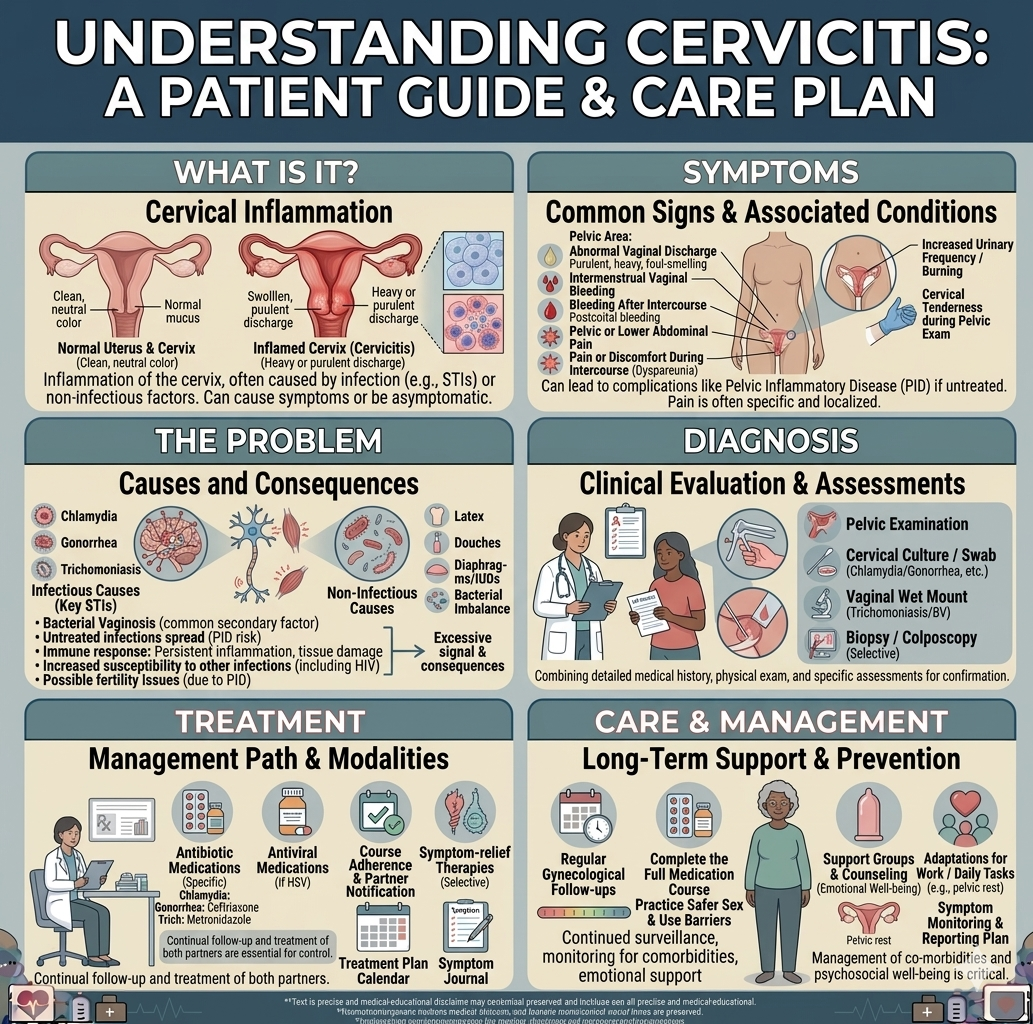
Cervicitis is the inflammation of the cervix, which is the lower, narrow part of the uterus that connects directly to the vagina. This common condition is often caused by sexually transmitted infections (STIs), bacterial imbalances, or allergic reactions to intimate products. While cervicitis can sometimes cause symptoms like unusual vaginal discharge or pelvic pain, many people experience no symptoms at all. Effective recovery requires addressing the root cause of the inflammation.
Understanding the Condition
Understanding Cervicitis: Causes, Symptoms, and Treatments
Understanding the Condition
Cervicitis is the inflammation of the cervix, which is the lower, narrow part of the uterus that connects directly to the vagina. This common condition is often caused by sexually transmitted infections (STIs), bacterial imbalances, or allergic reactions to intimate products. While cervicitis can sometimes cause symptoms like unusual vaginal discharge or pelvic pain, many people experience no symptoms at all. Effective recovery requires addressing the root cause of the inflammation.
Common Symptoms
Abnormal Vaginal Discharge: An unusual increase in vaginal discharge, which may appear yellow, green, or gray, and can sometimes have an unpleasant odor.
Painful Intercourse: Discomfort or pain during sexual activity, often accompanied by light bleeding or spotting immediately afterward.
Bleeding Between Periods: Unexpected vaginal spotting or bleeding that occurs outside of your normal menstrual cycle.
Painful or Frequent Urination: An urgent need to urinate more often than usual, which may be accompanied by a burning sensation.
Pelvic Pressure or Dull Ache: A persistent feeling of pressure or mild, dull aching in the lower abdomen.
Consultation Guide
Which Specialist to Meet
You should consult a primary care doctor, a gynecologist, or an obstetrician-gynecologist (OB-GYN) who specializes in female reproductive health.
Preparations Before Your Visit
To prepare for your visit, avoid douching, using tampons, or having sexual intercourse for 24 to 48 hours before your appointment, as these can alter vaginal fluids and affect test results. Write down your symptoms, the first day of your last period, and any list of products you use (such as soaps, douches, or spermicides).
Book a doctor visit near me
Routine Gynecological Screenings: Scheduling regular pelvic exams and STI screenings to catch and treat infections early, even if you do not experience any noticeable symptoms.
Avoid Douching: Steering clear of vaginal douches, which strip away the natural, healthy bacteria that protect the vagina from overgrowth and infection.
Consultation Guide
During the pelvic exam, the doctor will use a small, soft cotton swab or a tiny spatula to gently swipe the surface of your cervix. This takes only a few seconds and is generally painless, though it might cause temporary mild cramping.
A laboratory evaluation of a urine sample to check for urinary tract infections or potential sexually transmitted infections that can mimic or accompany cervicitis.
Antiviral Medications: Prescription medications used if the inflammation is caused by a viral infection like genital herpes, helping to shorten and suppress outbreaks. (Duration: Generally 7 to 10 days for an active outbreak, or taken daily for long-term suppression.)
Diagnostic Procedures
A physical assessment where the physician visually and physically examines your external and internal reproductive organs to look for signs of redness, swelling, tenderness, or unusual discharge.
What to Expect
You will lie on an examination table with your feet placed in stirrups. The doctor will gently insert an instrument called a speculum into your vagina to separate the walls, allowing them to view your cervix. You may feel mild pressure or minor cramping during this brief procedure.
Cervical Swab (Fluid Sample Analysis)
The collection of cells and fluid from the cervix to test in a laboratory for infections such as chlamydia, gonorrhea, trichomoniasis, or bacterial vaginosis.
What to Expect
What to Expect
You will be given a sterile cup and asked to provide a mid-stream urine sample in the clinic's restroom. This is a non-invasive procedure with no discomfort.
Monogamous Relationships: Limiting your number of sexual partners or maintaining a mutually monogamous relationship where both partners have tested negative for STIs.
Treatment Options
Medications
Antibiotic Therapy: Prescription oral medications designed to clear bacterial infections like chlamydia or gonorrhea. (Duration: Typically a single dose or a 7-day course, depending on the specific bacteria found.)
Partner Treatment: Concurrent treatment for sexual partners to ensure the infection is not passed back and forth. (Duration: Completed at the same time as the patient's treatment. Both partners should avoid sexual contact until therapy is fully completed.)
Surgical and Outpatient Procedures
Cryotherapy: An outpatient procedure using extreme cold to freeze and destroy abnormal or inflamed cervical tissue in persistent, non-infectious cases. (Duration: A single clinic procedure lasting about 15 minutes, with full tissue healing taking 3 to 6 weeks.)
Electrocautery (Thermal Ablation): A procedure that uses electrical current to apply heat to the cervix to remove inflamed or damaged tissue. (Duration: A single outpatient procedure taking roughly 15 to 30 minutes; complete healing takes several weeks.)
Home and Supportive Care
Pelvic Rest: Avoiding sexual activity during treatment to allow the cervical tissue to heal without irritation. (Duration: Until your doctor confirms the inflammation has completely cleared (typically 1 to 2 weeks post-treatment).)
Prevention & Long-Term Wellbeing
Eliminating Chemical Irritants: Stopping the use of potential allergens and irritants such as scented body washes, bubble baths, douches, and spermicide-containing contraceptives. (Duration: Ongoing as a permanent preventive lifestyle adjustment.)
Consistent Condom Use: Using latex or polyurethane condoms correctly every time you engage in sexual activity to block the transmission of infectious organisms.
Tags & Topics
Notice an error or need an update?
Help us keep medical information accurate. Report incorrect info or suggest an edit.


