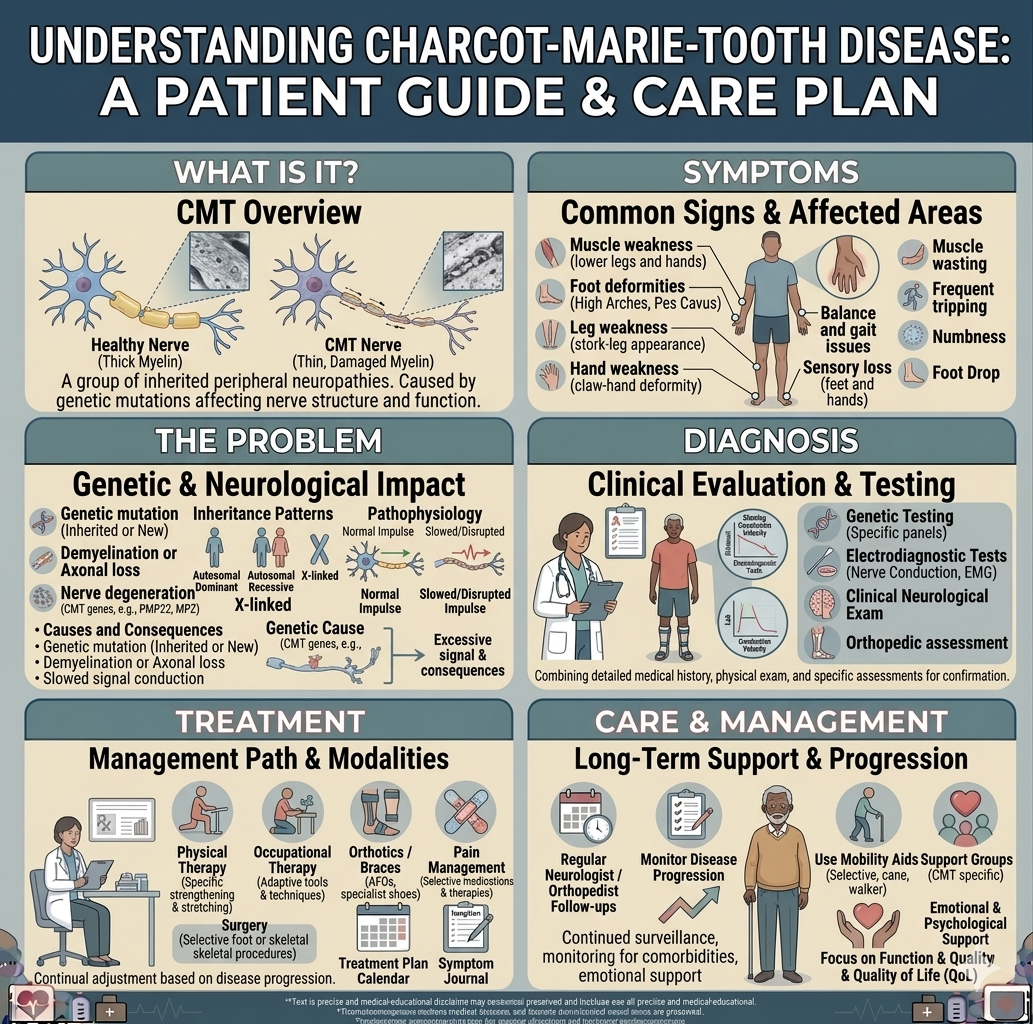
Charcot-Marie-Tooth (CMT) disease is a group of inherited conditions that cause progressive damage to the peripheral nerves—the nerves that extend from the brain and spinal cord to the arms, legs, hands, and feet. This nerve damage leads to muscle weakness, loss of sensation, and difficulties with walking and balance. CMT is also known as hereditary motor and sensory neuropathy, and its symptoms can vary widely, even among family members.
Understanding the Condition
Charcot-Marie-Tooth Disease: Understanding a Hereditary Nerve Condition
Understanding the Condition
Charcot-Marie-Tooth (CMT) disease is a group of inherited conditions that cause progressive damage to the peripheral nerves—the nerves that extend from the brain and spinal cord to the arms, legs, hands, and feet. This nerve damage leads to muscle weakness, loss of sensation, and difficulties with walking and balance. CMT is also known as hereditary motor and sensory neuropathy, and its symptoms can vary widely, even among family members.
Common Symptoms
Muscle Weakness and Atrophy: Progressive loss of muscle bulk and strength, particularly in the feet, lower legs, hands, and forearms. This can make daily activities challenging.
Foot Deformities: Common issues include high arches (pes cavus) and hammertoes (toes that curl downwards). These can lead to discomfort and difficulty finding shoes.
Foot Drop: Difficulty lifting the front part of the foot, causing a tendency to drag the foot or lift the knee high when walking (steppage gait) to avoid tripping.
Balance Problems: Reduced stability due to weakened leg muscles and loss of sensation in the feet, increasing the risk of falls.
Loss of Sensation: Numbness, tingling, or reduced ability to feel touch, pain, and temperature, typically starting in the feet and legs, and later affecting the hands and arms. This can lead to unnoticed injuries.
Hand and Arm Weakness: As the disease progresses, weakness can spread to the hands and arms, making fine motor tasks like buttoning clothes or writing difficult.
Consultation Guide
Which Specialist to Meet
Before your visit, create a detailed list of all your symptoms, including when they started and how they've changed. Prepare a complete list of all medications, supplements, and over-the-counter drugs you take. Gather any family medical history, especially if other relatives have similar nerve conditions. Write down any questions you have for the doctor.
Book a doctor visit near me
Regular Neurological Check-ups: Scheduled visits with your neurologist are essential to monitor disease progression, adjust treatment plans, and address any new symptoms or concerns.
Adaptive Equipment Assessment: Regularly reassess the need for and fit of orthotics, braces, or other assistive devices to ensure they continue to provide optimal support and function as your condition evolves.
Mental and Emotional Support: Living with a chronic progressive condition can be challenging. Seeking support from counselors, support groups, or mental health professionals can help manage emotional wellbeing.
Consultation Guide
This involves examining your DNA to identify specific changes (mutations) in genes known to cause Charcot-Marie-Tooth disease. Genetic testing can confirm a diagnosis, identify the specific type of CMT, and provide information for family planning.
If standard genetic testing doesn't yield a diagnosis but a genetic cause is still strongly suspected, genome sequencing (often focusing on the 'exome,' the protein-coding parts of DNA) may be performed. This advanced test analyzes a broader range of your genetic material.
Diagnostic Procedures
You should consult with a neurologist, a doctor specializing in nervous system disorders. A genetic counselor can provide information about inheritance patterns and testing. Physical therapists, occupational therapists, and orthopedic surgeons (for severe foot issues) may also be part of your care team.
Preparations Before Your Visit
Electromyography (EMG)
This procedure evaluates the health of your muscles and the nerve cells that control them. It can identify nerve or muscle dysfunction or problems with how nerves send signals to muscles.
What to Expect
An EMG typically involves two parts. First, a Nerve Conduction Study uses small electrode stickers placed on your skin to send brief, mild electrical pulses along your nerves. You may feel a tingling or twitching sensation as the speed and strength of nerve signals are measured. Second, a Needle EMG involves inserting a thin needle electrode directly into specific muscles. This records the electrical activity of the muscle when it's at rest and during gentle contraction. You might feel a brief sting or discomfort when the needle is inserted. The results are displayed as graphs, sounds, or numerical values interpreted by the specialist.
What to Expect
Genetic testing usually requires a blood sample, though sometimes a cheek swab may be used. The sample is sent to a laboratory for analysis. This procedure carries very little physical risk beyond the minor discomfort of a blood draw.
What to Expect
Similar to genetic testing, genome sequencing typically involves providing a blood sample. This sample is then analyzed in a specialized lab to look for subtle genetic variations that might be linked to your condition. Physical risks are minimal.
Treatment Options
Therapies
Physical Therapy: Exercises designed to strengthen muscles, improve balance, maintain joint flexibility, and prevent stiffness or contractures. (Duration: Ongoing, long-term)
Occupational Therapy: Strategies and adaptive equipment to help manage daily tasks affected by hand and arm weakness, such as dressing, eating, or writing. (Duration: Ongoing, long-term as needed)
Orthotics and Assistive Devices: Custom ankle-foot orthoses (AFOs), braces, splints, or specialized shoes to support feet and ankles, improve walking, and prevent injuries. Canes or walkers may be used for balance support. (Duration: Ongoing, adjusted as needed)
Medications
Pain Management: Over-the-counter pain relievers or prescription medications may be used to manage nerve pain or muscle cramps associated with CMT. (Duration: As needed, short to long term)
Surgical Procedures
Orthopedic Surgery: For severe foot deformities like high arches, hammertoes, or significant joint instability, surgery can correct these issues, improve comfort, and enhance walking ability. (Duration: One-time procedure, with recovery time varying based on the specific surgery)
Medication Review: Discuss all prescription, over-the-counter, and herbal medications with your healthcare professional. Certain drugs, like some chemotherapy agents, can worsen nerve damage and should be avoided or used with caution in people with CMT.
Prevention & Long-Term Wellbeing
Home Remedies/Lifestyle
Regular, Low-Impact Exercise: Activities like swimming, cycling, or water aerobics can help maintain muscle strength and flexibility without excessive stress on joints. (Duration: Ongoing)
Careful Foot Inspection: Daily checks for cuts, blisters, or sores are crucial, especially if sensation is reduced, to prevent infections. (Duration: Ongoing)
Proper Footwear: Wearing well-fitting, supportive shoes can prevent injury and accommodate foot deformities. Avoid tight or ill-fitting shoes. (Duration: Ongoing)
Prevention and Risk Management
Genetic Counseling: For individuals with a family history of CMT, genetic counseling can help understand inheritance patterns, reproductive risks, and options for family planning.
Injury Prevention: Due to decreased sensation and muscle weakness, it's important to take precautions to prevent falls and injuries, such as ensuring adequate lighting, removing tripping hazards, and wearing protective footwear.
Long-Term Monitoring and Support
Healthy Lifestyle Maintenance: Adopting a balanced diet, engaging in appropriate exercise, avoiding smoking, and limiting alcohol intake can contribute to overall health and potentially support nerve function.
Tags & Topics
Notice an error or need an update?
Help us keep medical information accurate. Report incorrect info or suggest an edit.


