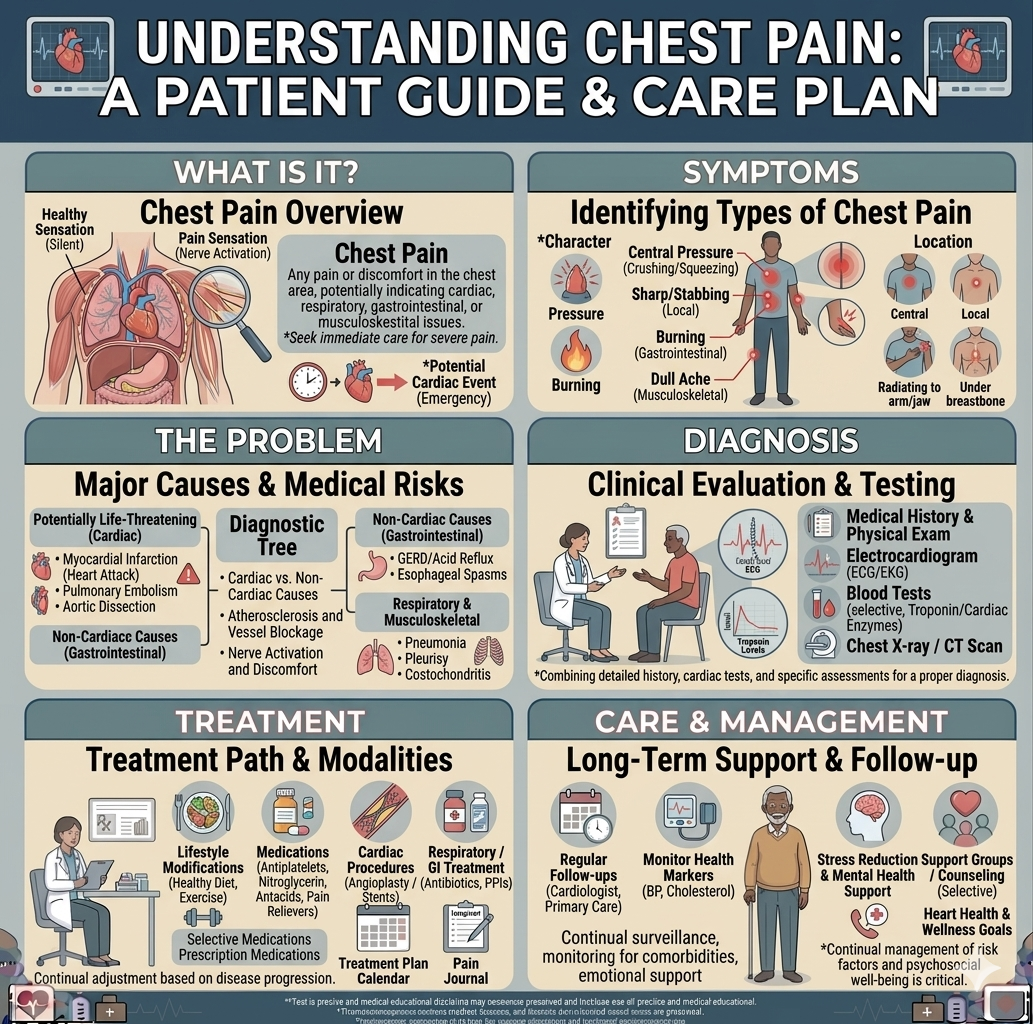
Chest pain is discomfort or pain felt anywhere between your neck and upper abdomen. It can vary in feeling—sharp or dull, intermittent or constant. As many causes, especially those involving the heart or lungs, can be serious or life-threatening, it's vital to seek prompt medical attention for an accurate diagnosis. If you suspect a heart attack, call emergency services immediately.
Understanding the Condition
Chest Pain: Understanding Causes, Symptoms, and Care
Understanding the Condition
Common Symptoms
General Chest Pain Characteristics: Chest pain symptoms vary widely based on the cause. It can feel like pressure, tightness, squeezing, or aching. Pain might spread to the shoulder, arm, back, neck, jaw, teeth, or upper belly. It can be accompanied by shortness of breath, indigestion, cold sweats, lightheadedness, or a fast heartbeat. Distinguishing heart-related chest pain from other causes often requires medical evaluation.
Heart-Related Chest Pain Symptoms: If related to a heart condition like a heart attack, common symptoms may include: pressure, tightness, squeezing, or aching in the chest; pain spreading to the shoulder, arm, back, neck, jaw, teeth, or upper belly; shortness of breath; indigestion or a heartburn-like sensation; cold sweats; lightheadedness or dizziness; and a fast heartbeat.
Consultation Guide
Which Specialist to Meet
Start with a primary care physician. Depending on findings, you might be referred to a cardiologist (heart), pulmonologist (lungs), or gastroenterologist (digestive system). For severe, sudden pain, emergency medical care is necessary.
Preparations Before Your Visit
Document your symptoms (onset, duration, what helps/worsens), existing medical conditions, current medications, and any questions you have.
Book a doctor visit near me
Electrodes monitor your heart. You'll walk on a treadmill or ride a bike, gradually increasing intensity, or receive medication. Your blood pressure is checked. The test continues until you reach a target heart rate or develop symptoms, lasting 15-30 minutes.
Symptom Awareness: Be vigilant about new or changing symptoms and report them promptly.
Consultation Guide
Chest pain is discomfort or pain felt anywhere between your neck and upper abdomen. It can vary in feeling—sharp or dull, intermittent or constant. As many causes, especially those involving the heart or lungs, can be serious or life-threatening, it's vital to seek prompt medical attention for an accurate diagnosis. If you suspect a heart attack, call emergency services immediately.
Quit Smoking: Smoking is a major risk factor for heart disease and other conditions.
Manage Stress: Use relaxation techniques like meditation or deep breathing.
Control Underlying Conditions: Effectively manage high blood pressure, high cholesterol, and diabetes.
Long-Term Monitoring & Management
Regular Medical Check-ups: Ensure ongoing health monitoring.
Diagnostic Procedures
Cardiac Catheterization
This procedure uses a thin tube (catheter) guided through a blood vessel to the heart. It offers detailed views of heart chambers, valves, and arteries to diagnose blockages or irregular rhythms.
What to Expect
You'll lie on an X-ray table. After numbing the insertion site (usually arm or leg), the catheter is inserted and guided to your heart using X-ray imaging. You might feel pressure but generally no pain. The doctor can take measurements, inject dye, or open narrowed arteries. The procedure takes 30 minutes to a few hours. You'll need to rest afterward to prevent bleeding.
Uses radiation to create images of your heart, lungs, blood vessels, airways, and chest bones. Helps detect issues like fluid, collapsed lungs, pneumonia, or an enlarged heart.
What to Expect
You'll stand or sit, positioned by a technician. You'll take a deep breath and hold it for seconds while the quick, painless image is taken. Remove metal jewelry.
CT Scan (Computerized Tomography Scan)
Combines multiple X-ray images from different angles to create detailed cross-sectional (slice) views of bones, blood vessels, and soft tissues, offering more detail than standard X-rays.
What to Expect
You lie on a moving table that slides into a large ring-shaped machine. The scanner rotates, taking images. You may receive a contrast dye to highlight areas. Remain still for the several-minute to half-hour scan.
Uses sound waves (ultrasound) to create moving pictures of your heart, showing how its chambers and valves work and blood flows, helping diagnose heart conditions.
What to Expect
A technician applies gel to your chest and moves a transducer device over it. This device sends and receives sound waves, displaying heart images on a monitor. The test is painless and takes 30-60 minutes.
Electrocardiogram (ECG or EKG)
A quick, non-invasive test recording the heart's electrical activity. It helps identify heart rate, irregular rhythms, and signs of heart attacks or other problems.
What to Expect
Sticky electrode patches are placed on your chest, arms, and legs, connected to an ECG machine. You'll lie still for a few minutes while the painless recording occurs.
Shows heart performance during physical activity (exercise stress test) or with medication. It monitors heart rate, blood pressure, and breathing to detect blood flow changes not visible at rest.
What to Expect
Follow-up Diagnostics: Undergo recommended follow-up tests to track progress or disease activity.
Education: Understand your specific condition to better participate in your care.
Treatment Options
Medications
Blood Thinners: To prevent clots (heart conditions). (Duration: Often long-term)
Nitrates: To relax blood vessels, improving heart blood flow (angina). (Duration: As needed or daily)
Acid Reducers: To decrease stomach acid (GERD). (Duration: Weeks to months or long-term)
Anti-inflammatory Drugs: For pain from inflammation (muscle, pericarditis). (Duration: Days to weeks)
Angioplasty and Stenting: To open blocked heart arteries using a balloon and often inserting a mesh tube (stent). (Duration: One-time procedure, with long-term monitoring)
Ablation: To correct irregular heart rhythms by scarring heart tissue. (Duration: One-time procedure)
Endoscopy: For digestive issues, to examine and sometimes treat problems in the esophagus or stomach. (Duration: One-time procedure, or as needed for follow-up)
Surgical Procedures
Coronary Artery Bypass Graft (CABG): To reroute blood around blocked arteries in the heart. (Duration: One-time major surgery, with lifelong management)
Aorta Repair: For conditions like aortic dissection. (Duration: One-time emergency surgery)
Gallbladder Removal: For severe gallstone disease. (Duration: One-time surgery)
Therapies
Adhere to Treatment Plans: Take prescribed medications and follow all doctor's recommendations.
Prevention & Long-Term Wellbeing
Home Remedies & Lifestyle
Rest: For chest pain due to muscle strain or minor injury. (Duration: Days to weeks)
Dietary Adjustments: Avoiding trigger foods, eating smaller meals for acid reflux. (Duration: Ongoing)
Over-the-Counter Antacids: For mild heartburn. (Duration: As needed)
Cardiac Rehabilitation: A supervised program of exercise, education, and counseling for heart recovery. (Duration: Weeks to months)
Prevention
Healthy Diet: Focus on whole foods; limit unhealthy fats, sodium, and sugar.
Regular Physical Activity: Aim for at least 30 minutes of moderate exercise most days.
Maintain a Healthy Weight: Reduces strain on the body.
Tags & Topics
Notice an error or need an update?
Help us keep medical information accurate. Report incorrect info or suggest an edit.


