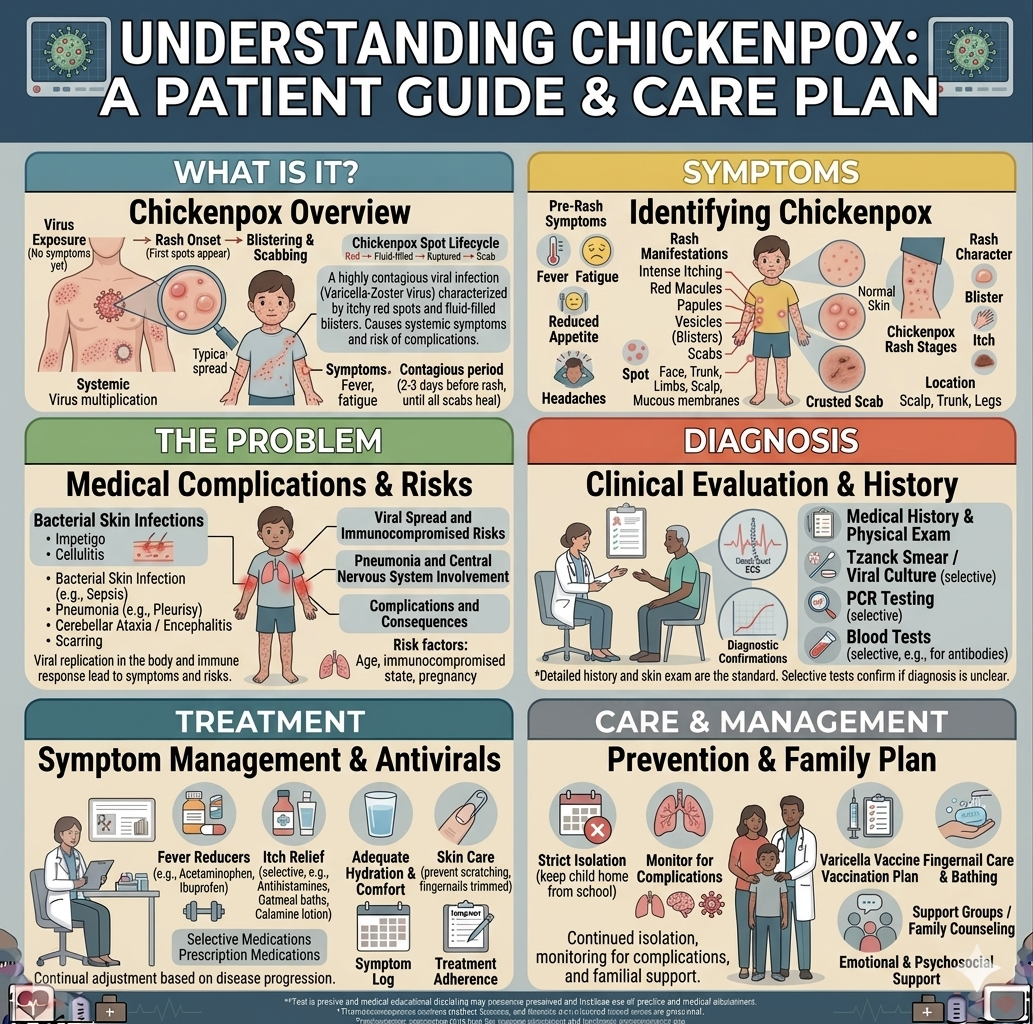
Chickenpox is a highly contagious viral infection caused by the varicella-zoster virus. It is characterized by an itchy, blister-like skin rash that eventually scabs over. The virus spreads easily through the air when an infected person coughs or sneezes, or through direct contact with the fluid from the blisters. While chickenpox is generally a mild, self-limiting childhood illness, it can lead to severe health complications in infants, adults, pregnant women, and individuals with weakened immune systems. The widespread use of the varicella vaccine has significantly reduced the global prevalence of this disease.
Understanding the Condition
Understanding Chickenpox: Symptoms, Diagnosis, and Management
Understanding the Condition
Common Symptoms
Early Malaise and Fever: One to two days before the rash appears, individuals often experience a general feeling of being unwell (malaise), accompanied by a mild fever, fatigue, and a loss of appetite.
Raised Red Bumps (Papules): The first phase of the rash involves the breakout of itchy, raised pink or red bumps. These bumps continue to appear over several days.
Fluid-Filled Blisters (Vesicles): Within about 24 hours, the raised bumps develop into small, thin-walled blisters filled with clear fluid. These blisters are highly fragile and can easily break open and leak.
Crusts and Scabs: Once the blisters break and release their fluid, they dry out and form crusts and scabs. These scabs take several days to heal and eventually flake off.
Mucosal and Severe Lesions: In moderate to severe cases, the blister-like rash can cover the entire body. Lesions may also form in the throat, eyes, and the mucous membranes lining the urethra, vagina, and anus.
Consultation Guide
Which Specialist to Meet
You should consult a Pediatrician (for children) or a Primary Care Physician/General Practitioner (for adults). If serious complications arise, such as severe skin infections, neurological symptoms, or respiratory issues, you may be referred to a Dermatologist, Pulmonologist, or an Infectious Disease Specialist.
Preparations Before Your Visit
Before your medical visit, write down all observed symptoms, their onset timeline, and any known contact with infected individuals. Crucially, call the clinic or doctor's office ahead of time to inform them of a suspected chickenpox case. This allows the medical staff to arrange isolation upon your arrival, preventing transmission to vulnerable patients in the waiting area.
Book a doctor visit near me
A thorough visual assessment of the skin rash and evaluation of accompanying symptoms by a healthcare provider.
Symptom Control and Home Remedies
Skin-Soothing Topicals: Applying cold compresses or calamine lotion to the affected areas of the skin to temporarily relieve itching. (Duration: 5 to 10 days, or until the rash has completely crusted over.)
Lukewarm Oatmeal Baths: Bathing in lukewarm water mixed with finely ground colloidal oatmeal to soothe widespread skin irritation. (Duration: 15 to 20 minutes per bath, taken multiple times a day for 5 to 7 days.)
Symptom Management and Scar Prevention
Nail Hygiene: Keeping fingernails trimmed short and clean to prevent skin damage and bacterial infection from scratching. For infants and toddlers, wearing soft cotton mittens can help protect their skin.
Hydration Support: Drinking plenty of fluids like water, broth, or herbal teas to prevent dehydration. This is especially vital if painful chickenpox sores have developed inside the mouth or throat.
Consultation Guide
Chickenpox is a highly contagious viral infection caused by the varicella-zoster virus. It is characterized by an itchy, blister-like skin rash that eventually scabs over. The virus spreads easily through the air when an infected person coughs or sneezes, or through direct contact with the fluid from the blisters. While chickenpox is generally a mild, self-limiting childhood illness, it can lead to severe health complications in infants, adults, pregnant women, and individuals with weakened immune systems. The widespread use of the varicella vaccine has significantly reduced the global prevalence of this disease.
Diagnostic Procedures
Clinical Visual Examination
What to Expect
The doctor will examine the distribution, size, and appearance of the bumps, blisters, and scabs on your skin. They will ask questions about your medical history, fever onset, and vaccine record. This is a non-invasive, painless visual check.
Viral Culture or PCR Swab Test
A laboratory test that detects the presence of varicella-zoster virus DNA directly from the fluid of an active skin lesion.
What to Expect
The practitioner will gently rub a sterile cotton swab against the base of a freshly opened blister. You may feel a slight scraping sensation or mild discomfort, but the procedure is completed in a few seconds.
Serological Blood Test
A blood test used to detect specific antibodies (IgM and IgG) to confirm an active infection or establish pre-existing immunity.
What to Expect
A phlebotomist will insert a small needle into a vein in your arm to draw a small sample of blood. You will feel a brief prick or pinch. The sample is then sent to a laboratory for analysis.
Treatment Options
Medications
Fever Reducers and Pain Relievers: Medications to reduce fever and alleviate body aches. Note: Aspirin must be strictly avoided in children and teenagers due to the risk of Reye's syndrome, a rare but life-threatening liver and brain disease. (Duration: 3 to 5 days, used as needed.)
Oral Antihistamines: Medications taken orally to calm severe, systemic itching and improve sleep quality. (Duration: 5 to 10 days, or as directed by a healthcare provider.)
Antiviral Drugs: Prescription antiviral medications designed to decrease the severity and duration of the viral infection. These are typically reserved for high-risk patients (such as adults, pregnant women, and people with compromised immune systems) and should ideally be started within 24 hours of rash onset. (Duration: Typically 5 to 7 days.)
Antibiotic Therapy: Prescription antibiotics used to treat secondary bacterial infections of the skin, soft tissues, or lungs that can occur from scratching open lesions. (Duration: 7 to 10 days, depending on the severity of the bacterial infection.)
Prevention & Long-Term Wellbeing
Prevention and Protection
Varicella Vaccination: The most effective method of preventing chickenpox. Health organizations recommend a two-dose schedule: the first dose between 12 and 15 months of age, and the second between 4 and 6 years of age. Unvaccinated older children, teens, and adults should also receive two catch-up doses.
Strict Quarantine and Isolation: An infected person must stay home and avoid public settings (like school, work, or daycare) until all blisters have fully dried and formed crusts. This stops the virus from spreading to susceptible individuals.
Tags & Topics
Notice an error or need an update?
Help us keep medical information accurate. Report incorrect info or suggest an edit.


