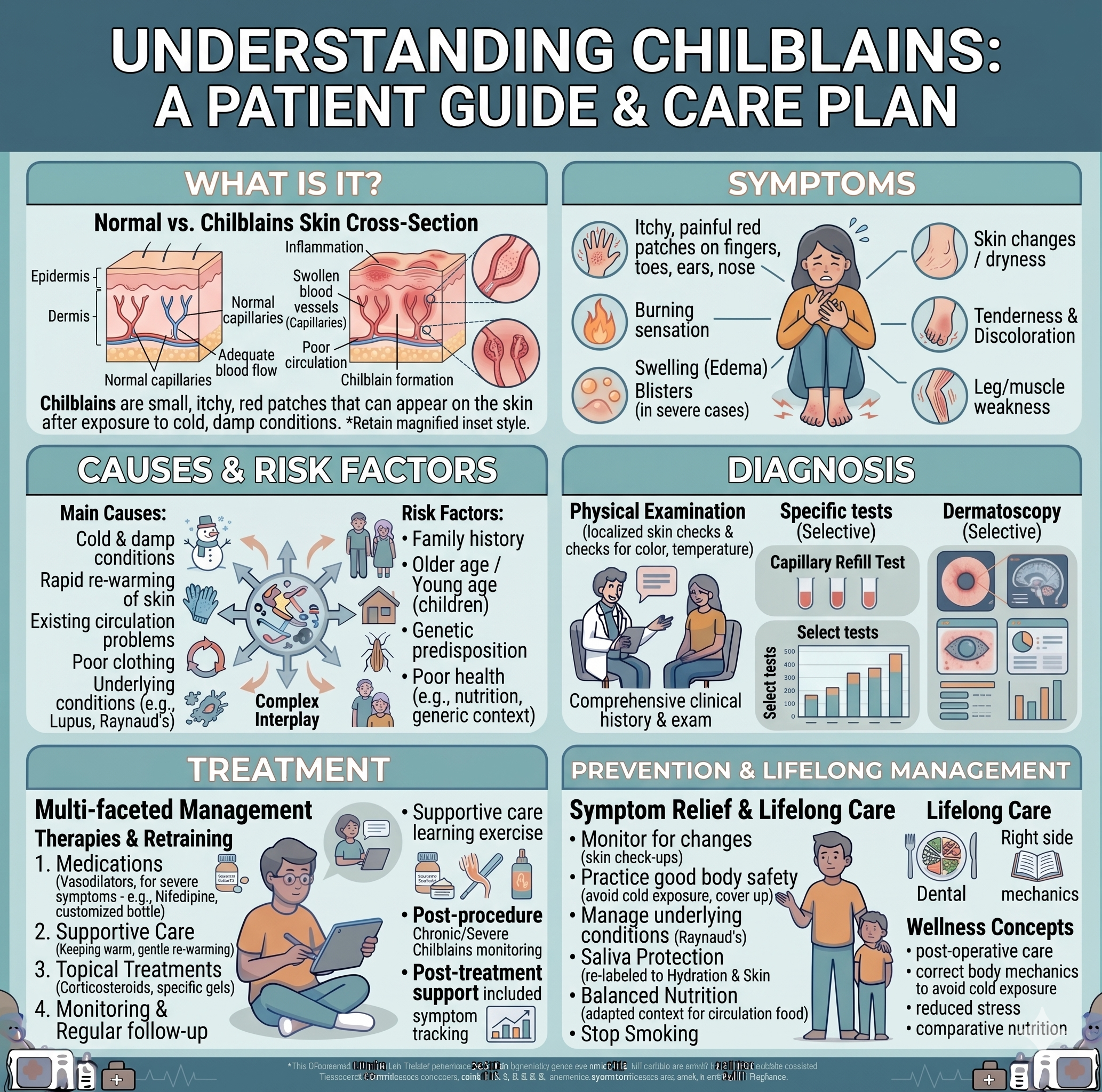
Chilblains, also known as perniosis, is a common but often uncomfortable condition where small blood vessels in the skin react abnormally to cold temperatures. It causes red, itchy, swollen patches, and sometimes blisters, most often on the hands, feet, ears, and nose. This reaction typically occurs hours after exposure to cold, damp air that isn't freezing. While generally harmless and clearing up within a few weeks, chilblains can recur seasonally, especially if preventive measures aren't taken. It rarely leads to lasting skin damage.
Understanding the Condition
Chilblains (Perniosis): Understanding and Managing Cold-Induced Skin Reactions
Understanding the Condition
Common Symptoms
Itchy, Red Patches: Small, intensely itchy areas that often appear as red or purplish bumps or patches on the skin, commonly on fingers, toes, heels, ears, and nose.
Swelling and Inflammation: Affected skin areas become noticeably swollen and feel tender.
Blisters or Sores: In more severe cases, the skin may develop painful blisters or open sores.
Burning or Stinging Sensation: A feeling of pain, burning, or stinging in the affected areas, especially upon rewarming.
Skin Color Changes: The skin may change color, appearing red, purplish, or even bluish, depending on skin tone.
Consultation Guide
Which Specialist to Meet
Before your appointment, it's helpful to: Keep a record of your symptoms, including when they started, how long they last, what makes them better or worse, and where they appear on your body. Mention any recent exposure to cold or damp environments. List all medications you are currently taking, including over-the-counter drugs, supplements, and herbal remedies. Be prepared to discuss your medical history, including any previous diagnoses of conditions like Raynaud's phenomenon or autoimmune diseases.
Book a doctor visit near me
Your doctor will visually examine the affected areas of your skin, looking for characteristic red or purple patches, swelling, and any blisters or sores. They will also ask you about when your symptoms started, how long you've had them, any recent exposure to cold or damp weather, and your medical history. This helps distinguish chilblains from other skin conditions or more severe cold injuries like frostbite.
Gentle Rewarming and Protection: Gradually rewarm affected skin by avoiding direct heat (like hot water or fires), which can worsen symptoms. Keep the skin warm, dry, and clean. Avoid scratching the affected areas to prevent infection. Wear loose, comfortable clothing and socks. (Duration: Ongoing as needed for symptom relief and prevention of recurrence.)
Anti-itch and Anti-inflammatory Creams: Over-the-counter or prescription creams containing ingredients that reduce itching and inflammation can be applied directly to the affected skin. These help soothe discomfort and reduce swelling. (Duration: Apply as directed, typically once or twice daily, until symptoms subside, usually within 1-3 weeks.)
Blood Vessel-Dilating Medication: For severe or recurring chilblains that don't respond to home care or topical treatments, a doctor may prescribe an oral medication. These medications work by helping to relax and widen the small blood vessels, improving blood flow to the affected areas. (Duration: Varies based on individual response and severity, typically taken during cold seasons or as long as symptoms persist, often for several weeks to months.)
Gradual Rewarming: If you've been in the cold, rewarm your skin slowly indoors. Avoid immediate direct heat sources like radiators or very hot water, as rapid rewarming can exacerbate symptoms.
Maintain Warm Indoor Environment: Keep your home and workplace comfortably warm to minimize exposure to cold temperatures indoors.
Stop Smoking: Smoking constricts blood vessels, reducing blood flow, which can worsen chilblains or increase your risk. Quitting smoking is beneficial for overall circulation and skin health.
Monitor for Recurrence: Be vigilant for symptoms each cold season, and proactively implement preventive measures as soon as cold weather approaches. Early intervention can help manage flare-ups.
Consultation Guide
Chilblains, also known as perniosis, is a common but often uncomfortable condition where small blood vessels in the skin react abnormally to cold temperatures. It causes red, itchy, swollen patches, and sometimes blisters, most often on the hands, feet, ears, and nose. This reaction typically occurs hours after exposure to cold, damp air that isn't freezing. While generally harmless and clearing up within a few weeks, chilblains can recur seasonally, especially if preventive measures aren't taken. It rarely leads to lasting skin damage.
Address Risk Factors: If you are underweight, discuss healthy weight gain strategies with your doctor. If you have conditions like Raynaud's phenomenon or other autoimmune diseases, ensure these are well-managed, as they can increase your susceptibility to chilblains.
Optimize Clothing and Footwear: Avoid tight-fitting clothing and shoes, which can restrict blood flow to your extremities and make them more vulnerable to cold. Choose insulated, breathable materials.
Diagnostic Procedures
You should initially consult your primary care doctor or general practitioner for diagnosis and initial treatment. If chilblains are severe, recurrent, or if another underlying condition is suspected, they may refer you to a dermatologist (a skin specialist).
Preparations Before Your Visit
Clinical Examination and Medical History
What to Expect
The doctor will gently examine your skin, particularly on your hands and feet. They may ask you to describe any sensations like itching, pain, or burning. There are no invasive procedures involved in this initial assessment.
Skin Biopsy (Rarely needed)
In rare instances, if the diagnosis is unclear or if your doctor suspects an underlying condition might be mimicking chilblains, a small skin sample (biopsy) might be taken. This sample is then examined under a microscope by a pathologist to help confirm the diagnosis or rule out other conditions such as vasculitis or other connective tissue disorders.
What to Expect
The doctor will numb a small area of skin with a local anesthetic injection. A tiny piece of skin will then be removed using a small scalpel or a punch tool. You might feel a brief sting or pinch from the anesthetic. The site will be covered with a small bandage, and you may need to keep it clean and dry for a few days. The procedure typically takes only a few minutes.
Treatment Options
Oral Medications (for severe or persistent cases)
Prevention & Long-Term Wellbeing
Prevention
Avoid Cold Exposure: Limit time outdoors in cold, damp weather. When going outside, cover all exposed skin, especially hands, feet, and face, with appropriate clothing.
Dress Warmly in Layers: Wear multiple layers of loose-fitting clothing, which traps warmth better than single thick layers. Always wear mittens (warmer than gloves), a scarf, a hat, and warm, water-resistant footwear.
Keep Skin Dry and Warm: Ensure your hands, feet, and face remain dry and warm. Change wet socks or gloves immediately.
Tags & Topics
Notice an error or need an update?
Help us keep medical information accurate. Report incorrect info or suggest an edit.


