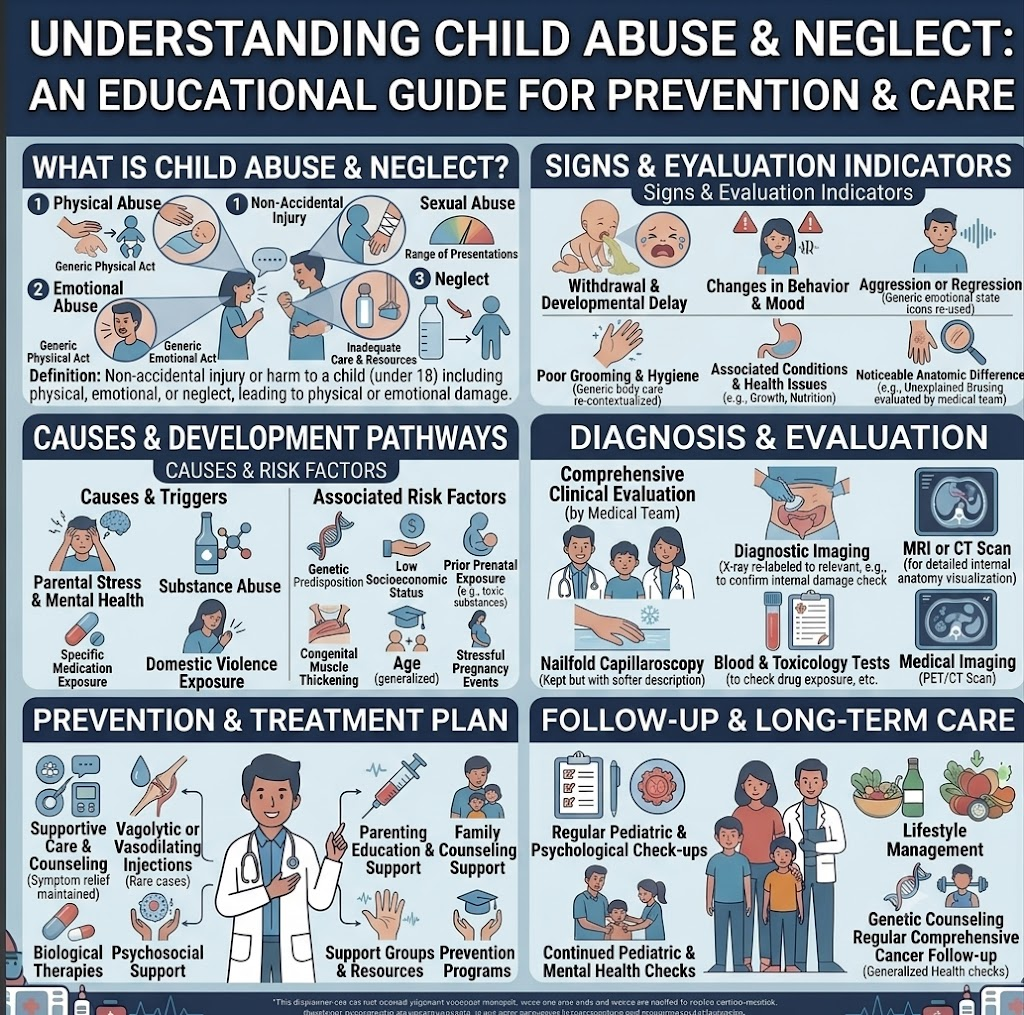
Child abuse refers to any intentional harm or mistreatment inflicted upon a child under 18 years old. This harm can take many forms, often occurring simultaneously. Typically, the abuser is someone the child knows and trusts, such as a parent or close relative. Children experiencing abuse may feel guilty, ashamed, or confused and are often afraid to disclose what is happening. Recognizing warning signs and promptly reporting suspicions to authorities are crucial steps in protecting children and ensuring their safety and well-being.
Understanding the Condition
Child Abuse and Its Impact
Understanding the Condition
Child abuse refers to any intentional harm or mistreatment inflicted upon a child under 18 years old. This harm can take many forms, often occurring simultaneously. Typically, the abuser is someone the child knows and trusts, such as a parent or close relative. Children experiencing abuse may feel guilty, ashamed, or confused and are often afraid to disclose what is happening. Recognizing warning signs and promptly reporting suspicions to authorities are crucial steps in protecting children and ensuring their safety and well-being.
Common Symptoms
Unexplained Physical Injuries: Bruises, burns, or broken bones that have no clear explanation, or injuries that appear in unusual patterns (like belt marks).
Poor Hygiene or Neglect: Being consistently dirty, unkempt, or lacking basic necessities like adequate food, clothing, or medical care.
Sudden Behavioral Changes: Becoming withdrawn, unusually aggressive, anxious, fearful, or depressed, especially if these changes are sudden.
Difficulty Trusting or Relating to Adults: Showing unusual fear of adults, being overly passive, or having extreme difficulty forming trusting relationships.
Changes in School Performance: A sudden drop in grades, increased absences, or difficulty concentrating in school.
Sleep or Eating Disturbances: Experiencing nightmares, difficulty sleeping, bed-wetting (after being toilet trained), or significant changes in appetite.
Social Withdrawal: Pulling away from friends, favorite activities, or showing a reluctance to go home.
Self-Harm or Risky Behaviors: Engaging in self-injurious actions, attempting to run away, or participating in risky activities beyond their age.
Inappropriate Sexual Knowledge or Behavior: Displaying sexual behaviors or knowledge that is unusual for their age, or appearing overly secretive about their body.
Fear or Guilt: Expressing feelings of guilt, shame, confusion, or an extreme fear of telling anyone about what they are experiencing.
Consultation Guide
Which Specialist to Meet
If you suspect child abuse, it is critical to seek help immediately. You should contact a child's healthcare provider, a local child welfare agency, the police department, or a 24-hour hotline dedicated to child protection. These professionals include pediatricians, family doctors, social workers, child psychologists, and law enforcement officers who are trained to assess and respond to child abuse concerns. In emergencies, call your local emergency number.
Preparations Before Your Visit
Gather any specific observations or concerns you have regarding the child's physical health, emotional state, or any suspicious behaviors. Note down dates, times, and descriptions of incidents or changes you have noticed. Be prepared to share this information clearly and concisely, focusing on the child's well-being and safety. It's important to remember that mandated reporters, such as healthcare professionals and teachers, are legally required to report suspected abuse.
Book a doctor visit near me
Supportive Medications: In some cases, medication may be used alongside therapy to manage specific symptoms such as severe anxiety, depression, sleep disturbances, or post-traumatic stress that arise from the trauma of child abuse. These medications help stabilize mood and improve overall functioning, allowing individuals to engage more effectively in therapy. (Duration: Varies based on symptoms and response to treatment, typically short to medium term in conjunction with ongoing therapy.)
Consultation Guide
Building Healthy Relationships: Learning to form and maintain trusting, respectful relationships is a vital part of recovery, helping to counteract the relational damage often caused by abuse and fostering positive social connections.
Self-Care and Resilience: Encouraging practices like mindfulness, physical activity, creative expression, and pursuing hobbies can build self-esteem, improve emotional regulation, and foster long-term emotional resilience.
Advocacy and Community Involvement: Maintaining vigilance and a commitment to reporting suspected abuse continues to be a critical step in protecting children. Supporting organizations that work to prevent child abuse and aid survivors contributes to broader community well-being.
Diagnostic Procedures
Child Abuse Identification and Assessment
Identifying child abuse involves a thorough evaluation by trained professionals. This process looks for a combination of physical signs, behavioral changes in the child, and observations of caregiver behavior. It aims to determine if abuse or neglect has occurred and to ensure the child's safety.
What to Expect
During an assessment, a child protection specialist, a healthcare provider, or a law enforcement officer may conduct sensitive interviews with the child in a safe, child-friendly environment. They will ask questions about the child's experiences and feelings. A physical medical examination may be performed to check for injuries or signs of neglect. Professionals will also interview parents or caregivers to understand family dynamics, discipline methods, and the child's overall welfare. This multi-faceted approach gathers essential information while prioritizing the child's protection.
Observation of Caregiver Behavior
As part of the assessment process, professionals pay close attention to the behavior and statements of parents or caregivers. Certain warning signs in adult behavior can indicate potential concerns related to child abuse or neglect and are considered alongside the child's own signs and disclosures.
What to Expect
A caregiver might be observed by professionals (for example, during interviews or home visits) to assess their interactions with the child, their emotional responses, and the consistency of their explanations regarding the child's condition or injuries. Warning signs that may be noted include a caregiver who blames the child for injuries, provides inconsistent or vague explanations, delays seeking necessary medical care, seems indifferent to the child's condition, or shows extreme reactions to the child's behavior.
Treatment Options
Safety and Protection Interventions
Child Protection Services: When child abuse is suspected or confirmed, child protection services intervene to ensure the child's immediate safety. This may involve removing the child from an unsafe environment, arranging safe alternative living arrangements, and coordinating ongoing support services for the child and, if appropriate, for the family. (Duration: Ongoing as needed, until the child is safe and stable, potentially for years.)
Therapies for Emotional and Psychological Impact
Cognitive Behavioral Therapy (CBT): CBT is a structured therapy that helps children and adults understand how their thoughts, feelings, and behaviors are connected. It teaches practical coping skills to manage stress, anxiety, depression, post-traumatic stress, and other mental health challenges often resulting from abuse. It helps individuals identify unhelpful thought patterns and replace them with healthier ones, improving emotional regulation and overall well-being. (Duration: Typically involves a limited number of sessions, often ranging from 12 to 20, over several weeks or months, with 'homework' between sessions to practice new skills.)
Psychotherapy (Talk Therapy): Psychotherapy involves talking with a trained mental health professional to explore and understand mental health issues and develop healthy coping mechanisms. It provides a safe space for individuals to process their experiences of abuse, express emotions, and learn strategies to improve their relationships, self-esteem, and overall life satisfaction. It addresses a wide range of emotional difficulties stemming from trauma. (Duration: Varies widely depending on individual needs and the complexity of the issues, ranging from a few months to several years.)
Prevention & Long-Term Wellbeing
Prevention of Child Abuse
Education and Awareness: Learning about the signs of child abuse and neglect empowers everyone in the community to recognize and report concerns. Understanding healthy parenting practices and the negative impacts of physical punishment can prevent harmful behaviors.
Safe and Supportive Environments: Creating homes, schools, and communities where children feel safe, loved, and heard helps build resilience and reduces vulnerability to abuse. Encouraging open communication between children and trusted adults is vital.
Supporting Parents and Caregivers: Providing resources, parenting classes, and support networks for parents can reduce stress, improve parenting skills, and prevent situations that might lead to abuse. Addressing parental mental health or substance abuse issues is also a key preventative measure.
Long-Term Well-being and Recovery
Ongoing Therapy and Support: For individuals who have experienced abuse, continued engagement in therapy, counseling, and support groups can be crucial for healing, processing trauma, and developing healthy coping strategies throughout their lives.
Tags & Topics
Notice an error or need an update?
Help us keep medical information accurate. Report incorrect info or suggest an edit.


