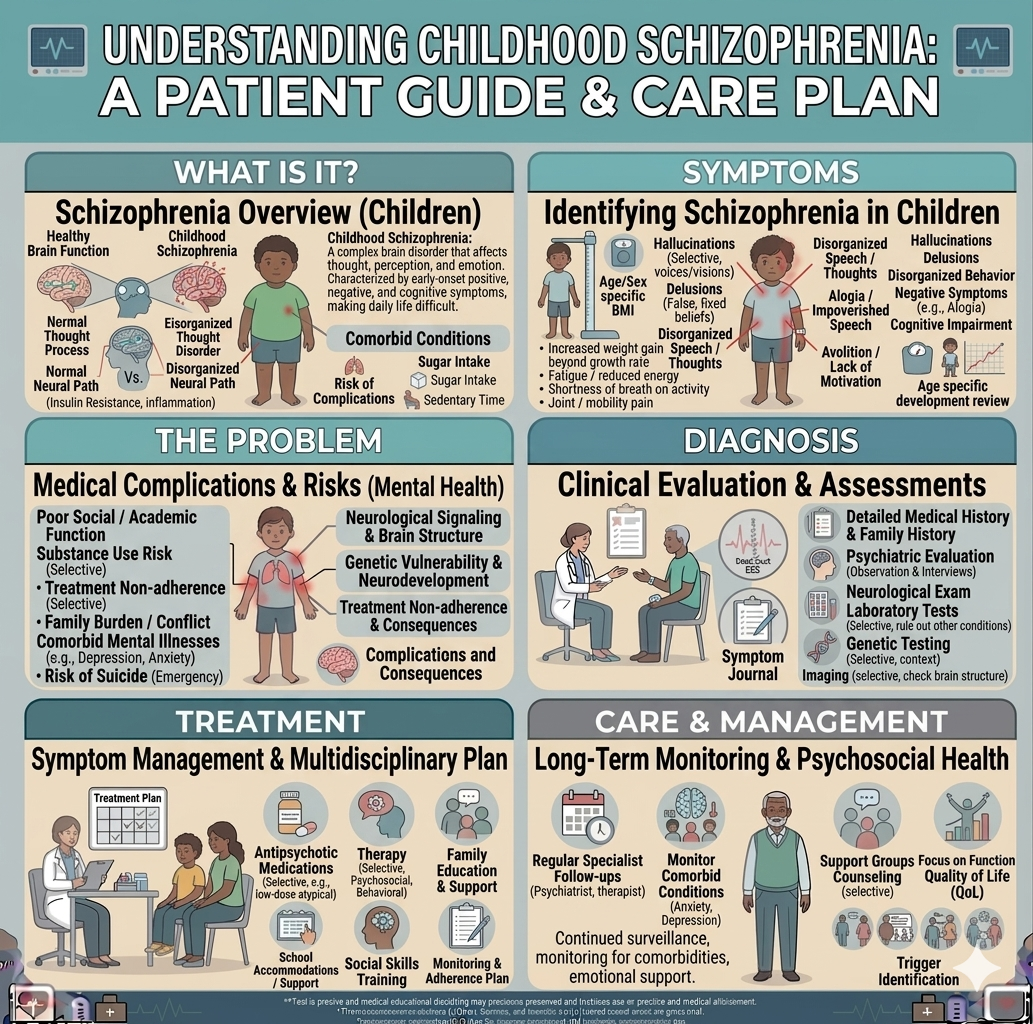
Childhood schizophrenia is a rare but severe brain disorder where children and teenagers struggle to understand what's real. It profoundly affects thinking, behavior, and emotions, causing symptoms like seeing or hearing things that aren't there (hallucinations), strong false beliefs (delusions), and extremely confused thoughts or actions. These challenges significantly impair daily functioning. Though similar to adult schizophrenia, its early onset—typically in teenage years, but extremely rare before 13—presents unique difficulties for diagnosis, treatment, and development. This chronic condition requires lifelong care, and early intervention greatly improves long-term outcomes.
Understanding the Condition
Childhood Schizophrenia
Understanding the Condition
Childhood schizophrenia is a rare but severe brain disorder where children and teenagers struggle to understand what's real. It profoundly affects thinking, behavior, and emotions, causing symptoms like seeing or hearing things that aren't there (hallucinations), strong false beliefs (delusions), and extremely confused thoughts or actions. These challenges significantly impair daily functioning. Though similar to adult schizophrenia, its early onset—typically in teenage years, but extremely rare before 13—presents unique difficulties for diagnosis, treatment, and development. This chronic condition requires lifelong care, and early intervention greatly improves long-term outcomes.
Common Symptoms
Hallucinations: Seeing, hearing, smelling, tasting, or feeling things that aren't actually there, such as hearing voices.
Delusions: Strong, false beliefs not based in reality, like thinking they are being watched or controlled.
Disorganized Thinking and Speech: Difficulty organizing thoughts, making sense when speaking, or using unusual words or phrases.
Confused Reality: Blurring the lines between dreams, television, or fantasy and real life.
Social Withdrawal: Pulling away from friends and family, becoming isolated.
Sleep Disturbances: Significant trouble falling or staying asleep.
Lack of Motivation: A noticeable drop in interest or drive for activities, leading to poor performance in school or neglecting personal hygiene like bathing or dressing.
Unusual or Bizarre Behavior: Acting in ways that seem strange, inappropriate, or out of character.
Agitation or Aggression: Becoming easily irritable, restless, or showing uncharacteristic aggressive outbursts.
Substance Use: Using recreational drugs or nicotine, which can be a coping mechanism or worsen symptoms.
Consultation Guide
Which Specialist to Meet
Before the visit, make a list of your child's symptoms, noting when they began, how often they occur, and any potential triggers. Include any changes in behavior, school performance, sleep patterns, or social interactions. Gather information about your family's medical history, especially any mental health conditions. Prepare questions for the doctor and bring a list of any current medications.
Book a doctor visit near me
A comprehensive discussion with parents or guardians about the child's developmental history, symptoms, family history, and any significant life events. The child's behavior, mood, and thought patterns are also observed during the appointment.
A general physical examination along with blood tests and sometimes urine tests are performed to rule out other medical conditions (such as thyroid disorders, epilepsy, infections, or substance use) that could cause symptoms similar to schizophrenia.
Your child will have a standard check-up with a doctor, including measurements of height, weight, and blood pressure. Blood samples will be taken, usually from a vein in the arm, which might cause a brief pinch. Depending on the situation, a urine sample may also be collected. These tests help ensure the symptoms aren't due to an underlying physical illness or drug exposure.
Psychological Evaluation
A psychologist will conduct a series of interviews and administer various tests. These might include questionnaires for both parents/guardians and the child, as well as cognitive tasks to assess attention, memory, and problem-solving skills. The evaluation may take several hours over one or more sessions. It's designed to understand your child's unique psychological profile and symptoms thoroughly.
Neuroimaging (e.g., MRI Scan)
While not used to diagnose schizophrenia directly, brain scans like Magnetic Resonance Imaging (MRI) may be used to rule out other neurological conditions (such as brain tumors, cysts, or structural abnormalities) that could present with similar psychiatric symptoms.
Antipsychotic Medications: These medications help manage symptoms like hallucinations, delusions, and disorganized thinking by affecting brain chemicals. They are a cornerstone of treatment for schizophrenia. (Duration: Typically lifelong, with careful monitoring and dosage adjustments by a psychiatrist.)
Psychotherapy (Talk Therapy): Individual therapy sessions with a mental health professional to help children understand their illness, cope with symptoms, develop problem-solving skills, and manage daily life challenges. (Duration: Ongoing, adapted to the child's needs and development.)
Family Therapy: Involves family members to help them understand schizophrenia, improve communication, develop coping strategies, and create a supportive home environment. (Duration: Ongoing, as needed, especially during challenging periods.)
Social Skills Training: Teaches children and teenagers practical skills for social interactions, communication, and navigating everyday situations, which can be challenging due to the disorder. (Duration: Ongoing, often through group sessions or individual coaching.)
Cognitive Behavioral Therapy (CBT): Helps children identify and change unhelpful thinking patterns and behaviors associated with their symptoms, improving their ability to manage delusions or hallucinations. (Duration: Typically several months to a year, or ongoing as part of broader therapy.)
Educational Support: Providing appropriate educational services and accommodations, such as individualized education programs (IEPs), to help children continue their learning despite the challenges of schizophrenia. (Duration: Ongoing throughout their schooling years, as needed.)
Early Symptom Recognition: Learning to identify the early signs of schizophrenia, such as changes in thinking, behavior, or emotions, is crucial. Early intervention can significantly improve long-term outcomes and limit severe episodes.
Prompt Professional Consultation: Seeking immediate evaluation from a child and adolescent psychiatrist if symptoms are suspected. Starting treatment early helps manage symptoms before they become more severe or disabling.
Long-Term Management and Support
Consistent Treatment Adherence: Regularly taking prescribed medication and attending therapy sessions are vital for symptom management and preventing relapses. Regular check-ups with the psychiatrist are essential.
Fostering a Supportive Home Environment: Ensuring a stable, understanding, and low-stress home environment helps the child feel secure and can reduce symptom severity. Educating family members about the condition is key.
Healthy Lifestyle Maintenance: Encouraging a balanced diet, regular physical activity, and sufficient sleep contributes to overall physical and mental health, which can positively impact symptom management.
Substance Avoidance Education: Strict avoidance of recreational drugs, alcohol, and nicotine is critical, as these substances can trigger or worsen psychotic symptoms and interfere with medication effectiveness.
Developing Coping Mechanisms: Helping the child learn strategies to manage stress, anxiety, and frustrating situations is important for emotional regulation and resilience.
Maintaining Social Engagement: Encouraging participation in structured social activities or support groups can combat isolation and help develop healthier social interactions, adapted to the child's comfort level.
Educational and Vocational Planning: Collaborating with schools to ensure appropriate accommodations and planning for future vocational or educational goals helps maintain a sense of purpose and independence.
Diagnostic Procedures
Begin with your child's pediatrician for an initial assessment and referral to a child and adolescent psychiatrist. This specialist is best equipped to diagnose and manage mental health conditions in young people. A care team may also include psychologists, social workers, and mental health therapists.
Preparations Before Your Visit
Clinical Interview and Observation
What to Expect
You and your child will meet with a mental health professional (like a psychiatrist or psychologist). Detailed questions will cover your child's behavior, emotional well-being, social interactions, and school performance. The professional will also spend time observing your child and may ask direct questions, depending on their age and ability to communicate. This process aims to gather a complete picture of their condition.
Physical Exam and Lab Tests
What to Expect
In-depth assessment involving standardized tests and interviews to evaluate cognitive abilities, emotional functioning, thought processes, and behavior patterns. This helps in diagnosing mental health conditions and ruling out others.
What to Expect
What to Expect
Your child will lie on a movable bed that slides into a large, tunnel-like machine. The MRI machine uses powerful magnets and radio waves to create detailed images of the brain. It is painless but can be noisy, so headphones may be provided. It's important for your child to lie very still during the scan, which can last 30 minutes or more. In some cases, a mild sedative might be offered to help young children remain still.
Treatment Options
Medications
Prevention & Long-Term Wellbeing
Prevention and Early Intervention
Tags & Topics
Notice an error or need an update?
Help us keep medical information accurate. Report incorrect info or suggest an edit.


