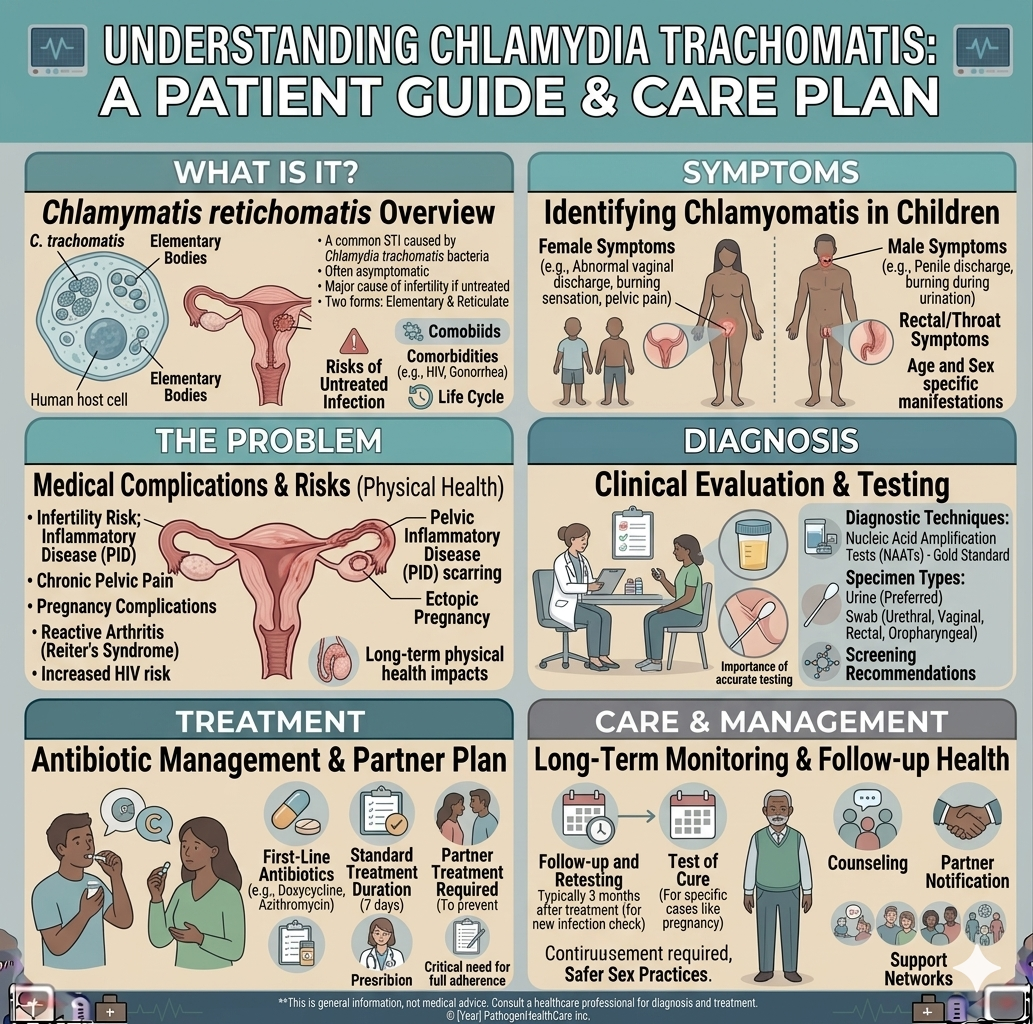
Chlamydia (pronounced kluh-MID-e-uh) is a very common sexually transmitted infection (STI) caused by Chlamydia trachomatis bacteria. It spreads mainly through oral, vaginal, or anal sex. Many people with chlamydia don't experience symptoms, making it a 'silent' infection. While it can affect anyone, it is most common in young women. If left untreated, chlamydia can lead to serious health issues, but it is easily treated with medication.
Understanding the Condition
Chlamydia: A Common and Often Silent Sexually Transmitted Infection
Understanding the Condition
Chlamydia (pronounced kluh-MID-e-uh) is a very common sexually transmitted infection (STI) caused by Chlamydia trachomatis bacteria. It spreads mainly through oral, vaginal, or anal sex. Many people with chlamydia don't experience symptoms, making it a 'silent' infection. While it can affect anyone, it is most common in young women. If left untreated, chlamydia can lead to serious health issues, but it is easily treated with medication.
Common Symptoms
Painful Urination: A burning sensation when you pee.
Unusual Vaginal Discharge: Discharge that might be different from your usual, or heavier.
Unusual Penile Discharge: White or yellowish discharge from the penis.
Pain During Vaginal Sex: Discomfort or pain during sexual intercourse.
Unusual Vaginal Bleeding: Bleeding between menstrual periods or after sex.
Sore Throat: An infection in the throat may cause a sore throat, but often has no symptoms.
Rectal Symptoms: An infection in the rectum may have no symptoms, or cause pain, discharge, or bleeding.
Consultation Guide
Which Specialist to Meet
You should see your primary care doctor, a gynecologist (for women), a urologist (for men), or an infectious disease specialist.
Preparations Before Your Visit
Before your appointment, be prepared to discuss your symptoms, sexual history (including past partners and unprotected sex), and any questions you have. It's helpful to write these down beforehand. Avoid douching or using vaginal creams for 24 hours before your visit if you are a woman.
Book a doctor visit near me
Oral Antibiotic Medication: Chlamydia is treated with a course of antibiotics. It's crucial to take all prescribed medication, even if symptoms improve. Your sexual partner(s) must also be treated to prevent reinfection. (Duration: Treatment typically involves a single dose of medication or a course lasting 7 days. During treatment, and for 7 days after a single-dose treatment or until the 7-day course is completed, you should avoid all sexual activity to prevent spreading the infection.)
Follow-Up: If you experience any ongoing symptoms or new concerns after treatment, consult your healthcare professional.
Consultation Guide
A small cotton swab will be gently used to collect cells from the suspected area. This might cause mild discomfort or a brief scratching sensation, but it is generally not painful and only takes a few seconds.
Infertility: Chlamydia infections can cause scarring and blockages in the fallopian tubes, making it difficult or impossible for a woman to get pregnant.
Ectopic Pregnancy: A life-threatening condition where a fertilized egg implants and grows outside the uterus, usually in a damaged fallopian tube. Chlamydia infections increase this risk.
Diagnostic Procedures
Testicular Pain: Pain or tenderness in one or both testicles.
Eye Infection (Conjunctivitis): Redness and irritation on the inside of the eyelid, similar to 'pink eye'.
This test checks a sample of your urine for the presence of Chlamydia trachomatis bacteria.
What to Expect
You will be asked to provide a urine sample into a sterile cup. This is a quick and painless process, usually done privately in a restroom at the clinic or lab.
For some individuals, a healthcare professional may take a swab sample from areas that might be infected, such as the cervix or vagina (in women), the urethra (in men), the throat, or the rectum. If an eye infection is suspected, a sample may be taken from the eye.
What to Expect
Infection Near Testicles (Epididymitis): In men, the bacteria can infect the coiled tube located next to each testicle, causing inflammation, pain, fever, and swelling in the scrotum.
Prostate Gland Infection (Prostatitis): Rarely, chlamydia can spread to the prostate gland, leading to pain during or after sex, fever, chills, and painful urination.
Newborn Infections: If a pregnant person has chlamydia, the infection can pass to the baby during delivery, potentially causing serious eye infections or pneumonia in the newborn.
Reactive Arthritis (Reiter Syndrome): Some people with chlamydia may develop a condition where their immune system mistakenly attacks joints, eyes, and the urethra (the tube that carries urine), leading to pain and inflammation.
Retesting: Your doctor may recommend retesting a few months after treatment to confirm the infection is gone and to check for potential reinfection.
Treatment Options
Medications
Preventive Medication: For high-risk individuals (e.g., some men who have sex with men or transgender women), your doctor might recommend a specific antibiotic medication taken shortly after sexual activity to lower the risk of infection. This should only be done under medical guidance.
Understanding Risks and Complications (if untreated)
Pelvic Inflammatory Disease (PID): In women, untreated chlamydia can infect the uterus, fallopian tubes, and ovaries, causing pain, potential hospital care, and damage to reproductive organs. This can lead to infertility and ectopic pregnancy.
Long-Term Monitoring & Treatment Adherence
Complete All Medication: Always finish the entire course of prescribed antibiotics to ensure the infection is fully cleared and to prevent the development of serious complications.
Partner Treatment: Ensure all sexual partners are also treated to prevent reinfection and further spread of the infection.
Prevention & Long-Term Wellbeing
Prevention
Abstinence: Avoiding all sexual activity is the only sure way to prevent chlamydia.
Condom Use: Use a new latex condom (male) or polyurethane condom (female) correctly during every sexual encounter to significantly lower the risk of infection, although it does not eliminate it entirely.
Limit Sex Partners: Having fewer sex partners reduces your risk of contracting chlamydia and other STIs.
Regular Screening: If you are sexually active, especially with multiple or new partners, discuss regular chlamydia screening with your healthcare professional. This is crucial for young people (under 25) and other high-risk groups.
Tags & Topics
Notice an error or need an update?
Help us keep medical information accurate. Report incorrect info or suggest an edit.


