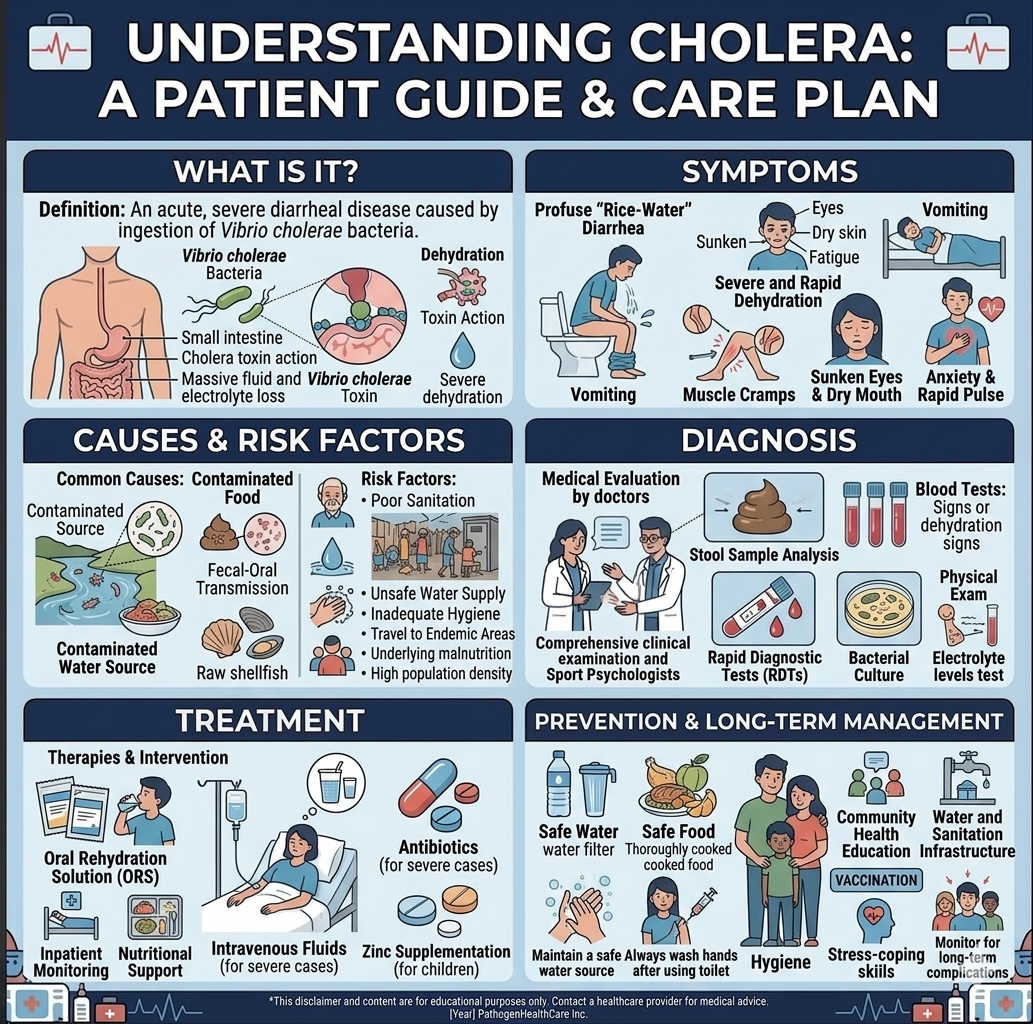
Cholera is a severe illness caused by a type of bacteria. It primarily spreads through drinking water or eating food that has been contaminated with the bacteria, often from the stool of an infected person. The disease can lead to rapid and serious diarrhea and dehydration, which, if not treated promptly, can become life-threatening within hours, even in otherwise healthy individuals. While modern water and sewage systems have largely eliminated cholera in many developed nations, it remains a risk in parts of Africa, South and Southeast Asia, and Latin America. Outbreaks are more common in areas affected by poverty, war, or natural disasters, where people might live in crowded conditions with limited access to clean water and sanitation. Although many people exposed to the bacteria may not show symptoms, they can still unknowingly spread the infection if their waste contaminates water or food sources. Fortunately, cholera is treatable, and serious dehydration and death can often be prevented with simple, affordable rehydration methods.
Understanding the Condition
Cholera: Understanding, Symptoms, and Treatment
Understanding the Condition
Cholera is a severe illness caused by a type of bacteria. It primarily spreads through drinking water or eating food that has been contaminated with the bacteria, often from the stool of an infected person. The disease can lead to rapid and serious diarrhea and dehydration, which, if not treated promptly, can become life-threatening within hours, even in otherwise healthy individuals. While modern water and sewage systems have largely eliminated cholera in many developed nations, it remains a risk in parts of Africa, South and Southeast Asia, and Latin America. Outbreaks are more common in areas affected by poverty, war, or natural disasters, where people might live in crowded conditions with limited access to clean water and sanitation. Although many people exposed to the bacteria may not show symptoms, they can still unknowingly spread the infection if their waste contaminates water or food sources. Fortunately, cholera is treatable, and serious dehydration and death can often be prevented with simple, affordable rehydration methods.
Common Symptoms
Diarrhea: The most common symptom, ranging from mild to severe, characterized by frequent, watery stools. In more severe cases, it can be extremely profuse and lead to rapid fluid loss.
Dehydration: This is the most dangerous complication of cholera and can develop very quickly, within hours of symptom onset. It can vary from mild to life-threatening. A loss of 10% or more of your body weight due to fluid loss indicates severe dehydration.
Symptoms of Dehydration: These include feeling irritable, extreme tiredness (fatigue), sunken eyes, a very dry mouth, intense thirst, and producing very little or no urine. Your skin might feel dry, shriveled, and when pinched into a fold, it may be slow to return to its normal state. Other signs can include low blood pressure and an irregular heartbeat.
You should initially consult your primary care doctor or a general practitioner. If symptoms are severe, or if you have recently traveled to areas where cholera is common, they may refer you to an infectious disease specialist or recommend immediate emergency care.
Preparations Before Your Visit
Before your appointment, be prepared to describe your symptoms in detail: when they started, how severe the diarrhea is, how frequently you are having bowel movements, and how much fluid you have been able to drink. Inform your doctor about any recent travel, especially to regions where cholera is present, and any potential exposure to contaminated food or water. Also, list any medications you are currently taking.
Book a doctor visit near me
Oral Rehydration Solutions (ORS): This is the most crucial treatment. ORS are special mixtures of water, salts, and sugar designed to replenish fluids and electrolytes lost through severe diarrhea. It is given by mouth, often in small, frequent sips. (Duration: Continues as long as dehydration symptoms persist and fluid loss is significant, typically 1 to 7 days or until diarrhea subsides.)
Intravenous (IV) Fluid Replacement: For individuals with severe dehydration who cannot drink enough ORS, fluids and electrolytes are administered directly into a vein through an IV line. This method quickly restores lost fluids. (Duration: Administered until the patient is rehydrated and able to tolerate oral fluids, usually for a few hours to 1-2 days, depending on severity.)
Consultation Guide
Electrolyte Imbalance: Rapid dehydration causes a significant loss of essential minerals (electrolytes) in the blood. These minerals are vital for maintaining fluid balance and many body functions. A severe imbalance can lead to serious complications such as muscle cramps, weakness, and, if not corrected, can affect heart function and lead to shock.
Consultation Guide
Which Specialist to Meet
A healthcare professional will draw a small amount of blood, usually from a vein in your arm, using a needle. This is a routine procedure that causes minimal discomfort. The blood sample is then sent to a lab for analysis of various markers related to hydration and organ function. Results are typically available within hours.
Diagnostic Procedures
Stool Sample Analysis
A laboratory test to identify the presence of the cholera bacteria (*Vibrio cholerae*) in your stool.
What to Expect
You will be asked to provide a fresh stool sample, typically in a sterile container provided by the clinic or lab. This sample is then sent to a laboratory for culture, where technicians will attempt to grow and identify the specific bacteria. Results may take a day or two.
Rapid Diagnostic Test (Dipstick Test)
A quick test used primarily in areas experiencing a cholera outbreak to rapidly detect the bacteria from a stool sample.
What to Expect
A small amount of your stool sample is applied to a special test strip (dipstick). The test strip changes color or shows lines if the cholera bacteria are detected. Results are usually available within minutes to a few hours, allowing for quicker diagnosis and treatment initiation during outbreaks.
Blood tests are performed to assess the severity of dehydration, check electrolyte levels, and evaluate kidney function, all of which can be affected by cholera.
What to Expect
Monitor for Dehydration Recurrence: After recovering from cholera, continue to monitor for any signs of dehydration, especially if you experience further gastrointestinal upset. Ensure adequate fluid intake.
Treatment Options
Medications
Antibiotics: Certain antibiotics can help shorten the duration of diarrhea and reduce the amount of bacteria shed in stool, making the patient less infectious to others. They are typically prescribed for more severe cases. (Duration: Usually taken for a short course, typically 3 to 5 days.)
Zinc Supplements: In some cases, especially in children, zinc supplements may be given alongside rehydration to reduce the severity and duration of diarrhea. (Duration: Typically given for 10-14 days, particularly in pediatric cases.)
Prevention & Long-Term Wellbeing
Prevention
Safe Water Consumption: Always drink bottled, boiled, or chemically treated water. Avoid tap water, ice, and unpasteurized drinks unless you are certain of their safety.
Safe Food Preparation and Eating: Eat only foods that are thoroughly cooked and served hot. Avoid raw or undercooked seafood (especially shellfish), unpeeled fruits and vegetables, and food from street vendors unless you can verify hygiene practices.
Hand Hygiene: Wash your hands frequently and thoroughly with soap and clean water, especially before handling food, after using the toilet, and after caring for someone who is ill. If soap and water are not available, use an alcohol-based hand sanitizer.
Proper Sanitation: Ensure proper disposal of human waste to prevent contamination of water sources. Use clean and functioning latrines or toilets.
Vaccination: Vaccines are available for cholera and are recommended for individuals traveling to areas where cholera is active or for those at high risk during an outbreak. Consult your doctor about vaccination options.
Long-Term Wellbeing
Nutritional Support: Focus on a balanced, easily digestible diet during recovery to regain strength and replenish lost nutrients. In some cases, nutritional supplements may be recommended.
Education and Preparedness: Understand how cholera spreads and educate family members on preventive measures, especially in areas where outbreaks are a risk. Have ORS packets readily available in such environments.
Tags & Topics
Notice an error or need an update?
Help us keep medical information accurate. Report incorrect info or suggest an edit.


