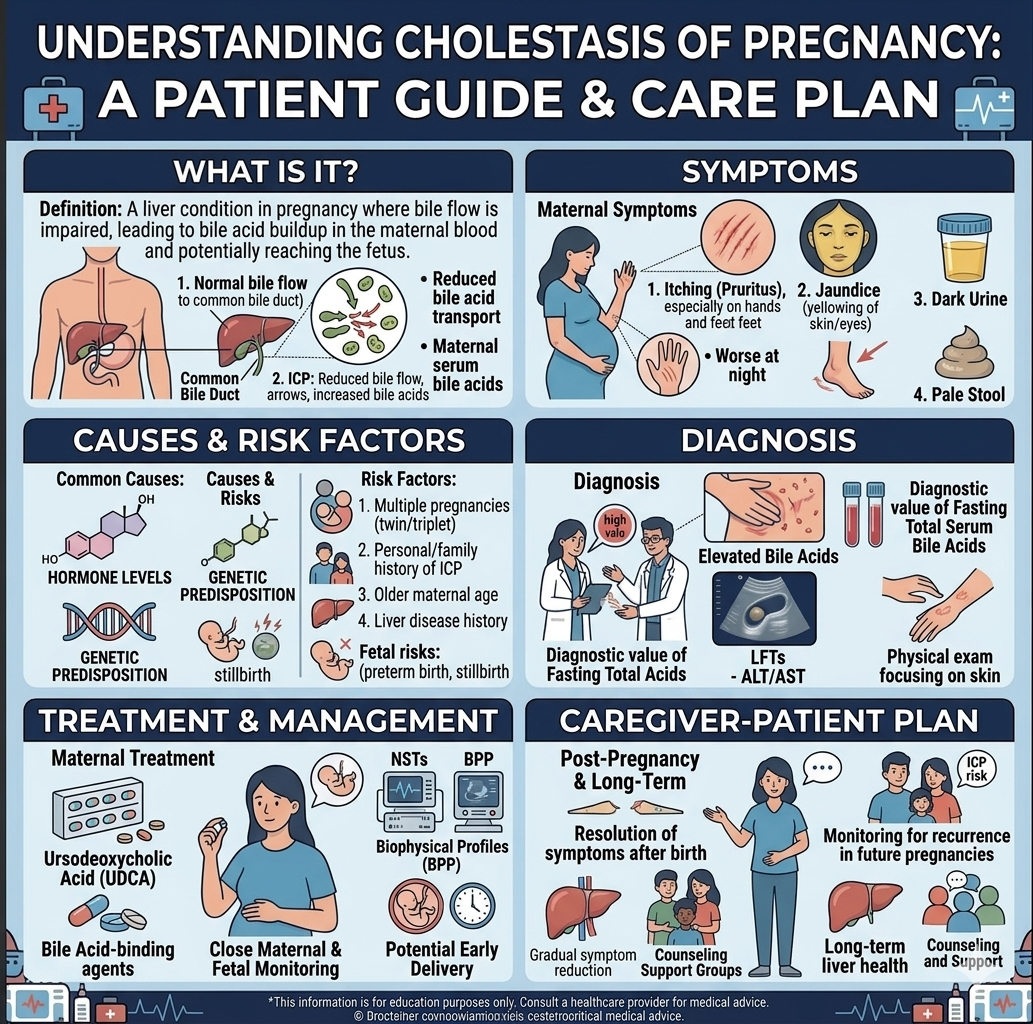
Cholestasis of pregnancy is a liver condition that can develop in late pregnancy. It causes severe itching without a rash, typically on the hands and feet. While uncomfortable for the mother, the main concern is the potential risks it poses to the baby, which may lead doctors to recommend an early delivery.
Understanding the Condition
Cholestasis of Pregnancy: A Guide for Expectant Mothers
Understanding the Condition
Common Symptoms
Intense Itching: This is the primary symptom, often felt on the palms of the hands and soles of the feet, but can spread across the entire body. The itching is typically worse at night and can severely disrupt sleep. There is no rash associated with this itching. It commonly starts in the third trimester and usually resolves a few days after birth.
Jaundice: In some less common cases, the skin and the whites of the eyes may turn yellow. This is known as jaundice.
Loss of Appetite: Some women may experience a decrease in their desire to eat.
Oily, Foul-Smelling Stools: Less commonly, stools may appear oily and have an unpleasant odor.
Consultation Guide
Which Specialist to Meet
You should consult with your primary pregnancy care provider, which is typically an obstetrician. Depending on the severity or complexity, they may refer you to a maternal-fetal medicine specialist, who focuses on high-risk pregnancies, or a liver specialist (hepatologist).
Preparations Before Your Visit
Contact your doctor immediately if you experience constant or extreme itching during pregnancy, especially if it's worse at night or on your hands and feet. Be prepared to discuss your symptoms in detail, including when they started and how severe they are. Inform your doctor about any personal or family history of liver conditions or cholestasis of pregnancy, and bring a list of all current medications and supplements you are taking.
Book a doctor visit near me
Medication for Itching Relief: While the primary medication helps with bile acids, other creams or oral medications may be prescribed to help manage severe itching symptoms directly. (Duration: As directed by your doctor, usually for the duration of the symptoms.)
Early Term Delivery (Labor Induction or C-section): Due to the potential risks to the baby, especially severe complications like stillbirth, your doctor may recommend delivering your baby earlier than your due date, often around 37 weeks of pregnancy. This might involve inducing labor or, in some cases, a planned C-section. (Duration: A single event near the end of pregnancy, determined by your doctor.)
Managing Itching at Home: While not a cure, cool baths, applying cold compresses, wearing loose-fitting cotton clothing, and avoiding very hot showers can help provide some temporary relief from the intense itching. (Duration: As needed, throughout the period of itching.)
Consultation Guide
Cholestasis of pregnancy is a liver condition that can develop in late pregnancy. It causes severe itching without a rash, typically on the hands and feet. While uncomfortable for the mother, the main concern is the potential risks it poses to the baby, which may lead doctors to recommend an early delivery.
A healthcare professional will draw a small sample of blood, usually from a vein in your arm. This is a quick procedure and generally causes only minor, temporary discomfort.
Diagnostic Procedures
Blood Tests (Liver Function and Bile Acid Levels)
These tests measure specific substances in your blood to check how well your liver is working and to detect elevated levels of bile acids. High bile acid levels are a key indicator of cholestasis of pregnancy.
What to Expect
Diagnostic Ultrasound
An ultrasound, also called sonography, uses sound waves to create live images of internal body structures. For cholestasis of pregnancy, an ultrasound may be used to assess your baby's health and growth, or to check your liver and gallbladder.
What to Expect
Most ultrasounds involve lying down while a technician applies a special gel to your abdomen and moves a small handheld device (transducer) over the area. This device sends sound waves into your body, which bounce back to create images on a screen. You may need to have a full bladder for certain types of ultrasound. The procedure is typically painless. You should wear loose clothing to your appointment, and you may be asked to remove jewelry.
Post-Delivery Follow-Up: The itching and elevated bile acid levels typically resolve within a few days after childbirth. Your doctor will likely recommend follow-up blood tests several weeks postpartum to ensure your liver function and bile acid levels have returned to normal.
Monitoring for Future Pregnancies: If you have experienced cholestasis in one pregnancy, your risk of developing it again in subsequent pregnancies is high (around 60-70%, and up to 90% in severe cases). It is important to inform your doctor in any future pregnancies so they can monitor you closely from early on.
Treatment Options
Medications
Medication to Lower Bile Acids: Your doctor may prescribe a medication taken by mouth that helps reduce the levels of bile acids in your bloodstream. This can help alleviate the itching and reduce some of the risks to your baby. (Duration: Typically taken daily until delivery.)
Prevention & Long-Term Wellbeing
Prevention
No Known Prevention Method: Currently, there is no known way to prevent cholestasis of pregnancy from developing.
Long-Term Monitoring
Tags & Topics
Notice an error or need an update?
Help us keep medical information accurate. Report incorrect info or suggest an edit.


