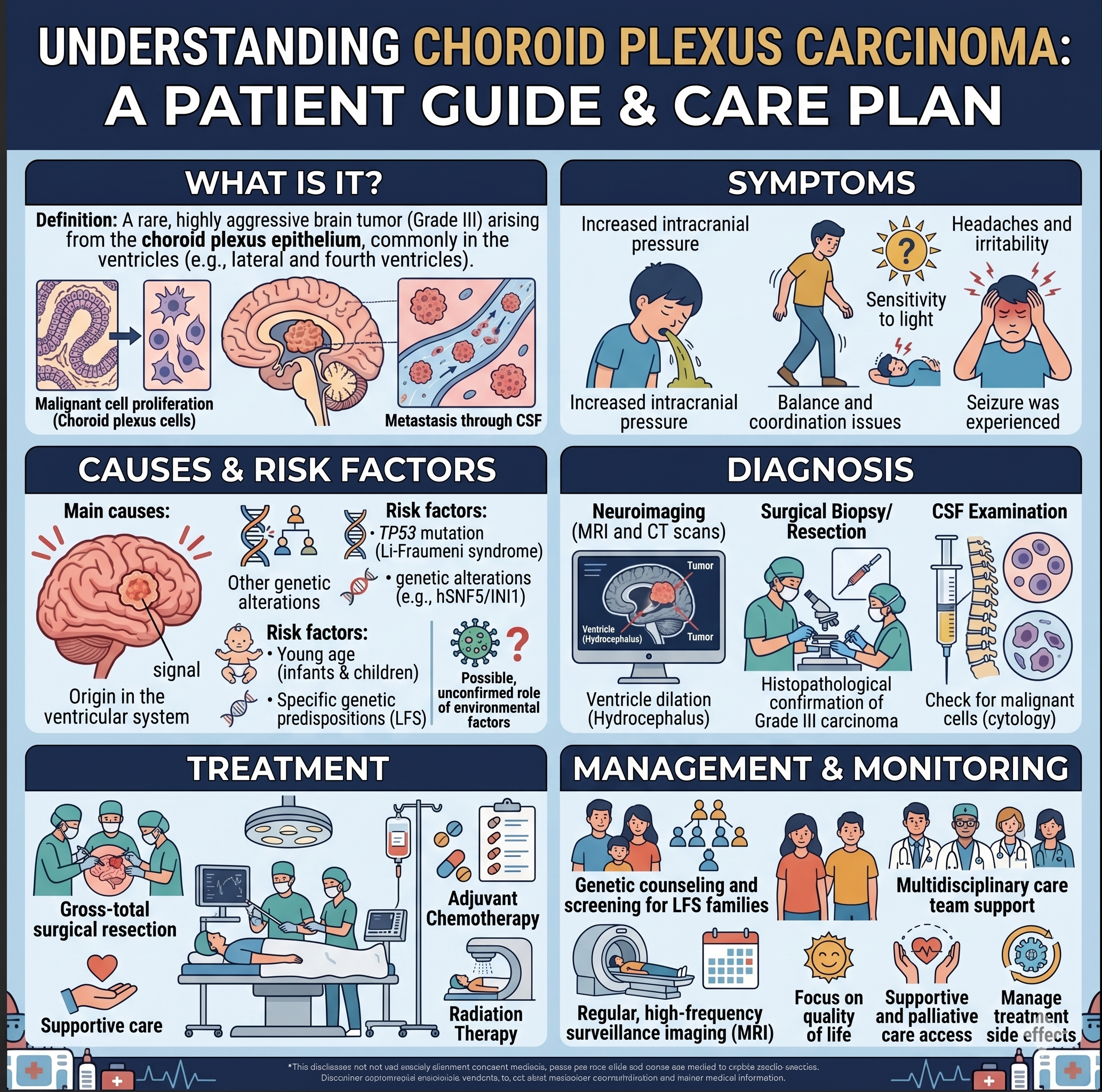
Choroid plexus carcinoma is a rare form of brain cancer that primarily affects children. This cancer starts in a specific brain area called the choroid plexus, which produces cerebrospinal fluid (CSF). CSF normally surrounds and protects the brain and spinal cord. As the tumor grows, it can lead to an excess of CSF in the brain, causing symptoms like irritability, nausea, vomiting, and headaches. Treatment and the chance of recovery depend on various factors, including the cancer's size, location, whether it has spread, and the child's age and overall health.
Understanding the Condition
Choroid Plexus Carcinoma: A Guide for Non-Medical Individuals
Understanding the Condition
Choroid plexus carcinoma is a rare form of brain cancer that primarily affects children. This cancer starts in a specific brain area called the choroid plexus, which produces cerebrospinal fluid (CSF). CSF normally surrounds and protects the brain and spinal cord. As the tumor grows, it can lead to an excess of CSF in the brain, causing symptoms like irritability, nausea, vomiting, and headaches. Treatment and the chance of recovery depend on various factors, including the cancer's size, location, whether it has spread, and the child's age and overall health.
Common Symptoms
Blurred or Double Vision: Difficulty seeing clearly, or seeing two images of a single object.
Increased Tiredness: Unusual or severe fatigue that doesn't improve with rest.
Irritability: Increased fussiness, agitation, or changes in mood, especially in children.
Nausea or Vomiting: Feeling sick to the stomach or throwing up, often due to increased pressure in the brain.
Headaches: Persistent or worsening head pain, also linked to increased brain pressure.
Consultation Guide
Which Specialist to Meet
Initially, you might see your primary care doctor or a pediatrician. If symptoms suggest a brain issue, they will likely refer you to specialists such as a neurologist (brain and nervous system specialist), a neurosurgeon (brain surgery specialist), or a pediatric oncologist (children's cancer specialist) if the patient is a child.
Preparations Before Your Visit
Before your visit, make a list of all symptoms, including when they started and how often they occur. Note any changes in your child's behavior or abilities. Gather your child's medical history, including any past illnesses or medications. Prepare a list of questions for the doctor to ensure all your concerns are addressed.
Book a doctor visit near me
The doctor will ask about your medical history and symptoms. They will then perform various tests to check mental status (memory, problem-solving), balance, coordination, reflexes, muscle strength, and sensation. This might involve walking, touching your nose, or responding to light touches.
Brain CT Scan (Computerized Tomography)
Early Detection and Monitoring: While prevention of most cases is not possible, prompt medical evaluation for any concerning or persistent symptoms, especially in young children, can lead to earlier diagnosis and potentially more effective treatment outcomes.
Long-Term Monitoring and Support
Consultation Guide
A thorough check of the nervous system to assess brain, spinal cord, nerve, and muscle function. This helps identify any issues and their potential causes.
Diagnostic Procedures
Neurological Examination
What to Expect
This imaging test uses X-rays and a computer to create detailed cross-sectional 'slices' of the head. It provides clear images of the brain, bones, blood vessels, and soft tissues, helping detect bleeding, swelling, or tumors.
What to Expect
You will lie on a narrow table that slides into a large, donut-shaped machine. You'll need to stay very still. The machine may make clicking or buzzing sounds. Sometimes, a special dye (contrast) is given intravenously in your arm to highlight certain areas. The scan is quick, usually taking only a few minutes.
Brain MRI (Magnetic Resonance Imaging)
A diagnostic test that uses powerful magnets and radio waves to create highly detailed images of the brain, and sometimes the neck and spine. It does not use radiation and is excellent for showing changes in brain tissue.
What to Expect
You will lie on a table that slides into a long, tube-shaped machine. It's crucial to remain completely still. The machine makes loud knocking or humming noises, so earplugs or headphones are usually provided. Some people find the enclosed space uncomfortable. The scan can take 30 minutes to an hour or more, depending on what images are needed.
This involves examining DNA, the body's genetic instruction manual, to identify specific changes that might be linked to certain illnesses or increased disease risk, such as inherited syndromes like Li-Fraumeni syndrome.
What to Expect
Genetic testing typically involves providing a small sample, usually a blood draw from a vein in your arm or a swab from the inside of your cheek. This sample is then sent to a lab for analysis. You will discuss the implications of the results with a doctor or genetic counselor.
Genetic Counseling and Testing: For families with a history of choroid plexus carcinoma or related inherited syndromes (like Li-Fraumeni syndrome), genetic counseling can help understand risks. Genetic testing can identify specific genetic changes, allowing for informed family planning and early screening strategies if a predisposition is found.
Psychological and Social Support: Living with a brain cancer diagnosis and its treatment can be emotionally challenging for patients and their families. Support groups, counseling, and mental health services can provide vital assistance in coping with stress, anxiety, and other emotional impacts.
Treatment Options
Surgical Procedures
Brain Tumor Surgery: A procedure aimed at removing a mass of unhealthy cells (tumor) from the brain. Surgeons strive to remove as much of the tumor as safely possible without damaging surrounding healthy brain tissue. In some cases, only a portion of the tumor can be removed. (Duration: The surgical procedure itself can last several hours. Recovery time in the hospital typically ranges from a few days to a week, followed by several weeks to months of home recovery and rehabilitation.)
Radiation Therapy (External Beam): This treatment uses high-energy beams, often X-rays or protons, precisely directed at the tumor to kill cancer cells and shrink the tumor. Modern techniques aim to minimize damage to healthy surrounding tissues. (Duration: Typically given in daily sessions over several weeks, Monday through Friday, with breaks on weekends.)
Intensity-Modulated Radiation Therapy (IMRT): An advanced form of external beam radiation therapy where the radiation beams are carefully shaped to match the tumor's contour, and their intensity is varied. This allows for a higher dose to the tumor while further protecting nearby healthy tissue. (Duration: Similar to standard external beam radiation, IMRT is usually administered in daily sessions over several weeks.)
Intraoperative Radiation Therapy (IORT): Radiation therapy delivered directly to the tumor site during surgery, after the primary tumor removal. This allows for a very high, concentrated dose of radiation directly to the area, minimizing exposure to other organs. (Duration: Administered as a single dose during the surgical procedure.)
Medications
Chemotherapy: A drug treatment that uses powerful chemicals to kill fast-growing cells in the body, most notably cancer cells. Different drugs can be used alone or in combination. (Duration: Treatment duration varies widely, typically given in cycles over several months, depending on the specific drugs, the cancer's response, and the patient's tolerance.)
Regular Follow-Up Care: After treatment, ongoing medical appointments, including imaging scans (CT, MRI) and neurological examinations, are crucial to monitor for any recurrence of the tumor or new health issues. The frequency of these visits will be determined by your medical team.
Rehabilitation Therapies: Depending on the tumor's location and treatment effects, therapies such as physical therapy (to regain strength and movement), occupational therapy (to improve daily living skills), and speech therapy (to address communication or swallowing difficulties) may be necessary to support recovery and improve quality of life.
Nutritional Support: Maintaining a healthy and balanced diet is important during and after treatment to support healing, energy levels, and overall well-being. A dietitian can provide personalized advice to meet specific nutritional needs.
Prevention & Long-Term Wellbeing
Prevention
Tags & Topics
Notice an error or need an update?
Help us keep medical information accurate. Report incorrect info or suggest an edit.


