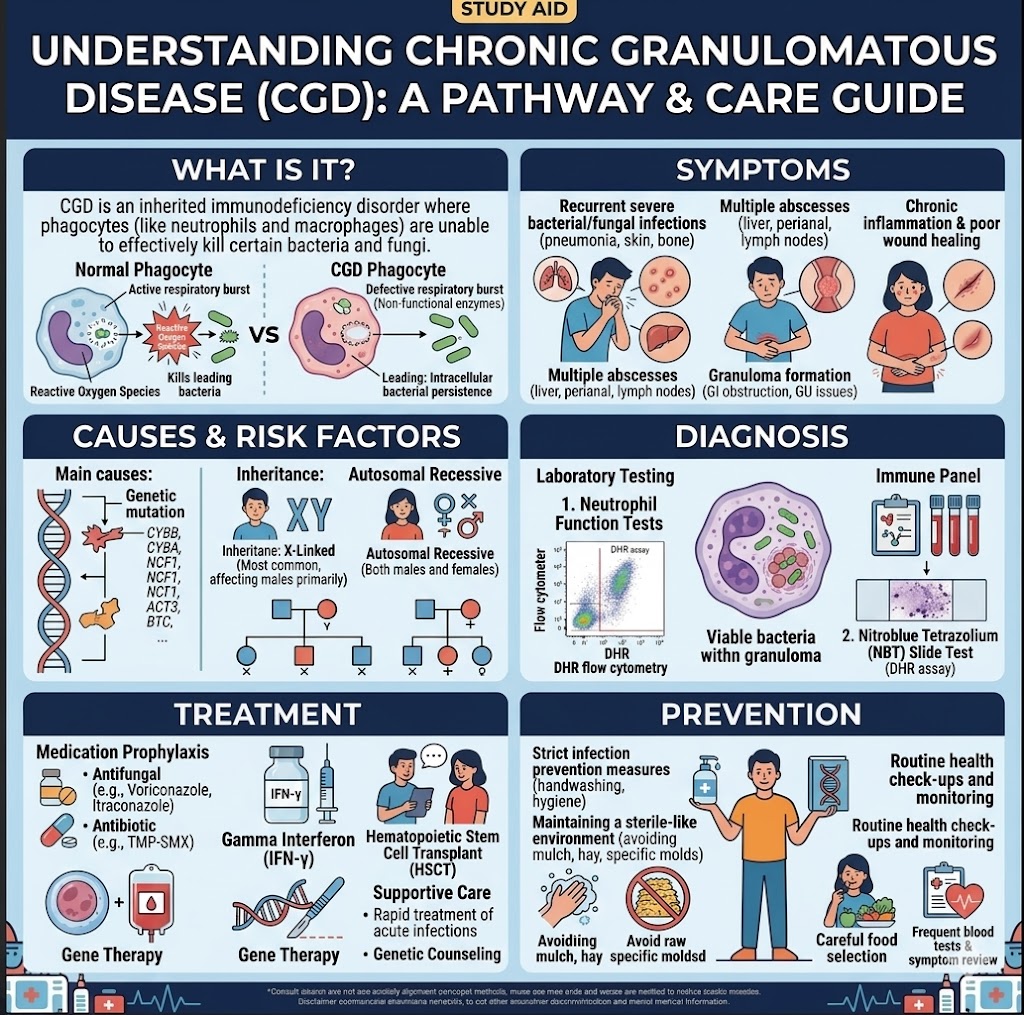
Chronic Granulomatous Disease (CGD) is a rare inherited condition where certain infection-fighting white blood cells, called phagocytes, don't work correctly. Normally, phagocytes act as the body's defenders, destroying harmful bacteria and fungi. In CGD, a genetic change prevents these cells from effectively killing invaders, leaving the body vulnerable to severe and recurrent infections.People with CGD often develop infections in areas like the lungs, skin, lymph nodes, liver, and digestive system. They may also form clusters of immune cells, called granulomas, in infected tissues. While most individuals are diagnosed during childhood, some may not receive a diagnosis until adulthood. CGD is caused by a change in one of five specific genes, which are responsible for producing an enzyme vital for the immune system's function. In rare cases, the genetic cause is not identified despite thorough testing. Boys are more frequently affected by CGD.
Understanding the Condition
Chronic Granulomatous Disease (CGD)
Understanding the Condition
Common Symptoms
Severe Recurrent Infections: Individuals typically experience serious bacterial or fungal infections every few years.
Lung Infections: Pneumonia is common, especially a severe fungal type after exposure to substances like dead leaves, mulch, or hay. Symptoms may include chest pain when breathing in or out.
Skin Infections: These can manifest as rashes, swelling, redness, boils, or persistent irritation.
Gastrointestinal Problems: This category includes symptoms such as stomach pain, bloody stool, and a painful pocket of pus near the anus (an abscess).
Consultation Guide
Which Specialist to Meet
Before your visit, gather a detailed family medical history, noting any instances of recurrent infections. Make a comprehensive list of all your symptoms, including when they started, their frequency, and any patterns you've noticed. Bring a list of all current medications, supplements, and previous infection diagnoses and treatments. Prepare a list of questions to ask your doctor.
Book a doctor visit near me
Granuloma Excision: If clusters of immune cells (granulomas) become large, cause blockages, or lead to significant symptoms, they may need to be surgically removed. (Duration: A single procedure; recovery time varies based on the size and location of the granuloma.)
Early Symptom Recognition: Become familiar with the early signs and symptoms of infection (e.g., fever, persistent cough, unusual skin changes) and report them immediately to your healthcare provider.
Patient and Family Education: Understand the condition thoroughly, including potential risks and management strategies, to empower you and your family in managing CGD effectively.
Genetic Counseling for Families: For affected individuals and their families, genetic counseling can provide valuable information on the inheritance patterns of CGD and assist with family planning considerations.
Consultation Guide
Chronic Granulomatous Disease (CGD) is a rare inherited condition where certain infection-fighting white blood cells, called phagocytes, don't work correctly. Normally, phagocytes act as the body's defenders, destroying harmful bacteria and fungi. In CGD, a genetic change prevents these cells from effectively killing invaders, leaving the body vulnerable to severe and recurrent infections.People with CGD often develop infections in areas like the lungs, skin, lymph nodes, liver, and digestive system. They may also form clusters of immune cells, called granulomas, in infected tissues. While most individuals are diagnosed during childhood, some may not receive a diagnosis until adulthood. CGD is caused by a change in one of five specific genes, which are responsible for producing an enzyme vital for the immune system's function. In rare cases, the genetic cause is not identified despite thorough testing. Boys are more frequently affected by CGD.
Genetic testing involves examining your DNA to identify specific changes (mutations) in the genes known to cause CGD. This test is crucial for confirming a diagnosis, understanding the inheritance pattern, and can guide treatment and family planning decisions. If initial tests are inconclusive, more extensive tests like whole exome or genome sequencing, which analyze a broader range of your genetic material, may be performed.
Depending on the suspected infection site, blood samples might be drawn for cultures, or a tissue biopsy may be taken from an affected area (e.g., skin lesion, lymph node, lung). Biopsies may involve a local anesthetic to numb the area and can cause mild discomfort. Imaging tests like X-rays or CT scans involve lying still while a machine captures internal images. These procedures are generally painless, and any discomfort is usually temporary.
Diagnostic Procedures
Organ Infections: Infections can affect internal organs such as the liver, stomach, intestines, brain, and eyes.
Swollen and Sore Lymph Glands: Lymph nodes, which are part of the immune system, may become enlarged and painful.
Persistent Runny Nose: An ongoing nasal discharge not necessarily linked to a common cold.
Oral Issues: Swelling and redness inside the mouth, potentially with sores.
Trouble Swallowing: Difficulty or pain when moving food down the throat.
For diagnosis and management of CGD, you should consult an immunologist (a specialist in immune system disorders), an infectious disease specialist, and potentially a genetic counselor or medical geneticist. Children are typically managed by pediatric immunologists, while adults see adult immunologists.
Preparations Before Your Visit
Phagocyte Function Tests (e.g., DHR test)
These specialized blood tests assess how effectively your white blood cells (phagocytes) can produce certain chemicals needed to kill bacteria and fungi. In CGD, this critical function is either absent or significantly reduced.
What to Expect
A healthcare professional will draw a small sample of blood, usually from a vein in your arm, similar to a routine blood test. This sample is then sent to a laboratory where it is stimulated to see how your phagocytes react. The test is quick and generally involves minimal discomfort, mainly a brief pinch during the blood draw. Results are typically available within a few days to a week.
What to Expect
Genetic testing usually requires a small sample of blood or cells collected with a cheek swab. For a blood sample, a nurse or phlebotomist will draw blood from your arm. For a cheek swab, you will gently rub a swab inside your mouth to collect cells. These samples are then processed in a lab. The procedure itself is minimally invasive with very low physical risk. Results may take several weeks to process, after which a genetic counselor or doctor will explain them and discuss their implications.
When an infection is suspected, various tests are performed to identify the specific pathogen (bacteria or fungus) causing it and to determine the extent of the infection. This can include cultures from blood, urine, or infected tissues, as well as imaging studies.
What to Expect
Treatment Options
Medications
Prophylactic Antimicrobial Therapy: This involves taking daily antibiotics and antifungals to prevent severe bacterial and fungal infections from occurring. (Duration: Lifelong, or as long as medically indicated by your specialist.)
Acute Infection Treatment: When an infection occurs, higher doses or different types of targeted antibiotics and antifungals are used to aggressively treat and clear the active infection. (Duration: Typically several weeks to months, depending on the severity and type of infection.)
Immune Modulating Medications: Certain medications may be prescribed to help regulate the immune system or reduce inflammation associated with granuloma formation. (Duration: Long-term, as determined by your healthcare provider based on your specific needs.)
Surgical Procedures
Aggressive Infection Management: Vigilant monitoring and rapid, targeted treatment for any suspected infection are crucial to prevent serious complications. (Duration: As needed, throughout life.)
Strict Medication Adherence: Consistently take all prescribed daily prophylactic antibiotics and antifungals exactly as directed by your doctor.
Environmental Awareness: Avoid or minimize exposure to environments known to harbor mold and fungi, such as construction sites, compost heaps, decaying leaves, or hay. If exposure is unavoidable, wear a protective mask.
Meticulous Hygiene: Practice thorough handwashing with soap and water frequently, especially before meals and after potential exposure to germs. Keep any skin cuts or abrasions clean and covered.
Up-to-Date Vaccinations: Ensure you receive all recommended vaccinations, including annual flu shots, as advised by your healthcare team. Discuss the safety of live vaccines with your doctor.
Safe Food Practices: Always ensure food is fully cooked, and avoid unpasteurized dairy products or raw foods that may pose an infection risk.
Long-Term Monitoring and Support
Regular Medical Follow-ups: Maintain a consistent schedule of appointments with your immunologist or other specialists for ongoing health monitoring, medication adjustments, and early detection of complications.
Prevention & Long-Term Wellbeing
Bone Marrow Transplant (Stem Cell Transplant): This is a potentially curative procedure where diseased, malfunctioning bone marrow is replaced with healthy blood-forming stem cells, usually from a donor. The process involves preparatory chemotherapy to clear existing bone marrow, followed by intravenous infusion of the new stem cells, which then ideally engraft and produce healthy immune cells. (Duration: A single, complex procedure requiring several weeks of hospitalization, followed by months of careful recovery and monitoring.)
Prevention of Infections
Tags & Topics
Notice an error or need an update?
Help us keep medical information accurate. Report incorrect info or suggest an edit.


