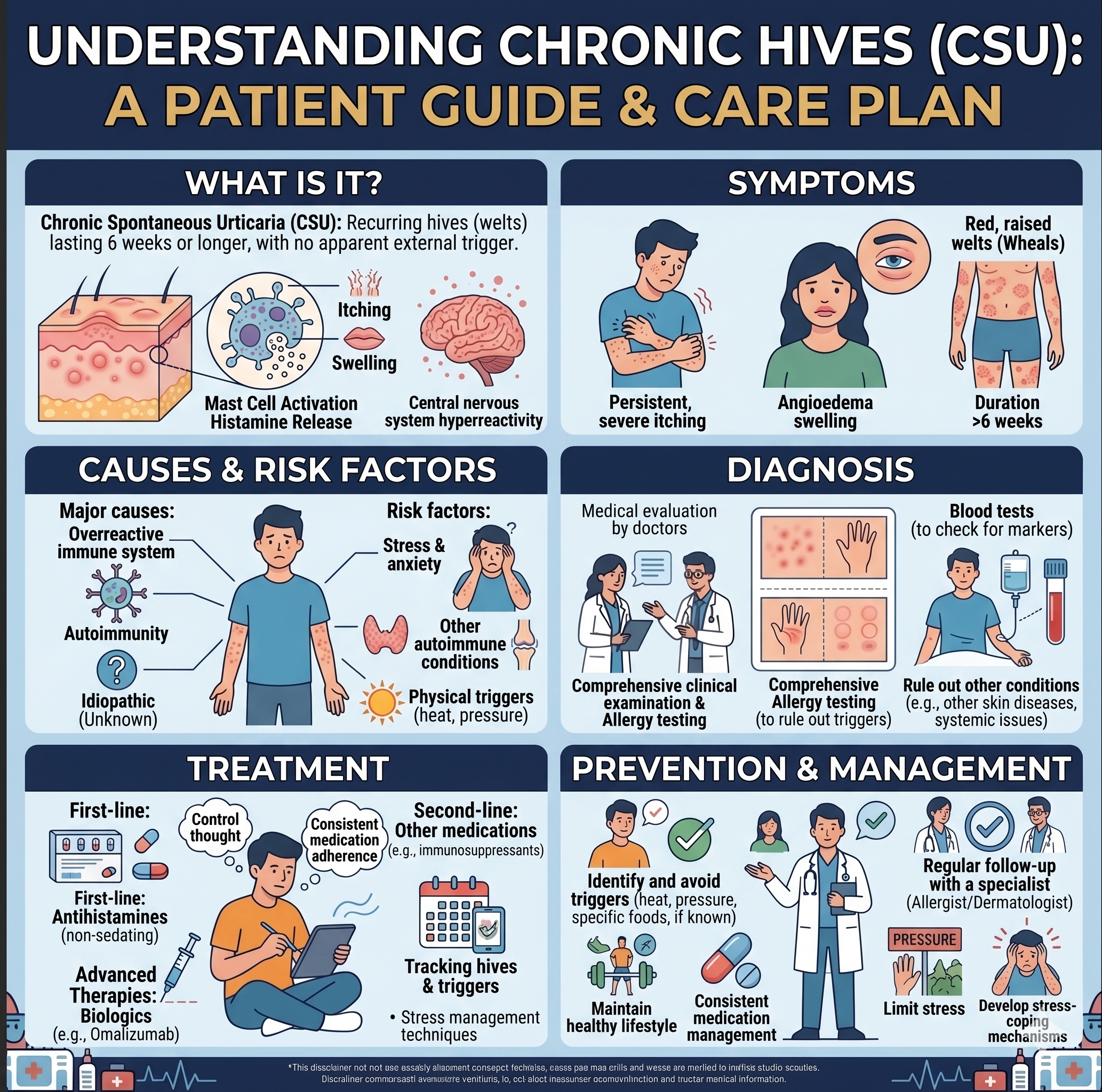
Chronic hives, medically known as chronic urticaria, is a skin condition characterized by itchy welts (weals) that last for more than six weeks and return frequently over months or even years. These welts can vary in size, appear and fade randomly, and often lack a clear, identifiable cause. While highly uncomfortable and disruptive to sleep and daily activities, chronic hives are generally not life-threatening. They occur when the immune system releases chemicals like histamine into the bloodstream, triggering localized skin swelling.
Understanding the Condition
Understanding Chronic Hives: A Guide to Symptoms, Diagnosis, and Management
Understanding the Condition
Common Symptoms
Itchy Welts (Weals): Swollen, raised patches of skin that can appear anywhere on the body, varying in size and shape. Individual welts usually fade within 24 hours, but new ones continuously appear.
Skin Discoloration: Welts may appear red, purple, or skin-colored, depending on your natural skin tone.
Intense Itching (Pruritus): A persistent and often severe itching sensation that can disrupt daily routines and sleep.
Painful Swelling (Angioedema): Deep swelling that occurs under the skin, most commonly around the eyes, cheeks, lips, hands, feet, or genitals.
Trigger-Induced Flares: Hives that worsen or reappear due to external triggers such as heat, cold, physical exercise, friction, or emotional stress.
Consultation Guide
Which Specialist to Meet
Before your visit, keep a detailed symptom diary documenting when hives appear, their appearance (with photos), what you ate, activities, and potential triggers. List all medications, supplements, and vitamins you take. Ask the clinic if you need to stop taking over-the-counter antihistamines before your appointment, as they can interfere with diagnostic tests.
Book a doctor visit near me
Consultation Guide
Chronic hives, medically known as chronic urticaria, is a skin condition characterized by itchy welts (weals) that last for more than six weeks and return frequently over months or even years. These welts can vary in size, appear and fade randomly, and often lack a clear, identifiable cause. While highly uncomfortable and disruptive to sleep and daily activities, chronic hives are generally not life-threatening. They occur when the immune system releases chemicals like histamine into the bloodstream, triggering localized skin swelling.
Immunosuppressants: Prescription medications that calm an overactive immune system to prevent it from launching the inflammatory response that causes hives. (Duration: Several months, requiring regular blood tests to monitor kidney and liver function.)
Diagnostic Procedures
You should consult a board-certified allergist/immunologist or a dermatologist. These specialists are trained to diagnose complex skin conditions and design a targeted management plan.
Preparations Before Your Visit
Allergy Skin Prick Test
This test checks for immediate allergic reactions to dozens of different substances simultaneously, such as pollen, mold, dust mites, pet dander, and foods.
What to Expect
A nurse or doctor will clean your skin (usually on your forearm or back) and place small drops of allergen extracts on it. They will then gently prick or scratch the skin surface through the drops. If you are allergic to a substance, a small, itchy red bump (similar to a mosquito bite) will appear within 15 to 20 minutes.
Specific IgE Blood Test
A blood test used to measure the amount of allergy-causing antibodies (Immunoglobulin E) in your bloodstream, helpful for patients with severe skin conditions who cannot undergo skin pricking.
What to Expect
A healthcare provider will draw a small sample of blood from a vein in your arm using a needle. You may feel a brief pinch. The sample is sent to a laboratory for analysis, and results are typically returned within a few days. No special preparation is needed.
Systemic Health Blood Panels
These blood tests check for underlying medical conditions, such as thyroid disease or autoimmune disorders, which are sometimes linked to chronic hives.
What to Expect
Similar to the IgE blood test, this requires a standard blood draw from your arm. Depending on the specific panel ordered, your doctor might instruct you to fast (avoid food and drink) for several hours before the draw.
Treatment Options
Medications and Therapies
Non-Drowsy Antihistamines: Daily oral medications that block histamine, the chemical causing the swelling and itching. They serve as the primary first-line treatment. (Duration: Taken daily for several weeks, months, or as long as hives persist, under medical supervision.)
H2 Blockers (Acid Reducers): Medications typically used for heartburn that can be combined with standard antihistamines to provide enhanced hives relief. (Duration: Used as an add-on therapy for a few weeks to months during active flare-ups.)
Monoclonal Antibodies: An injectable prescription medication designed to target and block specific antibodies that trigger allergic and inflammatory responses. (Duration: Administered as an injection once every four weeks; treatment can continue for several months or years.)
Oral Corticosteroids: Powerful anti-inflammatory medications used to quickly calm severe, widespread hives that do not respond to other treatments. (Duration: Short-term use only, typically 3 to 10 days, to avoid serious long-term side effects.)
Prevention & Long-Term Wellbeing
Prevention and Long-Term Well-Being
Identify and Avoid Triggers: Keep a careful eye out for environmental or physical triggers, such as extreme heat, cold, tight elastic waistbands, or heavy friction, and adapt your environment to avoid them.
Wear Loose, Breathable Clothing: Choose smooth-textured, loose-fitting cotton clothing to minimize skin friction, pressure, and irritation.
Practice Post-Exposure Hygiene: If your hives are triggered by pollen or animal dander, take a lukewarm shower and change into fresh clothes immediately after exposure.
Soothe the Skin: Apply cold, damp compresses to itchy areas, or take cool baths to help calm skin inflammation and reduce the urge to scratch.
Manage Stress: Incorporate stress-reduction practices like yoga, meditation, deep breathing, or counseling, as emotional stress can trigger immune system flares.
Tags & Topics
Notice an error or need an update?
Help us keep medical information accurate. Report incorrect info or suggest an edit.


