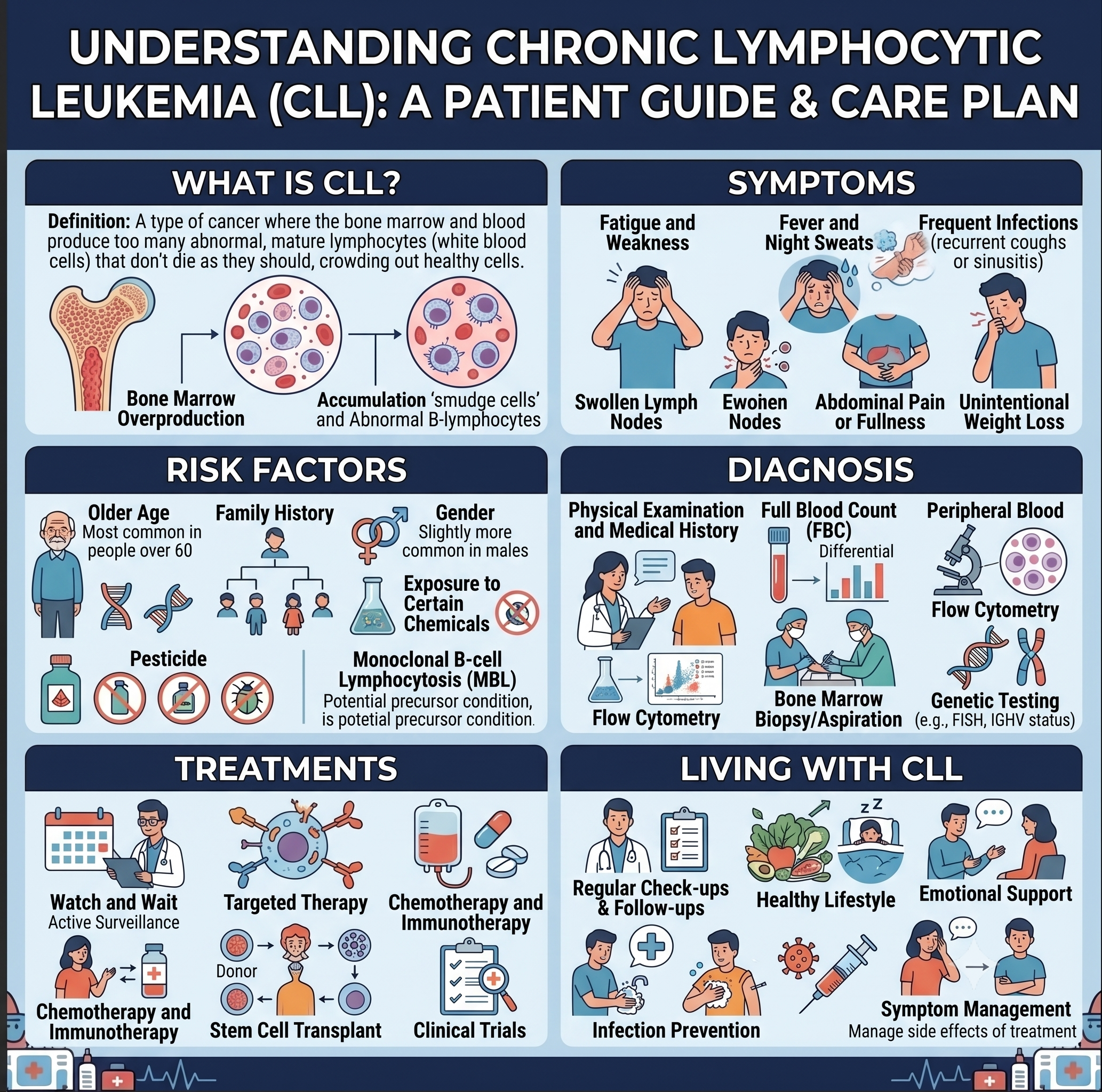
Chronic lymphocytic leukemia (CLL) is a slow-growing cancer of the blood and bone marrow—the soft, spongy tissue inside bones where blood cells are made. CLL specifically affects lymphocytes, a type of white blood cell that normally helps your body fight infections. In people with CLL, the body produces too many abnormal, dysfunctional lymphocytes. Over time, these cancer cells crowd out healthy blood cells, making it harder for the body to fight infections, carry oxygen, and control bleeding.
Understanding the Condition
Understanding Chronic Lymphocytic Leukemia (CLL)
Understanding the Condition
Chronic lymphocytic leukemia (CLL) is a slow-growing cancer of the blood and bone marrow—the soft, spongy tissue inside bones where blood cells are made. CLL specifically affects lymphocytes, a type of white blood cell that normally helps your body fight infections. In people with CLL, the body produces too many abnormal, dysfunctional lymphocytes. Over time, these cancer cells crowd out healthy blood cells, making it harder for the body to fight infections, carry oxygen, and control bleeding.
Common Symptoms
Before your appointment, write down any symptoms you are experiencing, list all medications, vitamins, and supplements you take, write down your medical history (including any history of cancer in your family), and prepare a list of questions to ask your doctor.
Book a doctor visit near me
Active Surveillance: Because CLL grows slowly, treatment may not be started immediately. Doctors monitor your condition closely with regular doctor visits, physical exams, and blood tests. (Duration: Can last for several months to many years, depending on how quickly the cancer progresses and whether symptoms develop.)
Consultation Guide
Swollen Lymph Nodes: Painless lumps under the skin, most commonly noticed in the neck, armpits, or groin, caused by an accumulation of abnormal lymphocytes.
Drenching Night Sweats: Severe sweating during sleep that can completely soak through nightwear and bedding.
Upper-Left Abdominal Pain: A feeling of fullness, discomfort, or pain in the upper-left side of the belly, often caused by an enlarged spleen.
Frequent Infections: Getting sick more often than usual, or having infections that are unusually severe and take a long time to clear up.
Consultation Guide
Which Specialist to Meet
You will need to consult with a hematologist (a doctor who specializes in blood disorders) or a hematologist-oncologist (a blood cancer specialist).
Preparations Before Your Visit
A healthcare provider will insert a small needle into a vein in your arm to draw a tube of blood. This takes only a few minutes and may cause a mild, brief pinch or slight bruising afterward.
Bone Marrow Aspiration and Biopsy
A combined procedure to collect samples of both the fluid and solid portions of bone marrow from your hip bone to check for leukemia cells.
Diagnostic Procedures
Complete Blood Count (CBC)
A routine blood test that measures the levels of red blood cells, white blood cells (including lymphocytes), and platelets.
What to Expect
What to Expect
You will lie on your side or stomach. The doctor will clean and numb the skin over your hip bone with a local anesthetic. Using specialized needles, they will withdraw a liquid sample (aspiration) and a small piece of bone tissue (biopsy). You may feel a brief, sharp pulling sensation and dull pressure. The area may feel sore for a few days.
CT (Computed Tomography) Scan
An imaging test that uses X-rays and computer technology to create detailed, 3D pictures of the inside of your body to look for swollen lymph nodes or an enlarged spleen.
What to Expect
You will lie flat on a motorized table that slides into a large, ring-shaped scanner. You must remain very still during the scan, which takes about 10 to 30 minutes. You may be given an oral or intravenous contrast dye beforehand to make the internal structures clearer on the images.
Attend All Follow-Up Appointments: Consistently attend your scheduled doctor appointments and blood tests so your care team can monitor your blood counts and check for any signs of progression.
Get Screened for Secondary Cancers: People with CLL have a higher risk of developing other cancers, particularly skin cancer. Schedule yearly skin checks with a dermatologist and follow age-appropriate cancer screenings.
Seek Emotional and Psychological Support: Join a cancer support group, talk with a counselor, or connect with loved ones to help navigate the emotional challenges of living with a chronic cancer.
Treatment Options
Watch and Wait (Active Surveillance)
Medication-Based Therapies
Targeted Therapy: Oral medications designed to target specific proteins or survival pathways inside cancer cells, causing them to die while sparing healthy cells. (Duration: Typically taken daily as a long-term maintenance therapy, continuing as long as the treatment is effective and side effects are manageable.)
Chemotherapy: The use of powerful medications to destroy rapidly dividing cancer cells throughout the body. (Duration: Given in cycles of treatment followed by a rest period, typically lasting 3 to 6 months in total.)
Immunotherapy: Intravenous medications that help your body's own immune system identify, target, and destroy leukemia cells. (Duration: Administered in outpatient sessions, often combined with chemotherapy, spanning several months.)
Advanced Procedures and Therapies
CAR-T Cell Therapy: An advanced immunotherapy where your own T-cells (infection-fighting cells) are collected, genetically modified in a lab to target your leukemia cells, and infused back into your bloodstream. (Duration: The treatment itself is a one-time infusion, but the entire process (including collection, modification, and post-treatment monitoring) takes several weeks to months.)
Radiation Therapy: The use of high-energy X-ray beams to shrink painfully swollen lymph nodes or an enlarged spleen when other treatments are not suitable. (Duration: Usually delivered in daily sessions over a period of 1 to 3 weeks.)
Prevention & Long-Term Wellbeing
Unintentional Weight Loss: Losing weight rapidly and noticeably without making any changes to your diet or exercise routine.
Loss of Appetite: A persistent decrease in your desire to eat, which can contribute to overall weakness and weight loss.
Bone Marrow Transplant (Stem Cell Transplant): A procedure that replaces your diseased bone marrow with healthy blood-forming stem cells from a donor, allowing your body to start producing healthy blood cells again. (Duration: Requires several weeks of intensive prep with chemotherapy, followed by a hospital stay of several weeks, and a recovery period of several months to a year.)
Practice Strict Hygiene: Wash your hands thoroughly and regularly with soap and water, and use hand sanitizer when soap is unavailable.
Stay Up-to-Date on Vaccines: Ask your doctor about recommended vaccines, such as the annual flu shot and pneumonia vaccines. Avoid live vaccines, as they can be dangerous for people with weakened immune systems.
Avoid Sick Contacts: Stay away from crowds and individuals who are actively sick or have recently been exposed to contagious illnesses.
Long-Term Monitoring and Support
Tags & Topics
Notice an error or need an update?
Help us keep medical information accurate. Report incorrect info or suggest an edit.


