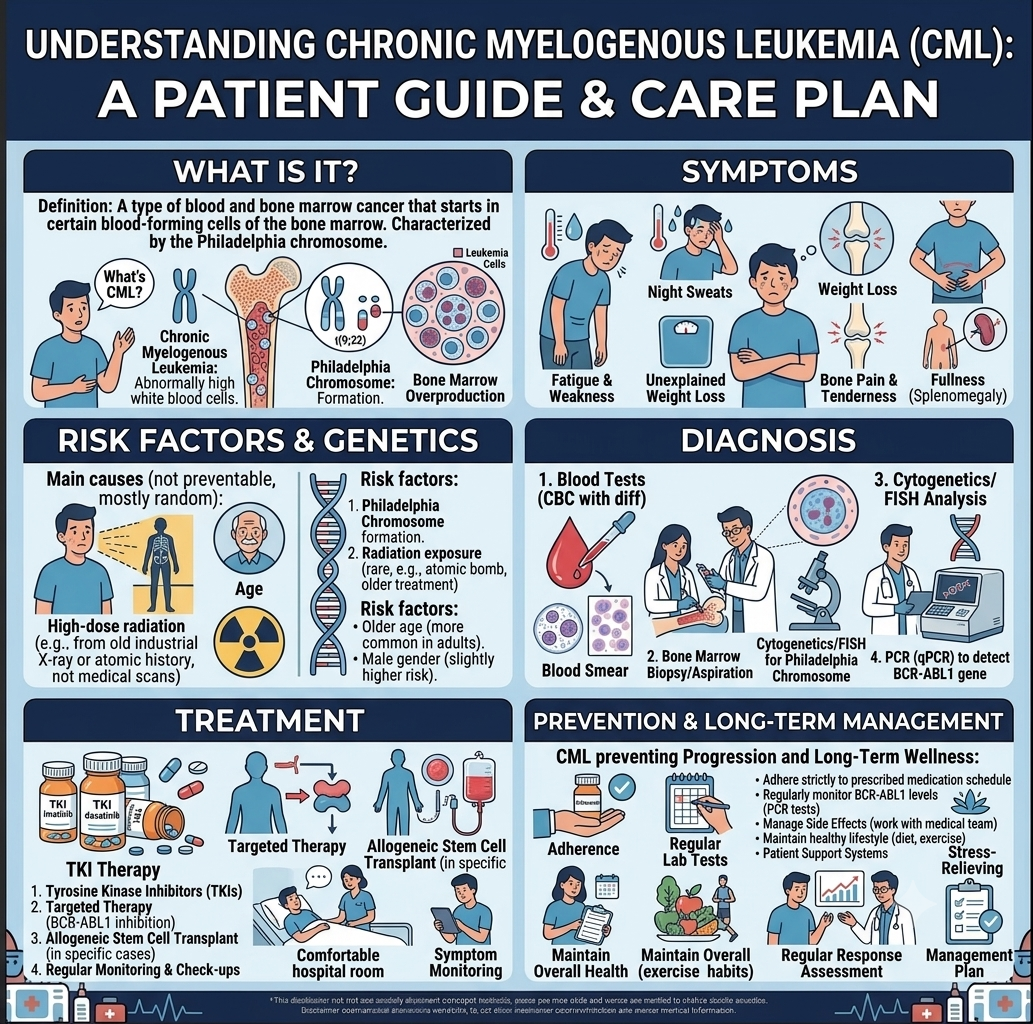
Chronic myelogenous leukemia, or CML, is an uncommon form of cancer that affects the bone marrow. Bone marrow is the soft, spongy tissue inside your bones where all blood cells are made. In CML, there's an uncontrolled increase in the number of certain white blood cells in the blood.The term "chronic" means this cancer generally progresses more slowly compared to some other severe forms of leukemia. "Myelogenous" refers to the specific type of blood cells affected by this condition. CML is also known as chronic myeloid leukemia or chronic granulocytic leukemia. While it can occur at any age, it most commonly affects older adults and is rare in children.CML arises from a specific change in the bone marrow cells. Normally, human cells have 23 pairs of chromosomes, which contain the DNA instructions for cell functions. In most people with CML, a piece of chromosome 9 swaps places with a piece of chromosome 22. This exchange creates an unusually short chromosome 22, known as the Philadelphia chromosome, and a longer chromosome 9. This Philadelphia chromosome is found in the blood cells of about 90% of individuals with CML.This chromosome swap leads to the formation of a new gene called BCR-ABL. The BCR-ABL gene instructs the affected blood cells to produce excessive amounts of a protein called tyrosine kinase. This protein then promotes the uncontrolled growth of certain white blood cells. These diseased white blood cells multiply rapidly and fail to die off as they should, accumulating in large numbers. This buildup crowds out healthy blood cells and damages the bone marrow, leading to the symptoms and complications of CML.Significant advances in treatment have greatly improved the outlook for people with CML. Many individuals can achieve remission and live for many years following their diagnosis.
Understanding the Condition
Chronic Myelogenous Leukemia (CML)
Understanding the Condition
Chronic myelogenous leukemia, or CML, is an uncommon form of cancer that affects the bone marrow. Bone marrow is the soft, spongy tissue inside your bones where all blood cells are made. In CML, there's an uncontrolled increase in the number of certain white blood cells in the blood.The term "chronic" means this cancer generally progresses more slowly compared to some other severe forms of leukemia. "Myelogenous" refers to the specific type of blood cells affected by this condition. CML is also known as chronic myeloid leukemia or chronic granulocytic leukemia. While it can occur at any age, it most commonly affects older adults and is rare in children.CML arises from a specific change in the bone marrow cells. Normally, human cells have 23 pairs of chromosomes, which contain the DNA instructions for cell functions. In most people with CML, a piece of chromosome 9 swaps places with a piece of chromosome 22. This exchange creates an unusually short chromosome 22, known as the Philadelphia chromosome, and a longer chromosome 9. This Philadelphia chromosome is found in the blood cells of about 90% of individuals with CML.This chromosome swap leads to the formation of a new gene called BCR-ABL. The BCR-ABL gene instructs the affected blood cells to produce excessive amounts of a protein called tyrosine kinase. This protein then promotes the uncontrolled growth of certain white blood cells. These diseased white blood cells multiply rapidly and fail to die off as they should, accumulating in large numbers. This buildup crowds out healthy blood cells and damages the bone marrow, leading to the symptoms and complications of CML.Significant advances in treatment have greatly improved the outlook for people with CML. Many individuals can achieve remission and live for many years following their diagnosis.
Common Symptoms
Often Asymptomatic: CML frequently doesn't cause any noticeable symptoms, and it might be discovered incidentally during a routine blood test.
Easy Bleeding: Unexplained bruising or bleeding, such as frequent nosebleeds or prolonged bleeding from minor cuts.
Feeling Full Quickly: Experiencing a sensation of fullness even after eating only a small amount of food.
If you experience any persistent or concerning symptoms, you should first consult your primary care provider. They can assess your overall health and, if CML is suspected, refer you to a hematologist-oncologist. A hematologist-oncologist is a medical doctor who specializes in blood disorders and cancers, including leukemia.
Preparations Before Your Visit
Before your appointment, make a list of all your symptoms, including when they started and how often they occur. Write down any existing medical conditions you have and all medications, vitamins, and supplements you are currently taking. Be prepared to discuss your medical history and any questions you have for your doctor. It can also be helpful to bring a family member or friend to take notes and support you.
Book a doctor visit near me
Acupuncture: A traditional therapy involving the insertion of very thin needles into specific points on the body. While not a direct treatment for CML, it may be used as a complementary therapy to help manage symptoms such as pain, nausea, or fatigue that can be associated with the disease or its treatments. (Duration: Ongoing, as needed, with sessions typically lasting 30-60 minutes each.)
Blood Transfusions: If CML or its treatments lead to dangerously low levels of red blood cells (anemia) or platelets, transfusions of healthy red blood cells or platelets can be given to alleviate symptoms and prevent complications. (Duration: As needed, depending on the severity and persistence of low blood counts.)
Consultation Guide
Blurry Vision: Impaired or unclear eyesight, which can be caused by bleeding at the back of the eye in advanced cases.
Consultation Guide
Which Specialist to Meet
Targeted Therapy: These oral medications specifically block the activity of the BCR-ABL protein (tyrosine kinase) that causes the uncontrolled growth of white blood cells in CML. They are highly effective and are the primary treatment for most people with CML. (Duration: Long-term, often lifelong, with regular monitoring of blood counts and disease markers.)
No Known Prevention Methods: Currently, there is no known way to prevent chronic myelogenous leukemia. The genetic change that causes CML is not inherited from parents but is believed to develop after birth due to unknown reasons. There's nothing you could have done to prevent it if you develop CML.
Minimize Radiation Exposure (General Guideline): While CML linked to radiation exposure is primarily observed in individuals who have undergone radiation therapy for other cancers, generally minimizing unnecessary exposure to high doses of radiation is a prudent health practice.
Long-Term Monitoring and Support
Diagnostic Procedures
Complete Blood Count (CBC)
This is a standard blood test that measures the numbers of red blood cells, white blood cells, and platelets in your blood. It provides a broad overview of your general health and can help detect a wide range of conditions, including anemia, infections, and leukemia.
What to Expect
A healthcare professional will draw a small sample of blood, usually from a vein in your arm. The process is quick and typically involves a brief pinch or sting as the needle is inserted. The blood sample is then sent to a lab for analysis.
Bone Marrow Aspiration and Biopsy
These two procedures are often performed together to collect and examine samples of bone marrow, which is the spongy tissue inside some of your larger bones. Bone marrow aspiration removes a small amount of the liquid part of the marrow, while a bone marrow biopsy removes a small piece of the solid bone tissue and marrow within it. These tests are crucial for determining if your bone marrow is healthy and producing normal amounts of blood cells, and for diagnosing blood and marrow diseases, including leukemia.
What to Expect
You will typically lie on your stomach or side. The area, usually the back of the hip bone (pelvis), will be cleaned and numbed with a local anesthetic. You might feel pressure as the needle is inserted into the bone. For aspiration, you may feel a brief, sharp pain as the liquid marrow is withdrawn. For the biopsy, you might feel a pushing or pulling sensation. The entire procedure usually takes about 15-30 minutes. Afterward, you will have a small bandage, and may experience some soreness for a few days.
Genetic Tests (for Philadelphia Chromosome and BCR-ABL Gene)
These specialized tests are performed on samples of blood or bone marrow to identify the specific genetic changes associated with CML. They look for the Philadelphia chromosome (the extra-short chromosome 22) and the BCR-ABL gene, which is created by the chromosome swap. Detecting these genetic markers is essential for confirming a CML diagnosis and guiding treatment decisions.
What to Expect
These tests are carried out in a laboratory using the blood or bone marrow samples already collected during a CBC or bone marrow exam. There are no additional procedures needed for the genetic testing itself beyond the initial collection of the sample.
Regular Medical Check-ups: Ongoing appointments with your hematologist-oncologist are vital to monitor the disease, assess the effectiveness of your treatment, and manage any side effects. This includes regular blood tests to check for the presence of the Philadelphia chromosome and BCR-ABL gene.
Emotional and Psychological Support: Coping with a cancer diagnosis can be challenging. Seek support from family, friends, support groups, or a mental health professional to help manage stress, anxiety, and depression. Many resources are available to help you navigate the emotional aspects of living with CML.
Treatment Options
Medications
Bone Marrow Transplant (Stem Cell Transplant): This intensive procedure involves replacing diseased bone marrow with healthy blood-forming stem cells. The new stem cells can come from a compatible donor (allogeneic transplant) or, in some cases, from the patient's own body (autologous transplant) after their marrow has been cleared of cancer cells. It's typically considered for cases where targeted therapy isn't effective or for more advanced stages of CML. (Duration: The intensive treatment phase (chemotherapy/radiation and transplant) lasts several weeks to months, followed by an extended recovery period of many months to a year or more.)
Chemotherapy: Chemotherapy uses powerful drugs to kill rapidly growing cancer cells throughout the body. While not the primary treatment for most CML patients today, it may be used in certain situations, such as to reduce the number of cancer cells before a stem cell transplant or in specific advanced cases of CML. (Duration: Varies significantly based on the specific drugs, dosage, and treatment goal, ranging from weeks to several months.)
Therapies / Supportive Care
Biological Therapy: These treatments harness or enhance the body's own immune system to fight cancer cells. Various types of biological therapies exist, and some may be used in CML to help control the disease or support other treatments. (Duration: Varies depending on the specific therapy and its role in the overall treatment plan, often weeks to months.)
Strict Adherence to Treatment: Consistently taking prescribed targeted therapy medications exactly as directed is crucial for maintaining remission and preventing the disease from progressing. Missing doses can allow cancer cells to multiply.
Healthy Lifestyle Choices: Maintaining a balanced diet, engaging in regular, moderate exercise (as advised by your doctor), and ensuring adequate sleep can help support your overall physical and mental health during treatment and remission.
Vaccinations: Discuss with your doctor about recommended vaccinations to protect against infections, especially if your immune system is compromised by CML or its treatments.
Prevention & Long-Term Wellbeing
Unintended Weight Loss: Losing weight without making any changes to diet or exercise routines.
Loss of Appetite: Reduced desire to eat or feeling less hungry than usual.
Pain or Fullness in the Abdomen: Discomfort or a sensation of pressure and fullness below the ribs on the left side, often due to an enlarged spleen.
Excessive Night Sweats: Soaking sweats occurring during sleep.
Prevention
Tags & Topics
Notice an error or need an update?
Help us keep medical information accurate. Report incorrect info or suggest an edit.


