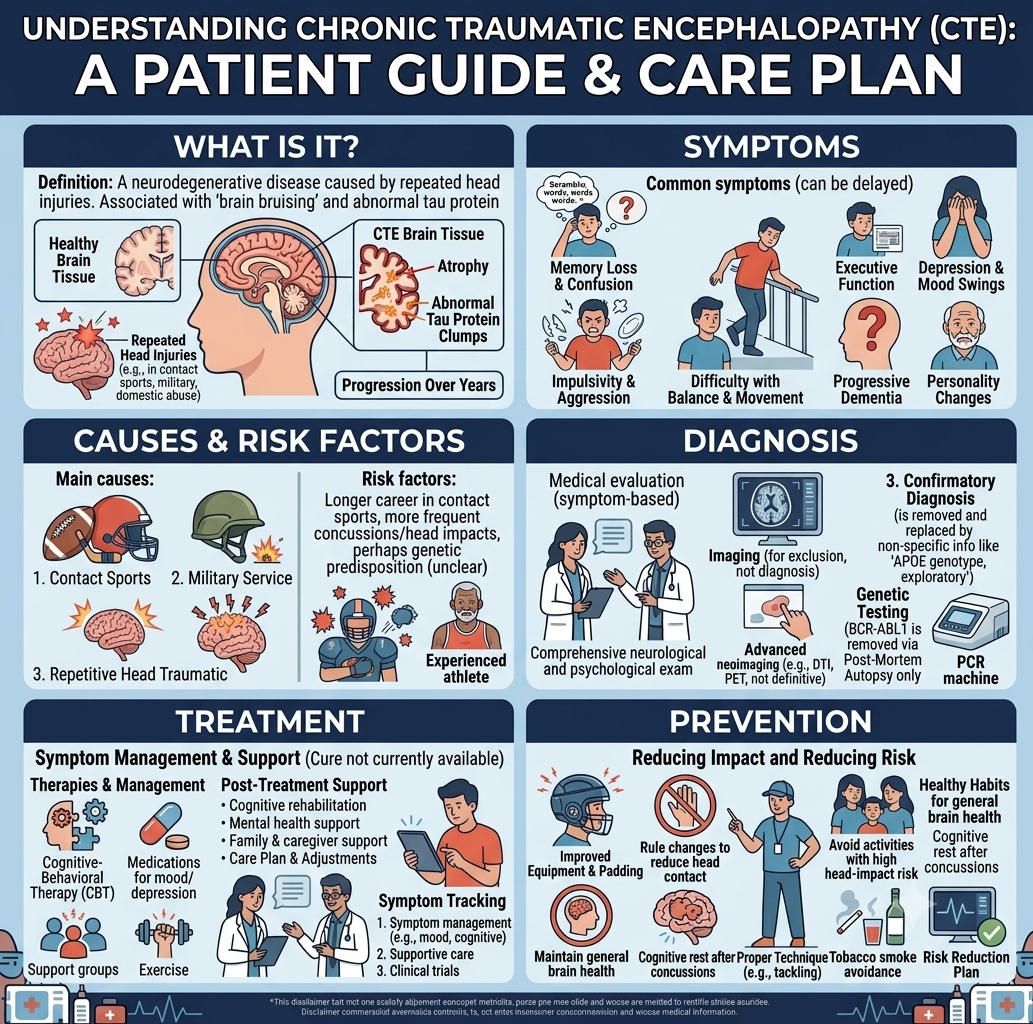
Chronic Traumatic Encephalopathy, or CTE, is a progressive brain disease believed to be caused by repeated head injuries. It leads to the degeneration and death of brain nerve cells, worsening over time. CTE is currently only definitively diagnosed after death through a brain autopsy. Experts believe CTE is rare and not linked to a single head injury, but rather to multiple impacts, often seen in contact sports (like U.S. football and boxing) or military combat, particularly with exposure to explosive blasts. Symptoms, which can include difficulties with thinking, emotions, physical functions, and behavior, are thought to emerge years to decades after the initial head traumas. Researchers are actively working to understand the exact mechanisms, risk factors, and develop living diagnostic tests for CTE, as well as how often it occurs in the general population. There is currently no cure for CTE.
Understanding the Condition
Chronic Traumatic Encephalopathy (CTE): A Guide for Non-Medical Persons
Understanding the Condition
Chronic Traumatic Encephalopathy, or CTE, is a progressive brain disease believed to be caused by repeated head injuries. It leads to the degeneration and death of brain nerve cells, worsening over time. CTE is currently only definitively diagnosed after death through a brain autopsy. Experts believe CTE is rare and not linked to a single head injury, but rather to multiple impacts, often seen in contact sports (like U.S. football and boxing) or military combat, particularly with exposure to explosive blasts. Symptoms, which can include difficulties with thinking, emotions, physical functions, and behavior, are thought to emerge years to decades after the initial head traumas. Researchers are actively working to understand the exact mechanisms, risk factors, and develop living diagnostic tests for CTE, as well as how often it occurs in the general population. There is currently no cure for CTE.
Common Symptoms
Trouble Thinking: Difficulty with cognitive processes like focus, problem-solving, and decision-making.
Memory Loss: Problems recalling recent events or information.
Planning Difficulties: Struggles with organizing thoughts and carrying out tasks.
Impulsive Behavior: Acting without considering consequences.
Aggression: Increased irritability and hostile actions.
Depression or Apathy: Persistent sadness, loss of interest in activities, or a lack of motivation.
Emotional Instability: Rapid and unpredictable shifts in mood.
Substance Misuse: Problematic use of alcohol or drugs.
Suicidal Thoughts or Behavior: Serious thoughts about ending one's life or attempts to do so.
Consultation Guide
Which Specialist to Meet
If you or a loved one have a history of repeated head injuries and are experiencing symptoms like those described, consider consulting a neurologist (a doctor specializing in the brain and nervous system), a sports medicine physician, or a neuropsychologist. A psychiatrist can also help manage mood and behavioral symptoms.
Preparations Before Your Visit
Before your appointment, gather your complete medical history, especially details about any head injuries, concussions, or exposures to blast forces. Document your symptoms, including when they started, how often they occur, and how they affect daily life. Bring a list of all medications, supplements, and vitamins you are taking. Prepare a list of questions for your doctor to ensure all your concerns are addressed.
Book a doctor visit near me
Symptomatic Management
Medications for Mood and Behavior: Prescription drugs to help manage symptoms such as depression, anxiety, aggression, or sleep disturbances. (Duration: Ongoing, as needed for symptom control.)
Cognitive and Memory Aids: Medications or strategies to support memory and thinking processes, though their effectiveness for CTE-related symptoms is still being studied. (Duration: Ongoing, as needed for symptom management.)
Therapies and Support
Physical Therapy: Exercises and interventions to improve balance, coordination, and movement difficulties. (Duration: Variable, depending on individual needs and progression.)
Occupational Therapy: Strategies and adaptations to help individuals perform daily activities and maintain independence. (Duration: Variable, depending on individual needs and progression.)
Speech and Language Therapy: Assistance for problems with communication, swallowing, or cognitive aspects of language. (Duration: Variable, depending on individual needs and progression.)
Psychotherapy/Counseling: Talking therapy to help individuals cope with emotional changes, depression, and behavioral issues. (Duration: Ongoing, as needed for emotional support and coping strategies.)
Caregiver Support and Education: Resources and guidance for family members and caregivers to manage the challenges of CTE. (Duration: Ongoing support for caregivers.)
Regular Medical Monitoring: Individuals with a history of repeated head injuries should undergo periodic medical evaluations to monitor for any developing neurological or cognitive symptoms.
Early Intervention for Symptoms: If symptoms associated with CTE emerge, seek prompt medical consultation to explore symptomatic management options and support services.
Diagnostic Procedures
Electroencephalogram (EEG)
An EEG is a test that records the electrical activity of your brain through small, metal discs (electrodes) placed on your scalp. It helps doctors detect abnormal brain wave patterns, often used to diagnose seizure disorders like epilepsy or assess general brain function.
What to Expect
During an EEG, you'll lie comfortably on a bed or sit in a reclining chair. A technician will attach about 16-25 small electrodes to your scalp using a sticky paste or cap. These electrodes are harmless and only record brain activity, they do not deliver electricity. You'll be asked to relax, close your eyes, and stay still. Sometimes, you might be asked to breathe deeply and rapidly (hyperventilate) or look at flashing lights to trigger certain brain activities. The test is painless and typically takes 20-40 minutes, but longer recordings might be needed.
PET Scan (Positron Emission Tomography)
A PET scan is an imaging test that uses a small amount of a radioactive drug, called a tracer, to visualize the metabolic and biochemical function of your body's tissues and organs. It can detect abnormal activity, such as in cancer, heart disease, or brain disorders, sometimes before changes are visible on other scans like CT or MRI.
What to Expect
Before the PET scan, a radioactive tracer is injected into a vein, usually in your arm. You'll then wait for about 30-90 minutes for the tracer to travel through your body and accumulate in the areas being studied. During the scan, you'll lie on a narrow table that slides into a large, donut-shaped machine. It's crucial to remain very still during the scan, which typically lasts 30 minutes. The scanner itself is quiet, and the procedure is generally painless, though some people may feel a slight discomfort from lying still. PET scans are often combined with CT or MRI scans for more detailed images.
SPECT Scan (Single-Photon Emission Computerized Tomography)
A SPECT scan is a type of imaging test that uses a radioactive substance and a special camera to create detailed 3D pictures. Unlike some other imaging tests that show organ structure, a SPECT scan focuses on how well your organs are functioning, for example, showing blood flow to the brain or heart, or areas of bone activity.
What to Expect
Similar to a PET scan, a small amount of a radioactive tracer is injected into your vein. You'll then wait for a period (which can range from minutes to hours, depending on the area being scanned) for the tracer to circulate and be absorbed by the tissues. During the scan, you'll lie on a table while a camera rotates around your body, capturing images that reveal blood flow and metabolic activity. You must remain still for the duration of the scan, which can last from 15 to 60 minutes. The procedure is usually painless, though lying still might be uncomfortable for some.
Prevention & Long-Term Wellbeing
Lifestyle Adjustments: Encouraging a healthy diet, regular gentle exercise (if appropriate), and social engagement to support overall well-being. (Duration: Lifelong practice.)
Prevention
Reduce Head Injury Risk: Prioritize safety in sports by adhering to rules, using proper protective gear, and promoting safe playing techniques to minimize concussions and subconcussive impacts.
Prevent Second Impact Syndrome: Ensure complete recovery from a head injury before returning to activities where another head injury might occur. This is critical to prevent severe brain swelling and potential long-term damage.
Awareness in High-Risk Professions: For individuals in military combat or other occupations with high head injury exposure, follow all safety protocols and seek immediate medical attention for any head trauma.
Long-Term Wellbeing
Brain-Healthy Lifestyle: Engage in activities that promote brain health, such as mental stimulation, regular physical activity (approved by a doctor), a balanced diet, and adequate sleep.
Tags & Topics
Notice an error or need an update?
Help us keep medical information accurate. Report incorrect info or suggest an edit.


