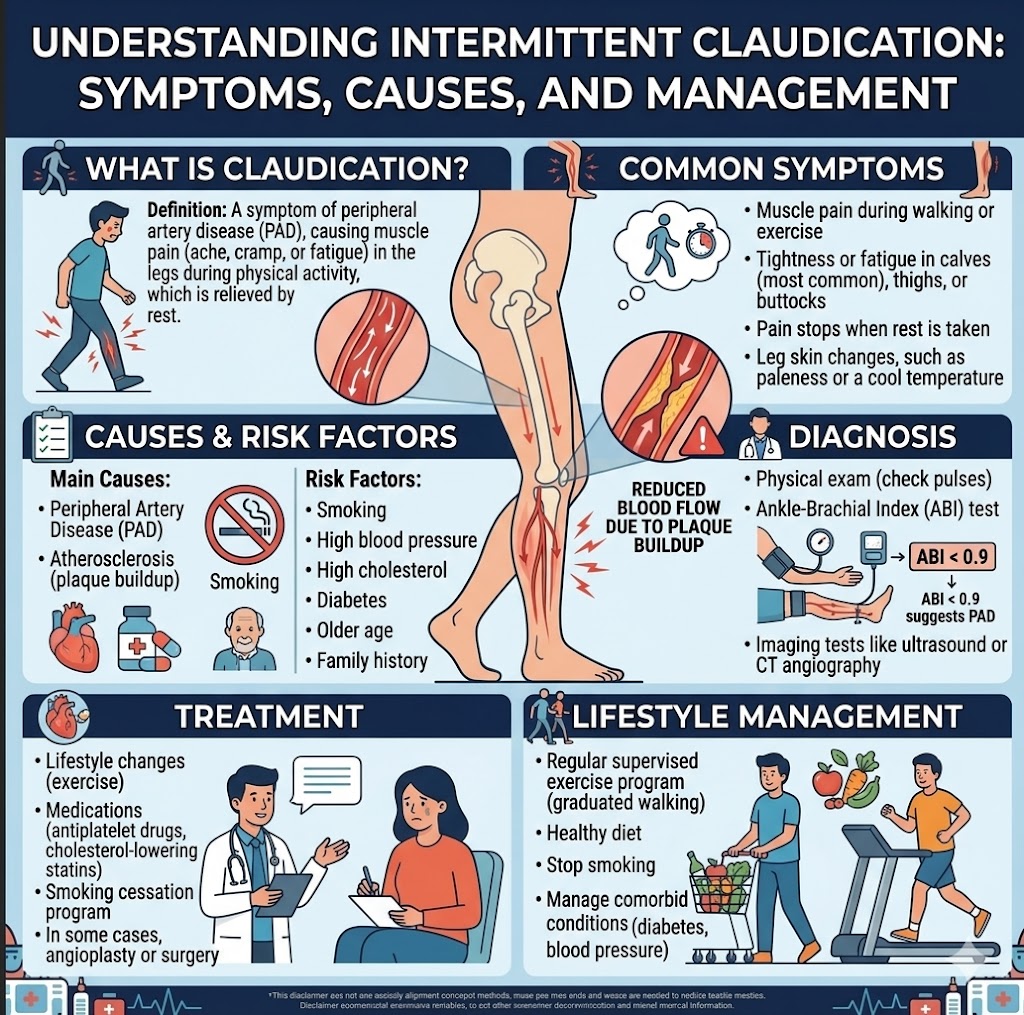
Claudication is muscle pain, typically in the legs, that starts during exercise and eases with rest. It occurs because muscles aren't getting enough blood flow and oxygen. This pain isn't a disease itself but a symptom, most often indicating peripheral artery disease (PAD), where arteries, usually in the legs or arms, are narrowed by fatty plaque buildup. Known as 'intermittent claudication' because the pain comes and goes, severe cases can lead to pain even at rest. Treatment aims to reduce pain, improve movement, prevent tissue damage, and lower cardiovascular risks.
Understanding the Condition
Claudication: Leg Pain from Poor Circulation
Understanding the Condition
Claudication is muscle pain, typically in the legs, that starts during exercise and eases with rest. It occurs because muscles aren't getting enough blood flow and oxygen. This pain isn't a disease itself but a symptom, most often indicating peripheral artery disease (PAD), where arteries, usually in the legs or arms, are narrowed by fatty plaque buildup. Known as 'intermittent claudication' because the pain comes and goes, severe cases can lead to pain even at rest. Treatment aims to reduce pain, improve movement, prevent tissue damage, and lower cardiovascular risks.
Common Symptoms
Pain with Activity: The main symptom is muscle pain, cramping, or aching in your legs or arms that begins during exercise and typically resolves with rest. Muscles may feel tired or heavy.
Common Locations: Most often in the calves, but also in thighs, buttocks, hips, or feet. Less commonly, pain can affect shoulders, biceps, or forearms.
Progressive Symptoms: Pain may worsen over time, occurring with less activity or increasing in intensity. In advanced stages, pain may develop even at rest.
Severe Blood Flow Issues: If blood flow is severely restricted, additional symptoms in the affected limb may include: persistent coldness or numbness, muscle weakness, slow-healing sores, skin color changes (pale or bluish), hair loss on legs/feet, and brittle nails.
Consultation Guide
Which Specialist to Meet
Before your visit, list all symptoms (onset, triggers, relief), your full medical history (conditions, medications, supplements), and any questions you have for your doctor.
Book a doctor visit near me
Regular Doctor Visits: Monitor symptoms, blood pressure, cholesterol, and overall heart health.
Self-Monitor Symptoms: Pay attention to any worsening pain, new symptoms, or changes to your doctor promptly.
Consultation Guide
This non-invasive test compares blood pressure in your ankle and arm to detect peripheral artery disease (PAD) and reduced blood flow. It's recommended if you have leg pain while walking or PAD risk factors (age >50, smoking, diabetes, high blood pressure, high cholesterol).
Diagnostic Procedures
Ankle-Brachial Index (ABI) Test
What to Expect
You lie flat while blood pressure cuffs are placed on both arms and ankles. A Doppler ultrasound device listens to blood flow as pressures are measured. The test is painless and takes about 10-30 minutes. An 'exercise ABI' may be performed before and after walking on a treadmill to assess blood flow changes during activity.
CT Coronary Angiogram (CTCA)
A CTCA uses advanced X-ray technology to create detailed 3D images of your heart's arteries. This non-invasive test helps identify narrowed or blocked heart arteries, diagnose coronary artery disease, and detect other heart conditions.
What to Expect
Treatment Options
Start with your primary care physician. They may refer you to specialists like a cardiologist (heart/blood vessel doctor), a vascular surgeon (blood vessel surgery specialist), or an interventional radiologist (minimally invasive blood vessel procedures).
Preparations Before Your Visit
Medications
Artery-Protecting Medications: Includes drugs to prevent blood clots, lower cholesterol, manage blood pressure, and improve blood flow, reducing pain and slowing disease progression. (Duration: Ongoing, as prescribed.)
Bypass Surgery: Creates a new path around a blocked artery using a healthy vessel or synthetic tube. (Duration: Surgery hours. Recovery weeks to months. Intended as a long-term solution.)
Adhere to Treatment: Take medications as directed and follow all medical advice.
Prevention & Long-Term Wellbeing
You'll lie on a table that slides into a CT scanner. An IV delivers contrast dye, making vessels visible (you might feel warmth). You'll need to lie still and hold your breath briefly. The procedure is quick (15-30 minutes) with no surgical cuts or recovery time. Inform your doctor if you are pregnant (radiation risk) or breastfeeding (dye can pass into milk), or if you have contrast dye allergies.
Lifestyle Changes
Structured Exercise Program: Supervised walking, 30-60 minutes most days, improves blood flow by promoting new vessel growth. (Duration: Months for improvement, ongoing for benefits.)
Quit Smoking: Essential step; smoking severely damages blood vessels. (Duration: Immediate and lifelong.)
Heart-Healthy Diet & Weight Management: Balanced diet, low in unhealthy fats, helps manage cholesterol and blood pressure; maintaining healthy weight reduces cardiovascular strain. (Duration: Lifelong commitment.)
Foot Care: Daily inspection and care prevent complications from poor circulation. (Duration: Daily and ongoing.)
Angioplasty and Stenting: A balloon-tipped catheter opens narrowed arteries; a mesh stent may be left to keep it open. (Duration: Procedure 1-3 hours. Recovery days to a week. Stent is permanent.)
Atherectomy: A catheter-based procedure to remove plaque from the inside of an artery. (Duration: Procedure 1-3 hours. Recovery days to a week.)
Prevention & Management
Stop Smoking: Crucial for preventing PAD and slowing its progression.
Control Chronic Conditions: Manage diabetes, high blood pressure, and high cholesterol to minimize artery damage.
Stay Active: Regular exercise improves circulation and cardiovascular health.
Healthy Eating: A balanced diet helps prevent plaque buildup and maintain healthy vessels.
Maintain Healthy Weight: Reduces strain on heart and circulation.
Long-Term Care
Supportive Lifestyle: Continue healthy habits and stress management for sustained wellbeing.
Tags & Topics
Notice an error or need an update?
Help us keep medical information accurate. Report incorrect info or suggest an edit.


