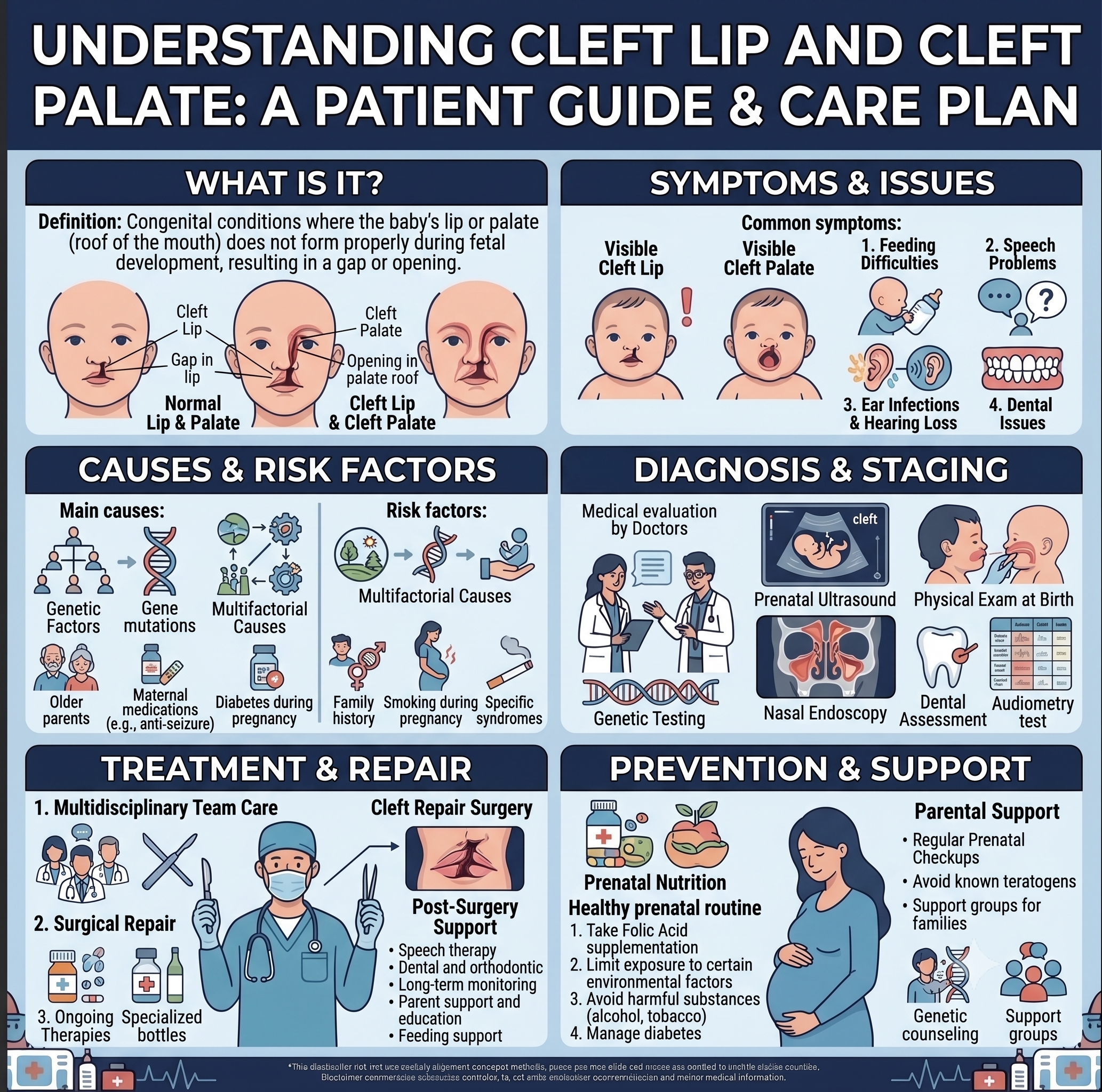
Cleft lip and cleft palate are common birth differences, appearing as openings in a baby's upper lip, the roof of their mouth (palate), or both. They occur early in pregnancy when facial tissues don't fully close. While concerning, these conditions are treatable with modern surgeries and ongoing care, allowing children to achieve normal appearance and function.
Understanding the Condition
Cleft Lip and Cleft Palate
Understanding the Condition
Common Symptoms
Visible Openings: A split in the lip or roof of the mouth, usually noticeable at birth or detected via prenatal ultrasound.
Types of Clefts: Clefts can be categorized as: a) Lip and Palate Cleft, affecting one or both sides, extending through the lip into the roof of the mouth. b) Lip-Only Cleft, ranging from a small notch to an opening extending through the gum into the nose. c) Palate-Only Cleft, an internal opening in the roof of the mouth, not visible externally.
Consultation Guide
The doctor will quickly examine the baby's lip, gums, and the roof of their mouth. For a suspected hidden cleft, the doctor might gently feel the roof of the mouth to detect any muscle gaps. This causes no discomfort.
If a cleft is detected prenatally and there are concerns about associated genetic conditions, amniocentesis may be recommended. This involves taking a small sample of amniotic fluid for genetic analysis.
Diagnostic Procedures
Submucous Cleft Palate: A hidden split in the soft palate muscles, diagnosed later due to: feeding difficulties, a nasal-sounding voice, frequent ear infections, or rarely, liquids/food coming out of the nose during swallowing.
Consultation Guide
Which Specialist to Meet
You should consult with a multidisciplinary team including a pediatrician, plastic surgeon, oral and maxillofacial surgeon, ENT doctor, speech therapist, dentist/orthodontist, audiologist, and a genetic counselor for personalized advice.
Preparations Before Your Visit
Before your visit, gather any available prenatal records, list any family medical history of similar conditions, and write down all your questions and concerns.
Book a doctor visit near me
This non-invasive imaging test uses sound waves to create pictures of your baby inside the womb. It can often detect a cleft lip and sometimes a cleft palate before birth.
What to Expect
Gel is applied to your abdomen, and a handheld device (transducer) is moved over your skin, displaying real-time images of your baby on a monitor. It is typically painless, though you might feel slight pressure.
Physical Exam at Birth
A healthcare professional will visually inspect your newborn's face and mouth immediately after birth. This is usually sufficient to identify a cleft lip or a visible cleft palate.
What to Expect
What to Expect
Usually between 14 and 20 weeks, an ultrasound guides a thin needle through your abdomen into the uterus to collect fluid. You may feel a brief sharp pain or cramping during the needle insertion and removal. The procedure lasts about 30 minutes.
Audiology and Hearing Monitoring: Regular hearing tests and management strategies for ear fluid and infections to safeguard hearing development. (Duration: Ongoing monitoring from infancy through childhood, particularly for children with cleft palate.)
Treatment Options
Cleft lip and cleft palate are common birth differences, appearing as openings in a baby's upper lip, the roof of their mouth (palate), or both. They occur early in pregnancy when facial tissues don't fully close. While concerning, these conditions are treatable with modern surgeries and ongoing care, allowing children to achieve normal appearance and function.
Surgical Procedures
Cleft Lip Repair (Cheiloplasty): Surgical procedure to close the gap in the upper lip, restoring a more typical lip shape, and improving muscle function while minimizing scarring. (Duration: Typically performed when the baby is around 3-6 months old.)
Cleft Palate Repair (Palatoplasty): Surgery to close the opening in the roof of the mouth, reconstructing the palate to allow for proper feeding, speech development, and to reduce the risk of ear infections. (Duration: Usually performed when the baby is between 9-18 months old. Additional surgeries may be needed as the child grows.)
Ear Tube Placement (Tympanostomy Tubes): Tiny, hollow tubes are surgically placed into the eardrums to create an airway, prevent fluid buildup in the middle ear, and reduce recurrent ear infections and potential hearing loss. (Duration: Most tubes fall out on their own within 4-18 months. Some may require surgical removal.)
Alveolar Bone Graft: If the cleft extends through the gum line (alveolus), bone material, often taken from the child's hip, is grafted into the gap. This provides support for teeth to erupt properly and stabilizes the upper jaw. (Duration: Typically performed around 8-12 years of age.)
Therapies and Support
Feeding Support: Guidance from specialists on modified feeding techniques and specialized bottles or nipples to help babies with clefts feed effectively and gain weight. (Duration: Initiated immediately after birth and continues until the baby can feed independently.)
Speech Therapy: Regular sessions with a speech-language pathologist to help children develop clear speech, correct nasal sounds, and improve articulation after palate repair. (Duration: Can begin in toddlerhood and continue for several years as needed.)
Dental and Orthodontic Care: Comprehensive dental care including routine check-ups, preventive treatments, and orthodontic interventions (like braces) to manage tooth alignment and jaw development affected by the cleft. (Duration: Ongoing from early childhood through adolescence and sometimes adulthood.)
Medication Review During Pregnancy: Discuss all prescription and over-the-counter medications you are taking or planning to take with your healthcare provider when pregnant or planning a pregnancy.
Long-Term Monitoring and Support
Multidisciplinary Team Care: Continued engagement with a specialized team of healthcare professionals throughout childhood and adolescence to address all aspects of the child's development, including growth, speech, hearing, and dental health.
Emotional and Psychosocial Support: Access to counseling services or support groups for children and families. This helps address potential social, emotional, and behavioral challenges related to appearance, medical procedures, and overall coping.
Adherence to Follow-Up Appointments: Regular attendance at scheduled appointments with all specialists is crucial for monitoring progress, addressing new concerns, and ensuring the best possible long-term outcomes for speech, hearing, and dental health.
Prevention & Long-Term Wellbeing
Prevention Strategies
Genetic Counseling: If there is a family history of cleft lip or palate, consult a genetic counselor before pregnancy. They can assess your risk and discuss potential implications for future children.
Prenatal Vitamin Intake (Folic Acid): Ensure adequate intake of essential vitamins, particularly folic acid, before and during the early stages of pregnancy. Discuss appropriate prenatal vitamin supplements with your doctor.
Avoidance of Harmful Substances: Refrain from using tobacco products or consuming alcohol during pregnancy, as these significantly increase the risk of birth differences.
Tags & Topics
Notice an error or need an update?
Help us keep medical information accurate. Report incorrect info or suggest an edit.


