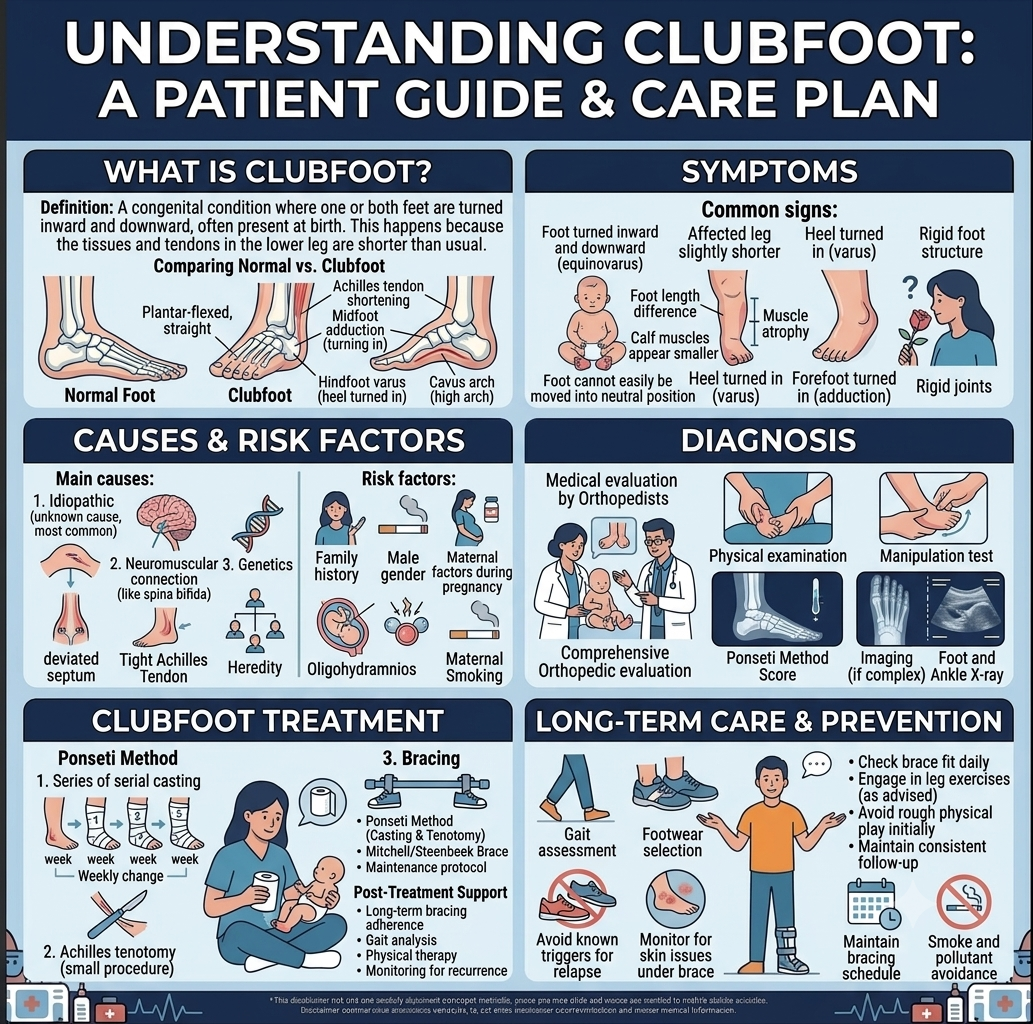
Clubfoot is a condition present at birth where a baby's foot is turned inward and downward. This happens because the tendons—the strong tissues connecting muscles to bones—are shorter than usual, pulling the foot out of its normal position. Also known as congenital talipes equinovarus, clubfoot is a common condition affecting about 1 in 1,000 babies, often without other medical issues. It can range from mild to severe, sometimes affecting both feet. Without proper treatment, a child might walk on the side or top of their foot, leading to limping, skin problems, and difficulty wearing shoes. While clubfoot won't improve on its own, it can be successfully treated, especially if treatment begins within weeks after birth, often involving a specific casting technique and a minor procedure to lengthen the heel tendon.
Understanding the Condition
Understanding Clubfoot: A Guide for Parents
Understanding the Condition
Common Symptoms
Unusual Foot Position: The top of the foot typically points inward and downward. The arch may appear high, and the heel might turn inward. In severe cases, the foot may be turned so much that it looks like it's upside down.
Slightly Shorter Foot: The affected foot or big toe might be slightly shorter than the other foot.
Smaller Calf Muscles: The calf muscles in the leg with clubfoot are usually smaller compared to the other leg.
Consultation Guide
Clubfoot is a condition present at birth where a baby's foot is turned inward and downward. This happens because the tendons—the strong tissues connecting muscles to bones—are shorter than usual, pulling the foot out of its normal position. Also known as congenital talipes equinovarus, clubfoot is a common condition affecting about 1 in 1,000 babies, often without other medical issues. It can range from mild to severe, sometimes affecting both feet. Without proper treatment, a child might walk on the side or top of their foot, leading to limping, skin problems, and difficulty wearing shoes. While clubfoot won't improve on its own, it can be successfully treated, especially if treatment begins within weeks after birth, often involving a specific casting technique and a minor procedure to lengthen the heel tendon.
No Pain at Birth: Clubfoot does not cause any discomfort or pain for the baby at birth.
Consultation Guide
Which Specialist to Meet
Your healthcare professional will likely notice clubfoot during an examination shortly after birth. You will typically be referred to a pediatric orthopedic surgeon, a doctor who specializes in bone and muscle conditions in children.
Preparations Before Your Visit
Before your visit, gather any medical records from your child's birth and any prenatal scans. Prepare a list of questions you have. Dress your baby in loose, comfortable clothing that can be easily removed for examination.
Book a doctor visit near me
Emotional Support: Provide support and understanding, especially during teenage years, if the appearance of the foot causes concerns about body image.
Diagnostic Procedures
A healthcare professional will examine your baby's foot soon after birth, assessing its position, flexibility, and overall structure. This is the primary method for diagnosing clubfoot.
What to Expect
The doctor will gently examine your baby's foot and leg. Your baby may need to be undressed from the waist down for a thorough check. This is a quick and painless procedure for the baby.
While not a definitive diagnosis, clubfoot can sometimes be observed during routine ultrasound scans performed during pregnancy, using sound waves to create images of the baby in the womb.
What to Expect
For the pregnant parent, a gel is applied to the abdomen, and a handheld device (transducer) is moved over the skin. This procedure is painless for both the parent and the baby.
What to Expect
Your baby will be gently positioned on an examination table, and the foot will be placed to get the clearest image. The process is quick and painless, with minimal exposure to radiation. Parents may be asked to wear a protective apron if they remain in the room.
Treatment Options
An X-ray uses a small amount of radiation to create images of the bones in the foot. This can help the doctor understand the exact bone structure and severity of the clubfoot, especially before treatment begins or to monitor progress.
Therapies and Procedures
Ponseti Method (Casting): This is the most common and effective treatment. The doctor gently stretches and manipulates the baby's foot into a more corrected position, then applies a series of plaster casts from the toes to the thigh. The cast is changed weekly, with the foot being stretched a little more each time. (Duration: Typically 5-7 weeks, with weekly cast changes.)
Heel Tendon Lengthening Procedure: Often performed after the casting series, this is a minor procedure. A small cut is made to lengthen the tight heel tendon (Achilles tendon), which allows the foot to move into an even better position. It's usually done in a clinic setting with local anesthesia. (Duration: A few minutes, followed by wearing a final cast for approximately 3 weeks.)
Foot Bracing: After casting and the tendon procedure, a special brace (often consisting of boots connected by a bar) is used to maintain the corrected foot position and prevent the clubfoot from returning. (Duration: Worn full-time for about 3 months, then during naps and at night for several years (e.g., up to age 4 or 5).)
Stretching Exercises: Parents are taught specific gentle stretches and exercises to help maintain the foot's flexibility and strength, which are crucial during the bracing period and beyond. (Duration: Ongoing throughout the bracing period and potentially continued at home for several years.)
Surgical Procedures
Corrective Surgery: For cases that are very severe, do not fully respond to the Ponseti method, or if the clubfoot returns later, surgery may be necessary. This involves adjusting tendons, ligaments, and sometimes bones to achieve a proper foot position. (Duration: Varies based on complexity; typically followed by a period of casting and physical therapy.)
Prudent Medication Use: Do not use non-prescription drugs, illegal substances, or any medications not approved by your healthcare professional while pregnant.
Long-Term Care and Monitoring
Strict Adherence to Treatment: Following the treatment plan, especially the consistent use of the brace, is critical for successful long-term outcomes and preventing the clubfoot from returning.
Regular Follow-up Visits: Ongoing check-ups with the pediatric orthopedic surgeon are necessary throughout childhood and adolescence to monitor the foot's development and address any potential issues.
Continued Stretching and Exercises: Maintaining a routine of gentle stretches and exercises helps to keep the foot flexible and strong over time.
Monitor for Complications: Be aware that even after successful treatment, the affected foot may be slightly stiffer, shorter, or have a smaller calf. Watch for any recurrence of the inward turn or discomfort.
Prevention & Long-Term Wellbeing
Prevention During Pregnancy
Avoid Smoking: Do not smoke, and avoid exposure to secondhand smoke during pregnancy, as this can increase the risk of certain birth complications, including clubfoot.
Avoid Alcohol: Refrain from drinking any alcohol during pregnancy.
Tags & Topics
Notice an error or need an update?
Help us keep medical information accurate. Report incorrect info or suggest an edit.


