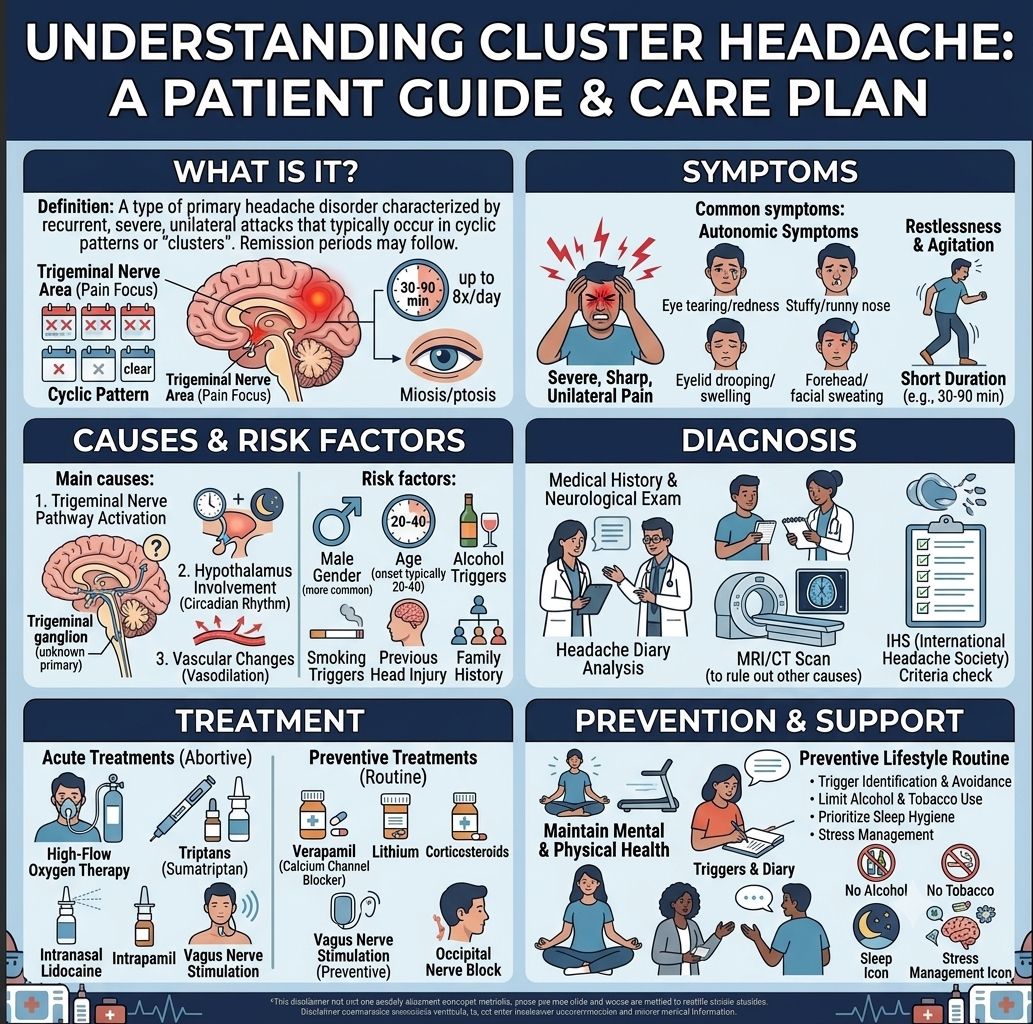
Cluster headache is a rare and exceptionally severe type of headache, often described as the most painful. It causes intense, piercing pain typically in or around one eye, on one side of the head. These headaches occur in 'clusters,' meaning you might experience several attacks over a short period, lasting weeks to months. These cluster periods are then followed by times without headaches, known as remission, which can last for months or even years. While the pain is severe, effective treatments are available to shorten individual attacks, reduce pain, and decrease the overall frequency of these debilitating headaches.
Understanding the Condition
Cluster Headache: Understanding and Managing Severe Head Pain
Understanding the Condition
Common Symptoms
Rapid Onset, Intense Pain: Cluster headaches typically strike suddenly, often without warning. Some individuals might experience mild nausea or visual disturbances (like flashes of light or tingling sensations) beforehand, similar to a migraine.
Key Characteristics of Pain: The pain is extreme, sharp, or stabbing, usually focused in, behind, or around one eye. It can spread to other areas of the face, head, and neck. The pain consistently affects one side of the head during a single cluster period, but can switch to the opposite side in different cluster periods.
Accompanying Symptoms (on the painful side): Symptoms that appear on the side of the head where the pain is located include redness of the eye, excessive tearing, swelling around the eye, a stuffy or runny nose, forehead or facial sweating, and a drooping eyelid.
Restlessness: Unlike migraine sufferers who often seek quiet and darkness, individuals with cluster headaches typically feel restless and may pace or rock during an attack.
Consultation Guide
Which Specialist to Meet
Begin by consulting your primary care doctor, who can provide an initial assessment and refer you to a neurologist. A neurologist is a medical doctor specializing in conditions affecting the brain, spinal cord, and nerves.
Preparations Before Your Visit
Before your appointment, keep a detailed headache diary. Note the date and time each headache starts, its duration, the type and severity of pain, any accompanying symptoms, and potential triggers. Also, be prepared to discuss your complete medical history, including any current medications, allergies, and questions you have for the doctor.
Book a doctor visit near me
This exam assesses the function of your nervous system, including your brain, spinal cord, and nerves. It helps your healthcare team identify any underlying issues that might be contributing to your symptoms.
Your doctor will ask about your medical history and then perform various tests to check your mental status (e.g., memory, speech), coordination, balance, reflexes, vision, hearing, and muscle strength. The exam can be brief or last up to an hour, depending on your symptoms and what the doctor observes.
Brain CT Scan (Computerized Tomography)
A brain CT scan uses a series of X-rays taken from different angles and a computer to create detailed cross-sectional images (or 'slices') of your brain, skull, blood vessels, and soft tissues. These images are more detailed than standard X-rays and can help identify issues like bleeding, swelling, or tumors. Sometimes, a special contrast dye is injected to highlight specific areas.
Consultation Guide
Cluster headache is a rare and exceptionally severe type of headache, often described as the most painful. It causes intense, piercing pain typically in or around one eye, on one side of the head. These headaches occur in 'clusters,' meaning you might experience several attacks over a short period, lasting weeks to months. These cluster periods are then followed by times without headaches, known as remission, which can last for months or even years. While the pain is severe, effective treatments are available to shorten individual attacks, reduce pain, and decrease the overall frequency of these debilitating headaches.
Stress Management Techniques: Incorporate relaxation techniques such as deep breathing exercises, meditation, yoga, or mindfulness into your daily routine. While stress isn't a direct cause, it can sometimes exacerbate headache conditions.
Join Support Groups: Connecting with others who experience cluster headaches can provide valuable emotional support, shared coping strategies, and a sense of community. This can reduce feelings of isolation and improve overall well-being.
Diagnostic Procedures
Neurological Examination
What to Expect
What to Expect
You will lie on a narrow, motorized table that slides into a large, doughnut-shaped machine. The machine will rotate around you, taking images. You may hear whirring or clicking noises. It’s crucial to remain very still during the scan. If contrast dye is used, an intravenous (IV) line will be inserted into a vein in your arm before the scan. The scan itself typically takes only a few minutes.
Brain MRI (Magnetic Resonance Imaging)
A brain MRI uses a powerful magnetic field, radio waves, and a computer to produce highly detailed images of your brain, and potentially your neck and spine. Unlike CT scans, MRI does not use radiation. It provides even more detailed images of soft tissues and can help diagnose conditions such as stroke, tumors, multiple sclerosis, or other structural brain changes.
What to Expect
You will lie on a movable table that slides into a large, tube-shaped machine. The machine generates loud banging and buzzing noises, so you will be provided with earplugs or headphones. It's essential to remain perfectly still throughout the procedure. Some people may feel uncomfortable in the enclosed space. An IV may be placed if contrast material is needed. The scan can last from 30 minutes to over an hour.
Treatment Options
Acute Treatments (to stop an attack quickly)
Oxygen Therapy: Inhaling pure oxygen through a face mask at a high flow rate can quickly relieve cluster headache pain for many individuals. (Duration: Typically 15-20 minutes per attack.)
Fast-Acting Medications (injectable/nasal spray): Specific medications designed to constrict blood vessels and block pain signals are highly effective for acute attacks. They are administered via injection under the skin or as a nasal spray for rapid absorption. (Duration: Relief usually within 5-15 minutes, lasting for several hours.)
Preventive Treatments (to reduce the frequency and severity of attacks during a cluster period)
Oral Anti-Inflammatory Medications: Short courses of powerful anti-inflammatory drugs can help suppress cluster headaches at the start of a cluster period. (Duration: Usually prescribed for a few weeks.)
Oral Nerve-Calming Medications: Certain medications, often used for blood pressure or epilepsy, can help stabilize nerve activity and prevent cluster headache attacks when taken regularly. (Duration: Long-term, typically throughout a cluster period and sometimes longer.)
Nerve Block Injections: Anesthetic and anti-inflammatory medications are injected near nerves in the back of the head to temporarily block pain signals. (Duration: Pain relief can last from weeks to several months.)
Neuromodulation Devices: Handheld devices that apply electrical stimulation to specific nerves (e.g., vagus nerve) or magnetic pulses to the head to interrupt pain pathways. (Duration: Used as needed, often daily during a cluster period.)
Home-Based Strategies
Regular Sleep Schedule: Maintaining a consistent sleep-wake cycle can help regulate the body's natural rhythms, which are often implicated in cluster headaches. (Duration: Ongoing.)
Trigger Avoidance: Identifying and strictly avoiding known triggers, especially alcohol and smoking, particularly during cluster periods, is crucial for preventing attacks. (Duration: Ongoing, especially during cluster periods.)
Regular Medical Follow-Up: Schedule consistent appointments with your neurologist to review your treatment plan, assess its effectiveness, and make necessary adjustments. This ensures optimal management and addresses any new concerns.
Prevention & Long-Term Wellbeing
Prevention
Identify and Avoid Triggers: Keep a detailed headache diary to track potential triggers such as alcohol consumption, smoking, strong odors, specific foods, or changes in sleep patterns. Avoiding these can significantly reduce attack frequency.
Maintain a Consistent Lifestyle: Establish and adhere to a regular sleep schedule, even on weekends. Irregular sleep can disrupt the body's internal clock and potentially trigger cluster headaches. Avoid excessive stress where possible.
Limit Alcohol and Stop Smoking: Alcohol and nicotine are among the most common and potent triggers for cluster headaches. Complete cessation of smoking and strict avoidance of alcohol, especially during cluster periods, is highly recommended.
Long-Term Monitoring and Support
Tags & Topics
Notice an error or need an update?
Help us keep medical information accurate. Report incorrect info or suggest an edit.


