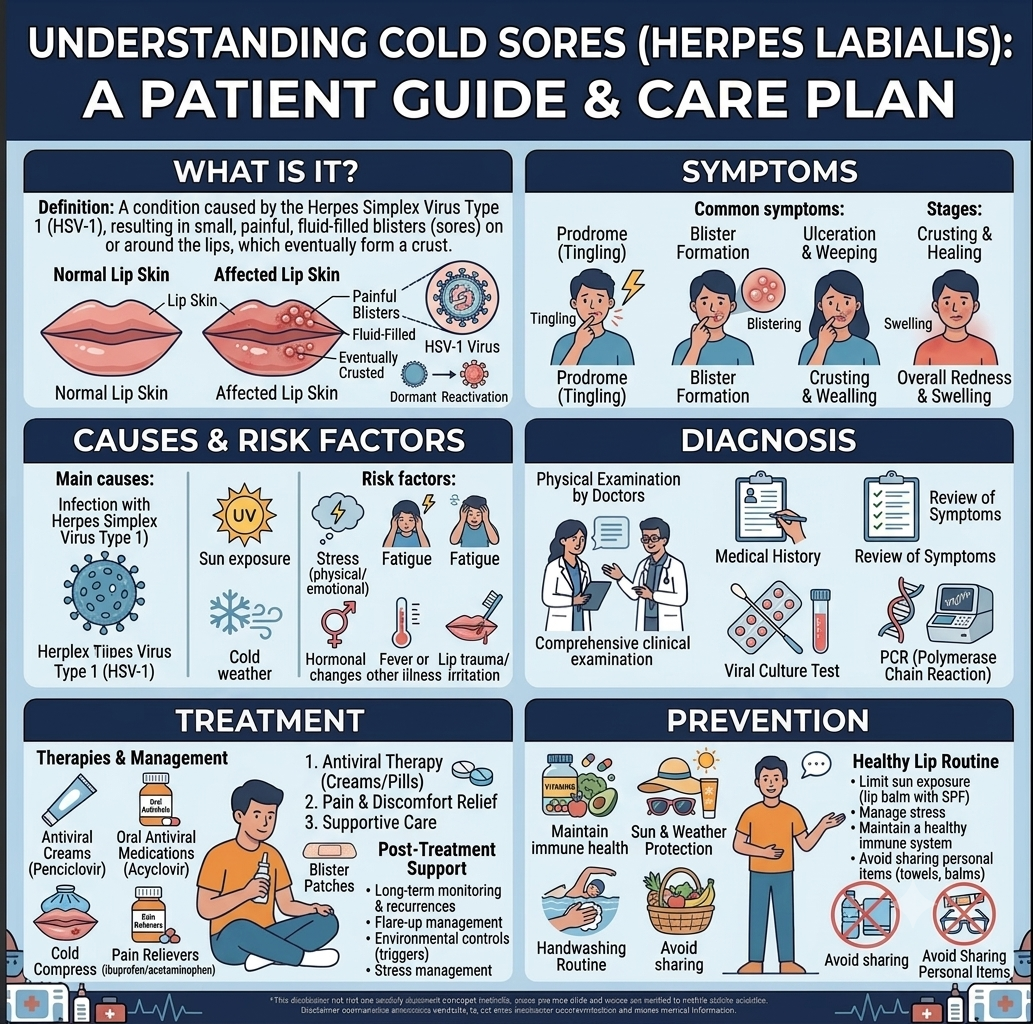
Cold sores, often called fever blisters, are a very common viral infection that typically appears as tiny, fluid-filled blisters on and around the lips. These blisters usually cluster together, break open, and then crust over before healing. Caused mainly by the herpes simplex virus type 1 (HSV-1), and sometimes type 2 (HSV-2), these sores spread through close personal contact like kissing or sharing personal items. The virus can spread even when no blisters are visible. While there's no cure, treatments can significantly help manage outbreaks, speed healing, and potentially reduce future occurrences. Most cold sores heal within 2 to 3 weeks without scarring. In rare cases, the virus can lead to complications affecting the eyes, fingertips, or spread across the skin, especially in individuals with weakened immune systems or certain skin conditions.
Understanding the Condition
Cold Sores (Fever Blisters): Understanding, Symptoms, and Management
Understanding the Condition
Common Symptoms
Tingling and Itching: Many individuals first notice an itching, burning, or tingling sensation around their lips for a day or two before any visible signs appear. This signals a cold sore is about to form.
Blisters: Small, fluid-filled blisters emerge, commonly along the edge of the lips. They can also appear around the nose, on the cheeks, or occasionally inside the mouth. These blisters often form in tight clusters.
Oozing and Crusting: The clusters of small blisters may merge, then burst open, leaving shallow, open sores. These sores will then ooze fluid and eventually crust over, forming a scab.
First Outbreak Specifics: During a first-time infection, symptoms might not show for up to 20 days after exposure. The sores can last longer, with blisters taking 2 to 3 weeks to fully heal. You might also experience painful gums, a sore throat, muscle aches, or swollen lymph nodes (glands in your neck). Subsequent outbreaks typically appear in the same spot, are usually less severe, and heal faster.
Consultation Guide
Which Specialist to Meet
Before your visit, list all your symptoms, including when they started, how long they last, and any potential triggers. Note all medications, supplements, and vitamins you are currently taking. Prepare a list of questions for your doctor regarding diagnosis, treatment options, and prevention strategies.
Book a doctor visit near me
Your doctor will visually inspect the affected area. They may ask about your symptoms, medical history, and how long you've had the sores. This is usually quick and non-invasive.
Topical Antiviral Creams or Ointments: These creams are applied directly to the cold sore and can help shorten healing time, reduce pain, and lessen other symptoms. They are most effective when applied as soon as tingling begins. (Duration: Usually applied 4-5 times a day for 4 to 10 days, or as directed by your doctor.)
Pain Relievers: Over-the-counter pain relievers can help manage discomfort, fever, and muscle aches that sometimes accompany cold sores, especially during a first outbreak. (Duration: As needed for symptom relief.)
Home Remedies and Self-Care
Cold Compress: Applying a cold, damp cloth to the sores can help reduce redness, swelling, and pain. (Duration: As needed for relief.)
Lip Balms with Sunscreen: Protecting your lips from sun exposure can help prevent sun-triggered outbreaks and keep the affected area moisturized. (Duration: Daily, especially when outdoors.)
Moisturizing Creams: Using petroleum jelly or other moisturizing creams can keep the cold sore from drying out and cracking, promoting comfort during healing. (Duration: As needed for comfort.)
Avoid Irritants: Avoid acidic foods, spicy foods, or very hot beverages that might irritate the sores and delay healing. (Duration: During an active outbreak.)
Consultation Guide
Cold sores, often called fever blisters, are a very common viral infection that typically appears as tiny, fluid-filled blisters on and around the lips. These blisters usually cluster together, break open, and then crust over before healing. Caused mainly by the herpes simplex virus type 1 (HSV-1), and sometimes type 2 (HSV-2), these sores spread through close personal contact like kissing or sharing personal items. The virus can spread even when no blisters are visible. While there's no cure, treatments can significantly help manage outbreaks, speed healing, and potentially reduce future occurrences. Most cold sores heal within 2 to 3 weeks without scarring. In rare cases, the virus can lead to complications affecting the eyes, fingertips, or spread across the skin, especially in individuals with weakened immune systems or certain skin conditions.
For typical cold sores, start by consulting your general practitioner or family doctor. If outbreaks are frequent, severe, or cause complications, a dermatologist (skin specialist) or an infectious disease specialist may be recommended.
Preparations Before Your Visit
The doctor or nurse will gently swab the fluid from an active blister using a sterile cotton swab. This process takes only a few seconds and might cause a brief, mild stinging or uncomfortable sensation. The swab is then sent to a lab to see if the virus grows.
Diagnostic Procedures
Often, a cold sore can be diagnosed by a doctor simply by observing the appearance and location of the blisters during a physical examination, especially if you have a history of cold sores.
What to Expect
If the diagnosis is uncertain, or to confirm the presence of the herpes simplex virus, a sample of fluid from a blister can be sent to a lab for viral culture.
What to Expect
PCR Test (Polymerase Chain Reaction)
A PCR test is a highly sensitive method to detect the genetic material of the herpes simplex virus, even when very little virus is present. It can distinguish between HSV-1 and HSV-2.
What to Expect
Similar to a viral culture, a sterile swab will be used to collect fluid from a blister or lesion. The swab is then sent for laboratory analysis. The procedure is quick, similar to a viral culture, and might involve minor discomfort.
A blood test can detect antibodies to the herpes simplex virus, indicating a past or current infection. It can help determine if you've been exposed to HSV-1 or HSV-2, even if you've never had a visible cold sore.
What to Expect
A healthcare professional will draw a small sample of blood, usually from a vein in your arm. You might feel a brief pinch or sting as the needle is inserted. The process is generally quick and well-tolerated.
Treatment Options
Medications
Oral Antiviral Medications: Prescription oral medications can help speed up the healing of cold sores. When taken at the first sign of an outbreak, they can reduce the severity and duration. For frequent outbreaks, they can be prescribed for daily use to prevent recurrence. (Duration: Typically 1 to 5 days for an acute outbreak, or continuously for several months to a year for suppressive therapy.)
Practice Good Hand Hygiene: Wash your hands thoroughly with soap and water after touching your cold sore or applying treatment. This prevents accidentally spreading the virus to other body parts (like your eyes) or to other people.
Manage Triggers: Identify and try to minimize personal triggers for outbreaks, which can include stress, fatigue, fever, illness, sun or wind exposure, hormonal changes (like menstrual periods), or a weakened immune system. Using sunscreen on your lips can help if sun exposure is a trigger.
Strengthen Immune System: Maintain a healthy lifestyle through adequate sleep, balanced nutrition, and stress management, as a strong immune system can help your body keep the virus in check. Individuals with compromised immune systems (due to conditions like eczema, cancer treatments, or organ transplant medications) should be extra vigilant and consult their doctor about preventative measures, as they are at higher risk for severe complications.
Consider Regular Antiviral Medication: If you experience frequent or severe cold sore outbreaks (more than nine times a year), or if you are at high risk for complications, your doctor may recommend taking a prescription antiviral medication daily to suppress the virus and reduce the frequency and severity of future outbreaks.
Prevention & Long-Term Wellbeing
Prevention of Spread and Recurrence
Avoid Close Contact During Outbreaks: Refrain from kissing, intimate physical contact, or sharing personal items (like eating utensils, razors, towels, lip balm) with others, especially while blisters are visible and oozing. The virus is most contagious during this phase, but can spread even without visible sores.
Tags & Topics
Notice an error or need an update?
Help us keep medical information accurate. Report incorrect info or suggest an edit.


