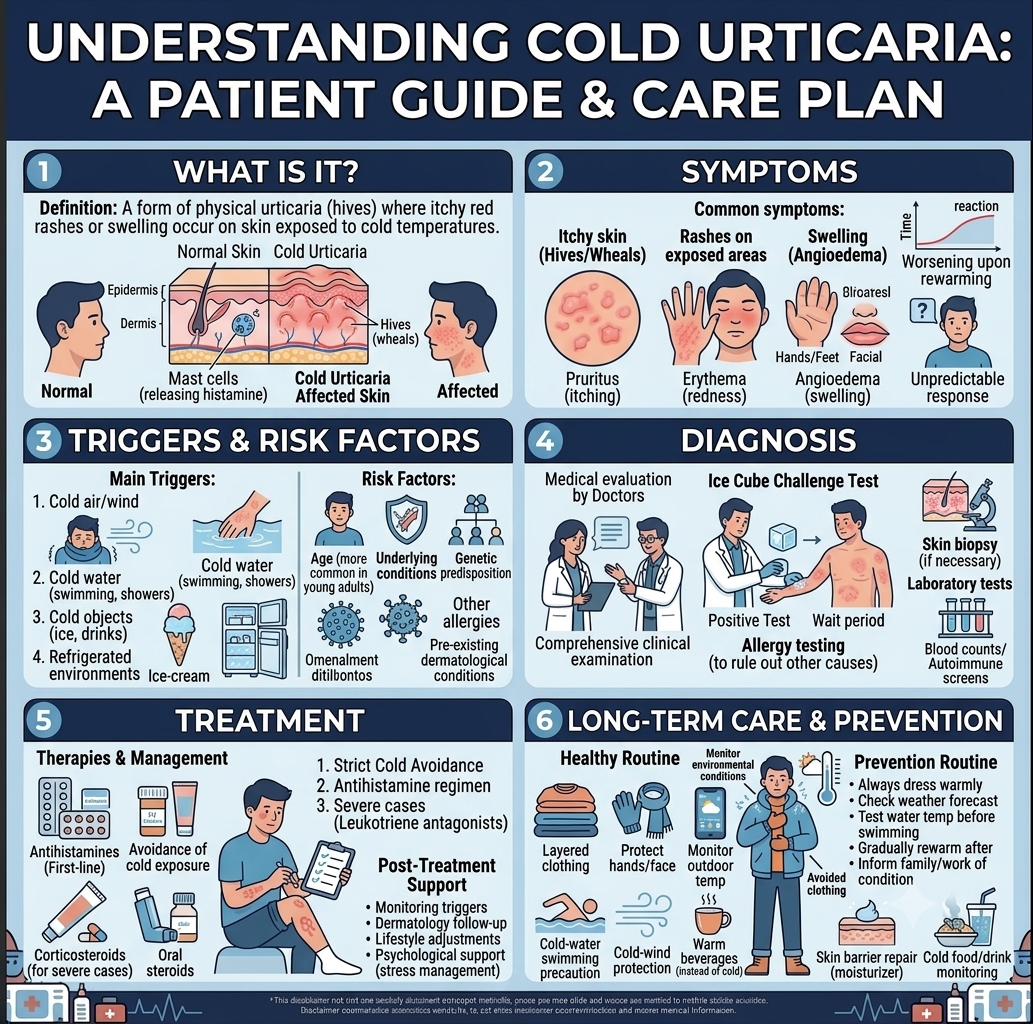
Cold urticaria (pronounced: ur-tih-KAR-e-uh) is a skin reaction that appears quickly, usually within minutes, after your skin is exposed to cold. This exposure can be to cold air, water, or even cold objects. The most noticeable symptom is the appearance of itchy welts, commonly known as hives, on the affected skin areas.While symptoms can range from mild itching to severe, life-threatening reactions, cold urticaria is most commonly seen in young adults. For some individuals, extensive exposure to cold, such as swimming in cold water, can trigger a full-body reaction leading to serious issues like a sudden drop in blood pressure, fainting, or even shock. The exact cause of cold urticaria is often unknown. It's believed that in many cases, skin cells become overly sensitive due to factors like a previous virus, an underlying illness, or a genetic predisposition. When these sensitive cells are exposed to cold, they release natural chemicals, including histamine, which are typically involved in allergic reactions. These chemicals cause the characteristic itching and hives, and in severe cases, can affect the entire body.
Understanding the Condition
Cold Urticaria: Your Skin's Reaction to Cold Temperatures
Understanding the Condition
Cold urticaria (pronounced: ur-tih-KAR-e-uh) is a skin reaction that appears quickly, usually within minutes, after your skin is exposed to cold. This exposure can be to cold air, water, or even cold objects. The most noticeable symptom is the appearance of itchy welts, commonly known as hives, on the affected skin areas.While symptoms can range from mild itching to severe, life-threatening reactions, cold urticaria is most commonly seen in young adults. For some individuals, extensive exposure to cold, such as swimming in cold water, can trigger a full-body reaction leading to serious issues like a sudden drop in blood pressure, fainting, or even shock. The exact cause of cold urticaria is often unknown. It's believed that in many cases, skin cells become overly sensitive due to factors like a previous virus, an underlying illness, or a genetic predisposition. When these sensitive cells are exposed to cold, they release natural chemicals, including histamine, which are typically involved in allergic reactions. These chemicals cause the characteristic itching and hives, and in severe cases, can affect the entire body.
Common Symptoms
Hives (Welts): Red, itchy patches that can vary in size and shape, appearing on the skin exposed to cold. These welts can be localized or spread over a larger area.
Itching: An intense, uncomfortable itch accompanies the hives.
Swelling: The affected skin may become swollen. In more severe cases, swelling can occur in the lips, tongue, or throat, making breathing difficult.
Redness: The skin around the hives often appears red and inflamed.
Burning Sensation: Some individuals may experience a burning or stinging sensation along with the itch.
Severe Reactions (Whole-Body): When large areas of the body are exposed to cold, such as during cold water swimming, severe reactions can occur. These may include a sudden drop in blood pressure (hypotension), fainting, dizziness, a racing heart, swelling of the tongue and throat (angioedema), and in extreme cases, anaphylactic shock or drowning. These reactions require immediate emergency medical attention.
Onset and Duration: Symptoms typically appear within minutes of cold exposure, sometimes as the skin rewarms. They can be worsened by damp and windy conditions. Each episode of hives usually lasts for about one to two hours.
Consultation Guide
Which Specialist to Meet
Before your appointment, it's helpful to:- Keep a detailed symptom diary: Note when reactions occur, what triggers them (e.g., cold water, air conditioning, ice packs), how long they last, and the severity of your symptoms.- List all medications, vitamins, and supplements you are currently taking.- Prepare a list of any recent illnesses, infections, or major stressors you've experienced.- Write down questions you have for your doctor to ensure all your concerns are addressed.- Be prepared to discuss your medical history, including any family history of allergies or similar skin conditions.
Book a doctor visit near me
While there isn't a specific blood test for cold urticaria itself, your doctor may order blood tests to rule out other underlying conditions that could cause similar symptoms or to identify potential triggers, such as certain infections or autoimmune diseases.
Antihistamines: These medications block the action of histamine, the chemical released by your body during an allergic reaction, which helps reduce itching and the formation of hives. Non-drowsy options are often prescribed for daily use. (Duration: Taken daily or as needed, often for ongoing management over months or years, depending on the individual's response and persistence of symptoms.)
Epinephrine Auto-injector: For those at risk of severe, whole-body reactions (anaphylaxis), an injectable medication designed for emergency use may be prescribed. It quickly counteracts severe allergic symptoms. (Duration: Should be carried at all times by individuals at risk and used immediately in case of a severe reaction.)
Cold Desensitization (Cold Adaptation Therapy): Under medical supervision, this therapy involves gradually exposing the skin to increasing levels of cold to help the body become less reactive over time. This can include daily cold water immersions or applying controlled cold stimuli. (Duration: Typically involves regular sessions over several weeks or months, with ongoing maintenance as advised by a specialist.)
Light Therapy (UV Therapy): In some cases, controlled exposure to ultraviolet (UV) light can help reduce skin sensitivity to cold. This is usually performed in a clinical setting. (Duration: Multiple sessions are required, typically over several weeks, with frequency determined by the specialist.)
Identify and Avoid Triggers: Learn what specific cold stimuli (e.g., cold air, ice, cold drinks, specific temperatures) trigger your symptoms and avoid them as much as possible. This is the most crucial step in managing the condition.
Dress Warmly: Wear layers of protective clothing when exposed to cold weather. Cover all exposed skin, including hands, feet, ears, and face, with gloves, warm socks, hats, and scarves.
Regular Doctor Visits: Maintain regular follow-up appointments with your doctor or specialist to monitor your condition, adjust medications if needed, and discuss any new symptoms or concerns.
Wear a Medical Alert Bracelet: Consider wearing a medical alert bracelet or necklace that indicates you have cold urticaria, especially if you are prone to severe reactions. This can provide vital information to first responders in an emergency.
Stay Hydrated and Healthy: Maintaining general good health, including proper hydration and nutrition, can support your immune system and overall well-being.
Manage Stress: While not a direct trigger, high stress levels can sometimes exacerbate immune responses or make symptoms feel worse. Incorporate stress-reducing activities into your routine.
Diagnostic Procedures
Initially, you should consult your primary care doctor, who can provide an initial assessment and may refer you to a specialist. A dermatologist (skin specialist) or an allergist/immunologist (allergy and immune system specialist) are the most appropriate doctors to diagnose and manage cold urticaria.
Preparations Before Your Visit
Ice Cube Test (Cold Challenge Test)
This is the most common and straightforward test to diagnose cold urticaria. It involves placing an ice cube on a small area of your skin, usually on the forearm, to see if a characteristic hive reaction develops.
What to Expect
During the test, a doctor or nurse will place an ice cube, often wrapped in a thin plastic bag or cloth, directly onto your skin for a few minutes (typically 4-5 minutes). After removing the ice, you will be monitored for about 10-15 minutes. If you have cold urticaria, a red, itchy welt (hive) will usually appear in the exact shape and size of the ice cube as your skin begins to warm up. The presence and timing of this reaction help confirm the diagnosis. The test might be repeated with different temperatures or durations if the initial result is unclear.
What to Expect
A small sample of your blood will be drawn, usually from a vein in your arm. This is a standard procedure and typically involves a brief pinch or sting as the needle is inserted. The blood sample will then be sent to a lab for analysis. Results may take a few days to a week to become available.
Test Water Temperature: Before entering any water, particularly pools, lakes, or oceans, test the temperature with a small area of your skin that is not typically reactive. If you experience any tingling or itching, do not enter.
Be Cautious with Cold Foods and Drinks: Avoid very cold beverages and foods, such as ice cream or ice cubes, especially if you experience swelling of the lips or mouth with cold exposure.
Inform Others: Educate family, friends, and colleagues about your condition, especially if you are at risk of severe reactions. Let them know what to do in an emergency.
Treatment Options
Medications
Other Allergy Medications: For individuals who don't respond well to standard antihistamines, a doctor may prescribe stronger allergy medications or those that block different chemical pathways involved in allergic reactions. (Duration: Duration varies based on the specific medication and individual patient needs, usually taken daily for sustained periods.)
Carry Emergency Medication: If prescribed an epinephrine auto-injector, always carry it with you, especially when you might be exposed to cold, and ensure those around you know how to use it.
Prevention & Long-Term Wellbeing
Prevention
Tags & Topics
Notice an error or need an update?
Help us keep medical information accurate. Report incorrect info or suggest an edit.


