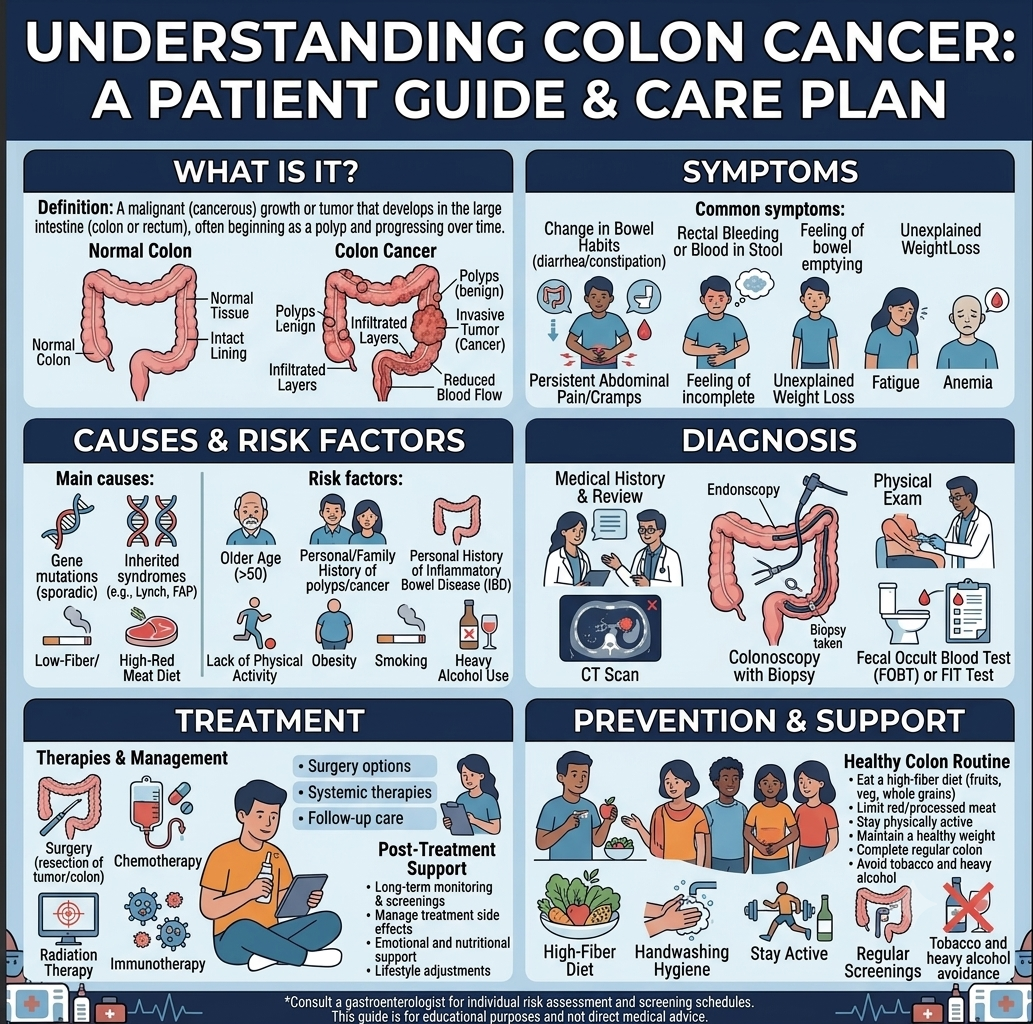
Colon cancer is a type of cancer that starts in the large intestine (colon), the final part of your digestive system. It's often grouped with rectal cancer as "colorectal cancer," as the rectum is the last section of the large intestine. This cancer begins when cells in the colon develop changes in their genetic material (DNA), causing them to grow out of control. It usually starts as small, non-cancerous growths called polyps, which can become cancerous over time. Though typically affecting older adults, cases in younger individuals are increasing. Early detection through screening is vital for prevention and effective treatment.
Understanding the Condition
Common Symptoms
Changes in Bowel Habits: More frequent bouts of diarrhea or constipation, or stools that are narrower than usual.
Rectal Bleeding or Blood in Stool: Blood can appear red, or make stools look very dark/tarry. Often, invisible blood is also a sign.
Ongoing Abdominal Discomfort: Persistent cramps, gas, or pain in the belly area.
Incomplete Bowel Emptying: A persistent feeling that your bowel hasn't fully emptied after a bowel movement.
Unexplained Weakness or Tiredness: Feeling unusually weak or fatigued without a clear reason.
Before your visit, list your symptoms (onset, frequency, severity), personal and family medical history, all medications and supplements you take, and any questions you have. Be prepared to discuss your diet and lifestyle.
Book a doctor visit near me
Radiation Therapy: Uses high-energy beams to destroy cancer cells, often directed precisely at the tumor area from outside the body. Used before/after surgery or for symptom relief. (Duration: Typically given daily for several weeks, or as shorter courses for symptom management.)
Palliative Care: Specialized medical care providing relief from symptoms, pain, and stress of illness, improving quality of life for both the patient and their family. It is provided alongside other treatments. (Duration: Ongoing throughout the illness, as needed.)
Symptom Awareness: Promptly report any new or returning symptoms to your healthcare provider.
Sustain Healthy Habits: Continue healthy eating and regular exercise habits for overall health and to reduce recurrence risk.
Consultation Guide
GI Stents: A mesh tube inserted inside the colon to open a blockage caused by a tumor, helping stool pass. (Duration: Can be temporary or longer-term, depending on the patient's condition and treatment plan.)
Diagnostic Procedures
Colon cancer is a type of cancer that starts in the large intestine (colon), the final part of your digestive system. It's often grouped with rectal cancer as "colorectal cancer," as the rectum is the last section of the large intestine. This cancer begins when cells in the colon develop changes in their genetic material (DNA), causing them to grow out of control. It usually starts as small, non-cancerous growths called polyps, which can become cancerous over time. Though typically affecting older adults, cases in younger individuals are increasing. Early detection through screening is vital for prevention and effective treatment.
Initially, consult a general practitioner. They may refer you to a gastroenterologist (digestive system specialist) or an oncologist (cancer specialist) if colon cancer is suspected or diagnosed. A surgeon may also be involved for treatment.
Preparations Before Your Visit
Fecal Immunochemical Test (FIT)
An at-home stool test that looks for tiny, invisible amounts of blood in a stool sample, which can be a sign of polyps or cancer.
What to Expect
You collect a small stool sample at home using a provided kit and send it to a lab. There's little to no special preparation needed, and no dietary restrictions are typically required before the test.
An at-home stool test that checks for specific DNA changes in cells shed into your stool, as well as hidden blood, which may indicate colon cancer or precancerous polyps.
What to Expect
You collect an entire stool sample at home using a special container and send it to a lab. This test requires no special dietary preparation or changes to your medications.
A procedure allowing a doctor to view the entire inside of the large intestine (colon) and rectum using a long, flexible tube with a camera (colonoscope). Polyps or tissue samples can be removed during this exam.
What to Expect
What to Expect
Requires bowel preparation. A small tube may inflate the colon with air. You lie on a table for CT scans. No sedation is typically needed.
A specialized X-ray technique that creates detailed cross-sectional images of internal organs, bones, soft tissues, and blood vessels. It helps to locate tumors, assess their size, and check if cancer has spread.
What to Expect
You lie on a table that moves through a scanner. Contrast dye may be given. You'll need to stay still and possibly hold your breath.
Complete Blood Count (CBC)
A blood test that measures different components of your blood, such as red blood cells, white blood cells, and platelets. It can help detect anemia, often a result of bleeding colon cancer.
What to Expect
A small blood sample is drawn, usually from an arm vein. It's a quick test with minimal discomfort.
A quick, painless imaging test that uses radiation to create pictures of structures inside your body, especially bones. It can sometimes show blockages or other significant changes in the colon.
What to Expect
You position yourself for images. You'll need to hold still or hold your breath briefly.
Ileoanal Anastomosis (J-Pouch) Surgery: After removal of the large intestine, an internal pouch is created from the small intestine and connected to the anus for normal bowel movements. (Duration: Often a multi-stage surgical process, with recovery spanning several months.)
Treatment Options
Colon Cancer: Understanding, Prevention, and Treatment
Understanding the Condition
Surgical Procedures
Polypectomy: Removal of small growths (polyps) during a colonoscopy to prevent cancer or treat very early cancer. (Duration: A single procedure, typically less than an hour.)
Colostomy Reversal: Surgery to close a temporary colostomy, reconnecting the bowel for natural waste passage. (Duration: A single procedure, with recovery taking several weeks for bowel function to normalize.)
Medications & Therapies
Chemotherapy: Uses strong medicines, given intravenously or as pills, to kill fast-growing cancer cells throughout the body. Used before/after surgery or for advanced cancer. (Duration: Cycles typically last several months, varying based on cancer stage and individual response.)
Targeted Therapy: Medicines that specifically block growth pathways unique to cancer cells, minimizing harm to healthy cells. (Duration: Ongoing, as long as the treatment is effective and tolerable.)
Immunotherapy: Medicines that boost the body's own immune system to recognize and fight cancer cells more effectively. (Duration: Often given in cycles over several months or longer, depending on response.)
Hyperthermic Intraperitoneal Chemotherapy (HIPEC): After surgery to remove visible tumors, heated chemotherapy liquid is circulated directly in the abdomen to kill remaining microscopic cancer cells. (Duration: A single procedure, performed with surgery, followed by intensive recovery.)
Discuss Risk-Reducing Medications: High-risk individuals should discuss potential aspirin use with a doctor, considering benefits versus digestive bleeding risks. It's not generally recommended for average risk.
Adhere to Follow-up Care: Attend all recommended screenings and appointments post-treatment for ongoing monitoring.
Prevention & Long-Term Wellbeing
Unintended Weight Loss: Losing weight without making changes to diet or exercise.
Bowel Blockage: Severe constipation, inability to pass gas, swelling, and pain, indicating a more advanced blockage.
- Consultation Guide
Which Specialist to Meet
Requires bowel preparation (liquid diet, laxatives). Sedation is provided. A flexible tube with a camera is inserted into the rectum to view the entire colon and remove polyps or tissue samples.
Virtual Colonoscopy (CT Colonography)
A less invasive screening method that uses a CT scan to take detailed cross-sectional pictures of your colon and rectum, which are then combined to create a 3D view.
Colectomy (Colon Resection): Surgical removal of the cancerous part of the colon, nearby healthy tissue, and lymph nodes. The remaining ends are usually reconnected. (Duration: A single procedure, recovery typically takes several weeks to months.)
Colostomy: Creating a temporary or permanent opening (stoma) in the abdominal wall for waste to collect in an external bag, often after colon removal or for healing. (Duration: Permanent or temporary; healing often takes weeks to months before potential reversal.)
Living with an Ostomy: Guidance on managing diet, hygiene, and emotional adaptation to an ostomy (e.g., colostomy or ileostomy). (Duration: Long-term, ongoing adaptation.)
Prevention
Balanced Diet: Eat diverse fruits, vegetables, and whole grains; limit red and processed meats for cancer protection.
Moderate Alcohol Intake: If consuming alcohol, limit to one drink per day for women, two for men.
Quit Smoking: Seek professional help to stop smoking, as it significantly raises risk.
Regular Exercise: Aim for 30 minutes of moderate activity most days to lower risk.
Maintain Healthy Weight: Achieve and sustain a healthy weight through diet and exercise.
Timely Screening: Discuss starting screening around age 45 (earlier for high risk) to find and remove polyps. Factors increasing risk (and potentially warranting earlier screening) include older age, Black race, a personal or family history of colon cancer/polyps, inflammatory bowel diseases, inherited genetic syndromes, diabetes, obesity, and prior abdominal radiation therapy.
Tags & Topics
Notice an error or need an update?
Help us keep medical information accurate. Report incorrect info or suggest an edit.


