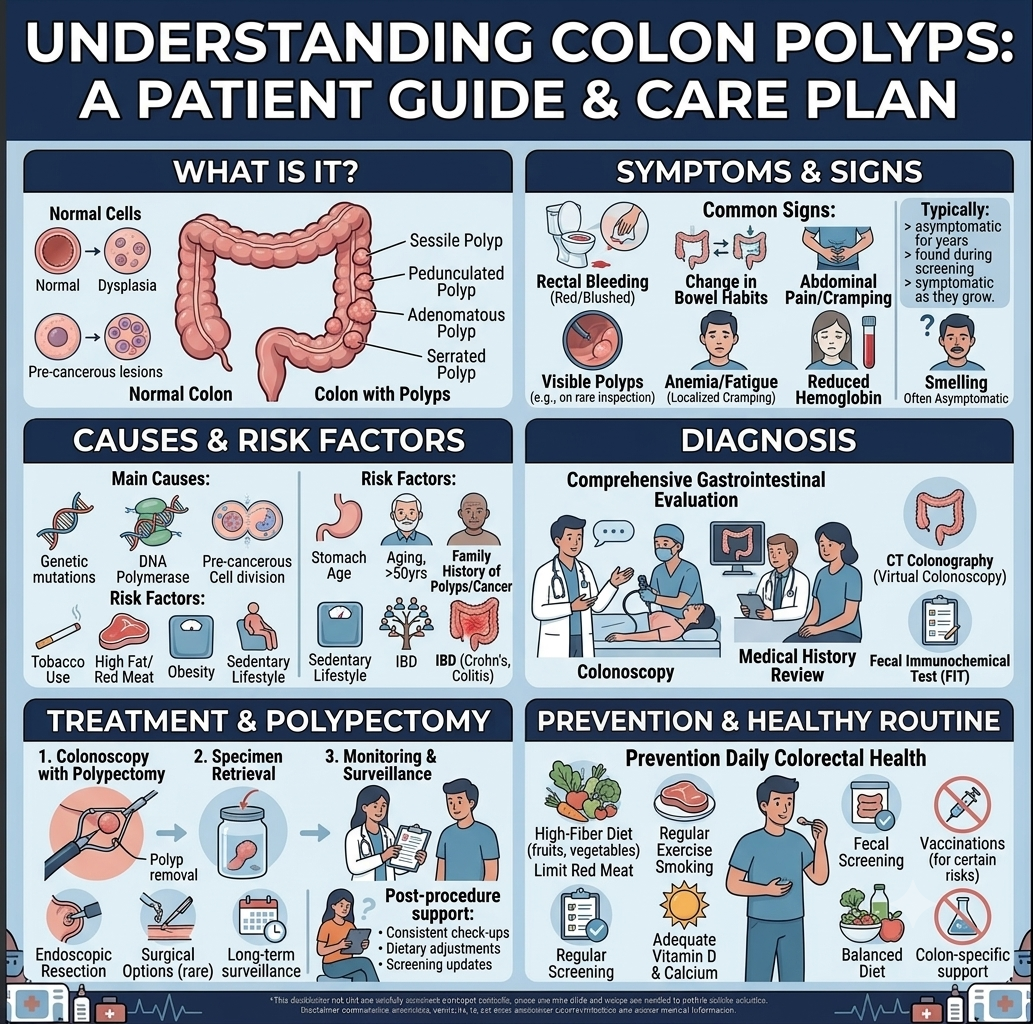
Colon polyps are small clusters of cells that form on the inner lining of the large intestine (colon). While most are harmless, some can slowly transform into colorectal cancer over many years, which can be life-threatening if found in later stages. "Neoplastic" polyps, such as adenomas and serrated lesions, are considered precancerous and should be removed. Anyone can develop polyps, with risk increasing after age 45. Other risk factors include obesity, smoking, heavy alcohol use, diabetes, inflammatory bowel disease, and a personal or family history of polyps or colorectal cancer. As polyps often cause no symptoms, regular screening tests are crucial for early detection and prevention.
Understanding the Condition
Colon polyps are small clusters of cells that form on the inner lining of the large intestine (colon). While most are harmless, some can slowly transform into colorectal cancer over many years, which can be life-threatening if found in later stages. "Neoplastic" polyps, such as adenomas and serrated lesions, are considered precancerous and should be removed. Anyone can develop polyps, with risk increasing after age 45. Other risk factors include obesity, smoking, heavy alcohol use, diabetes, inflammatory bowel disease, and a personal or family history of polyps or colorectal cancer. As polyps often cause no symptoms, regular screening tests are crucial for early detection and prevention.
Common Symptoms
No Symptoms: Most individuals with colon polyps experience no symptoms, highlighting the importance of routine screening tests to detect them early.
Changes in Bowel Habits: Persistent constipation or diarrhea lasting longer than a week may signal a larger polyp or cancer.
Increased Mucus in Stool: While some mucus is normal, a noticeable increase, especially when accompanied by other symptoms, warrants medical attention.
Iron Deficiency Anemia: Slow, often unseen bleeding from polyps can lead to chronic blood loss, causing fatigue and shortness of breath due to low iron.
Belly Pain: Cramping or abdominal discomfort may occur if a large polyp or cancer partially blocks the bowel.
Rectal Bleeding: Visible blood from the rectum can be a sign of colon polyps, cancer, or other conditions like hemorrhoids.
Consultation Guide
Which Specialist to Meet
Begin with your primary care physician to discuss symptoms, risk factors, and screening options. They may refer you to a gastroenterologist, a specialist in digestive system disorders, for diagnosis and polyp removal. If your family history suggests a hereditary condition, a genetic counselor can assess your risk and guide genetic testing.
Preparations Before Your Visit
Before your visit, compile a detailed medical history, including any personal or family history of colon polyps or colorectal cancer. List all medications, dietary supplements, and any symptoms you’ve experienced. Prepare a list of questions to ask your doctor.
Book a doctor visit near me
Consultation Guide
Maintain Healthy Weight: Strive for and maintain a healthy body weight, as obesity is a known risk factor for polyps.
Discuss Family History: Inform your healthcare provider about any family history of colon polyps or colorectal cancer to determine if earlier or more frequent screening is needed.
Genetic Counseling: If you have a strong family history (e.g., multiple family members with advanced polyps or cancer) or a personal history of many polyps, consider genetic counseling to assess hereditary risks.
Diagnostic Procedures
A comprehensive examination of your entire large intestine (colon and rectum) using a long, flexible tube with a camera (colonoscope) to visually inspect the lining, identify swollen or irritated tissues, polyps, or cancer, and remove suspicious growths or take tissue samples (biopsies).
What to Expect
What to Expect
Less extensive bowel preparation than a full colonoscopy is usually required. Sedation is often not needed. The sigmoidoscope is inserted, and the doctor examines the lower colon. Any small polyps found can often be removed during the procedure. The exam is quicker than a colonoscopy.
Virtual Colonoscopy (CT Colonography)
A non-invasive imaging test that uses a CT scanner to take hundreds of cross-sectional X-ray pictures of your abdomen, which are then combined to create detailed views of your colon and rectum, screening for polyps without inserting a full scope.
What to Expect
You'll still need thorough bowel preparation. During the test, a small tube is briefly inserted into your rectum to gently inflate the colon with air for clearer images. You'll lie on a table as the CT scanner takes pictures. No sedation is used, and the procedure is relatively quick.
An at-home test that analyzes a stool sample for altered DNA that may come from colon cancer or precancerous polyps, as well as hidden blood.
What to Expect
A kit is provided for you to collect a stool sample in the privacy of your home. You then send the sample to a lab for analysis. There are typically no special diet restrictions before this test.
Fecal Immunochemical Test (FIT) / Fecal Occult Blood Test (FOBT)
Simple, at-home tests that detect tiny amounts of hidden (occult) blood in your stool, which can be a sign of polyps or cancer. FIT is generally more specific for human blood.
What to Expect
An X-ray exam where a liquid containing barium is introduced into the colon via an enema to coat its lining. Air is often also pumped in (double-contrast) to improve image quality, creating a clear outline of the colon on X-rays. This test is less common now, largely replaced by more accurate imaging methods.
What to Expect
Bowel preparation is necessary. During the procedure, a tube is inserted into your rectum to deliver the barium liquid and then air. X-ray images are taken as you may be asked to change positions.
Examination of your DNA to identify inherited gene changes (mutations) that can increase your risk of developing colon polyps and colorectal cancer, particularly in rare hereditary syndromes.
What to Expect
This usually involves a simple blood draw or a cheek swab. A genetic counselor typically provides advice before and after testing to help you understand the implications of the results for your health and family.
Polypectomy during Endoscopy: Small polyps are often removed during a colonoscopy or flexible sigmoidoscopy using specialized instruments (forceps or a wire loop called a snare) passed through the scope. The polyp is then cauterized or cut away. (Duration: Typically takes a few minutes per polyp during the diagnostic procedure itself.)
Endoscopic Mucosal Resection (EMR): A technique used to remove larger polyps or very early-stage cancerous lesions from the inner lining of the digestive tract. Fluid is injected beneath the lesion to lift it, making it easier and safer to remove with a snare. (Duration: An outpatient procedure; duration varies from 30 minutes to a few hours depending on the size and number of lesions.)
Colectomy (Colon Resection): Surgical removal of a portion (partial colectomy) or the entire (total colectomy) large intestine. This is performed for very large polyps that cannot be removed endoscopically, or if cancer is present. It may involve reconnecting the remaining parts of the digestive system or creating an ostomy. (Duration: A major surgery requiring several hours in the operating room, followed by a hospital stay of several days and a recovery period of several weeks.)
Increased Surveillance: If polyps are found and removed, or if you have a diagnosed hereditary disorder causing polyps, your doctor will likely recommend more frequent follow-up colonoscopies starting at a younger age to monitor for new growths.
Treatment Options
Changes in Stool Color: Blood can appear as red streaks in the stool or make it look black. (Note: Certain foods or medications can also alter stool color).
You will receive a kit to collect small stool samples over one to three days. These samples are then returned to your doctor or a lab. Some dietary or medication restrictions may apply, especially for FOBT, to avoid false positives.
Barium Enema (Double-Contrast)
Procedures for Polyp Removal
Prevention & Long-Term Wellbeing
Colon Polyps: Understanding, Detection, and Prevention
- Understanding the Condition
You will need to thoroughly clean your bowels beforehand, typically involving a liquid diet and laxatives. During the procedure, you'll receive sedation for comfort. The colonoscope is gently inserted through the rectum and advanced through the colon. The exam usually takes 30-60 minutes, after which you'll need someone to drive you home due to sedation effects.
Flexible Sigmoidoscopy
Examines only the rectum and the lower part of the colon (sigmoid and descending colon) using a shorter, flexible tube (sigmoidoscope).
Prevention of Colon Polyps and Colorectal Cancer
Regular Screening: Adhere to recommended guidelines for colon cancer screening, which can detect and remove polyps before they become cancerous.
Healthy Diet: Emphasize a diet rich in fruits, vegetables, and whole grains, while limiting red and processed meats and reducing fat intake.
Limit Alcohol: Restrict alcohol consumption to moderate levels or less, as higher intake increases risk.
Quit Tobacco: Cease all forms of tobacco use, as smoking significantly increases the risk of polyps and cancer.
Stay Active: Engage in regular physical activity to help maintain overall health and reduce cancer risk.
Tags & Topics
Notice an error or need an update?
Help us keep medical information accurate. Report incorrect info or suggest an edit.


